

AI / FINTECH / CRYPTO / TECH

NY Presswire

Understand the systems shaping money.

Mara Alonzo wearing a NY Presswire T-shirt and dark glasses outdoors.

Mara Alonzo

Mara covers payments, remittances, and everyday financial services. She follows how fees, settlement times, and account requirements affect people moving money across borders.

Latest

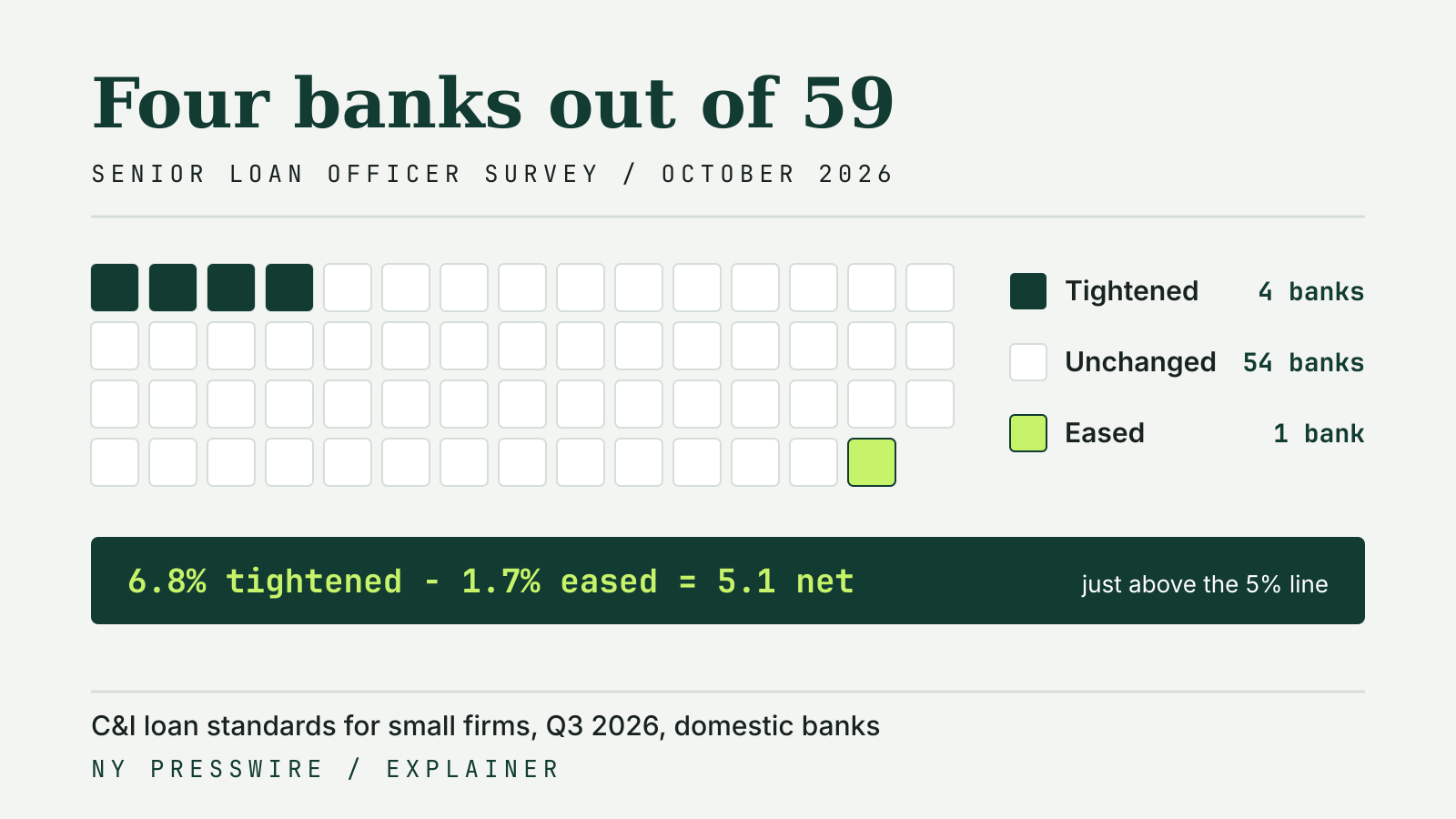
Grid of 59 squares, one per bank: 4 tightened, 54 unchanged and 1 eased C&I loan standards for small firms in the October 2026 Senior Loan Officer Opinion Survey, a net 5.1 percent.
Federal Reserve ·

Senior Loan Officer Opinion Survey: How to Read It

How the Fed's SLOOS turns bank answers into net percentages, worked through the October 2026 survey.
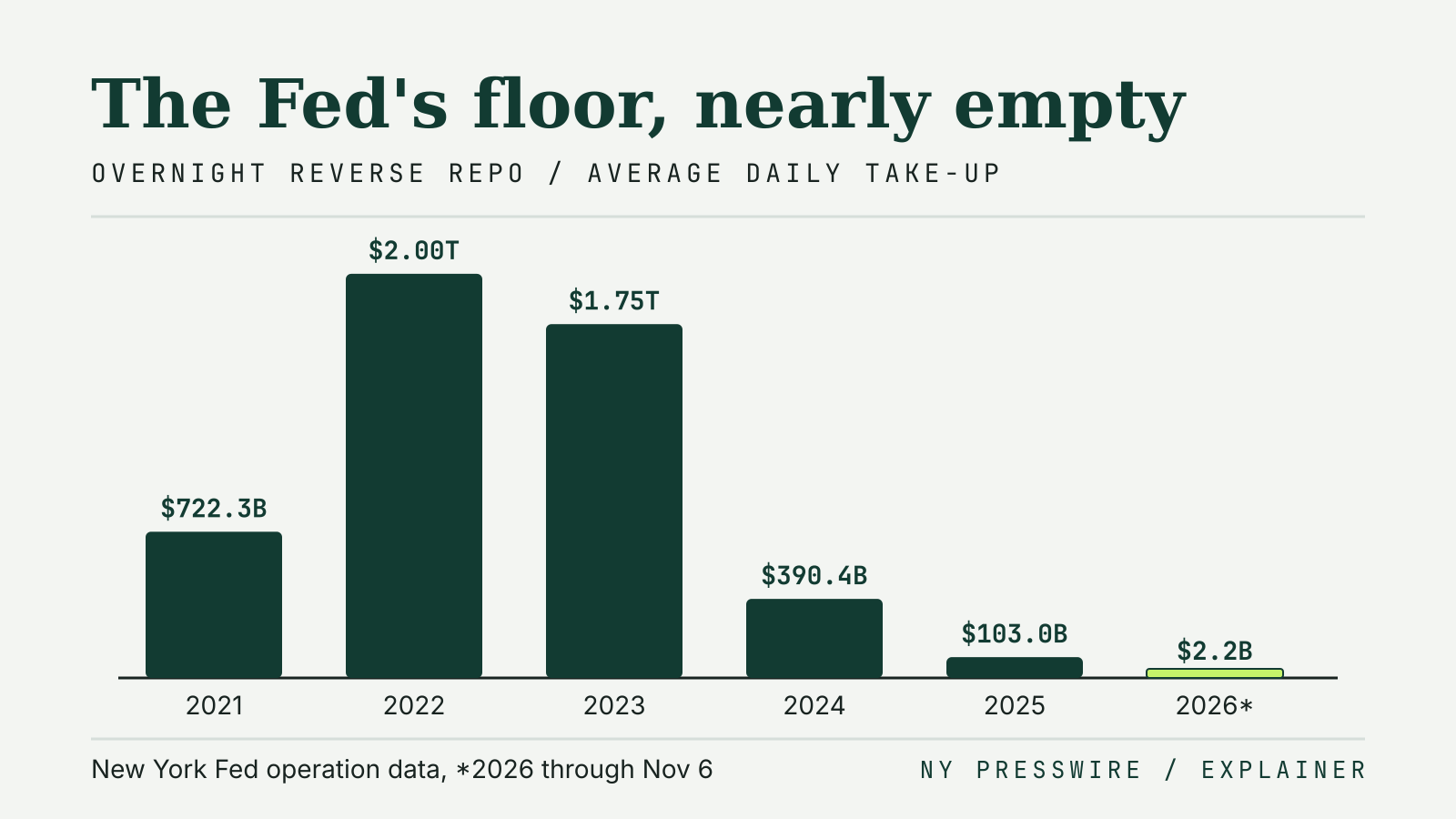
Bar chart of average daily take-up at the Fed's overnight reverse repo facility: $722.3 billion in 2021, $2.00 trillion in 2022, $1.75 trillion in 2023, $390.4 billion in 2024, $103.0 billion in 2025 and $2.2 billion in 2026 through November 6.
Federal Reserve ·

Overnight Reverse Repo Facility: Why the Fed's Floor Sits Empty

How the Fed's ON RRP sets a floor at 3.75%, and why take-up fell from $2.55T in 2022 to $150M on Nov 6, 2026.
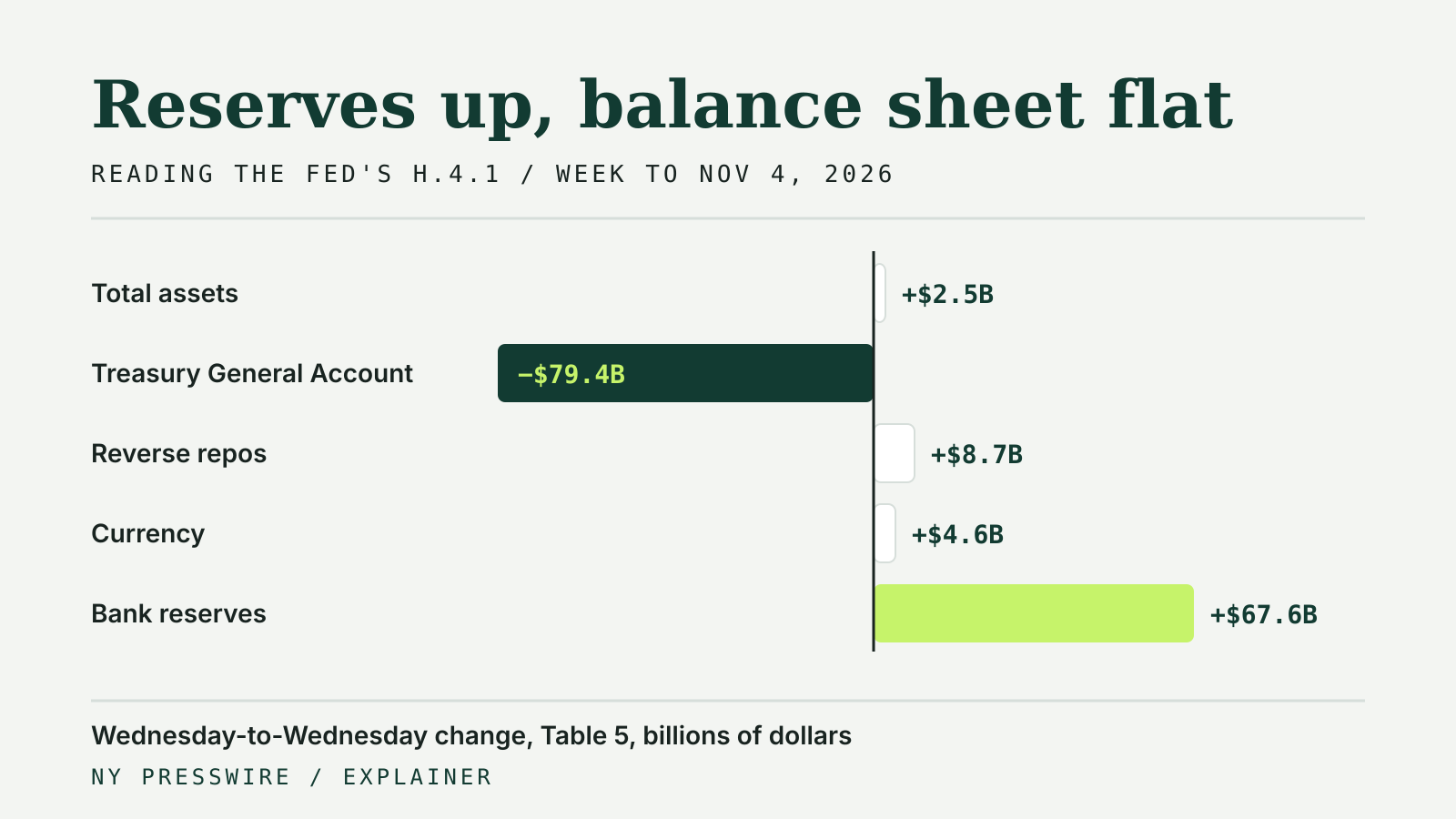
Bar chart of H.4.1 Table 5 changes from October 28 to November 4, 2026: total assets up $2.5 billion, Treasury General Account down $79.4 billion, reverse repos up $8.7 billion, currency up $4.6 billion and bank reserves up $67.6 billion
Federal Reserve ·

How to Read the Fed's H.4.1 Balance Sheet Release

Which H.4.1 table answers which question, worked through Nov 5, 2026: reserves up $67.6B as the TGA fell.
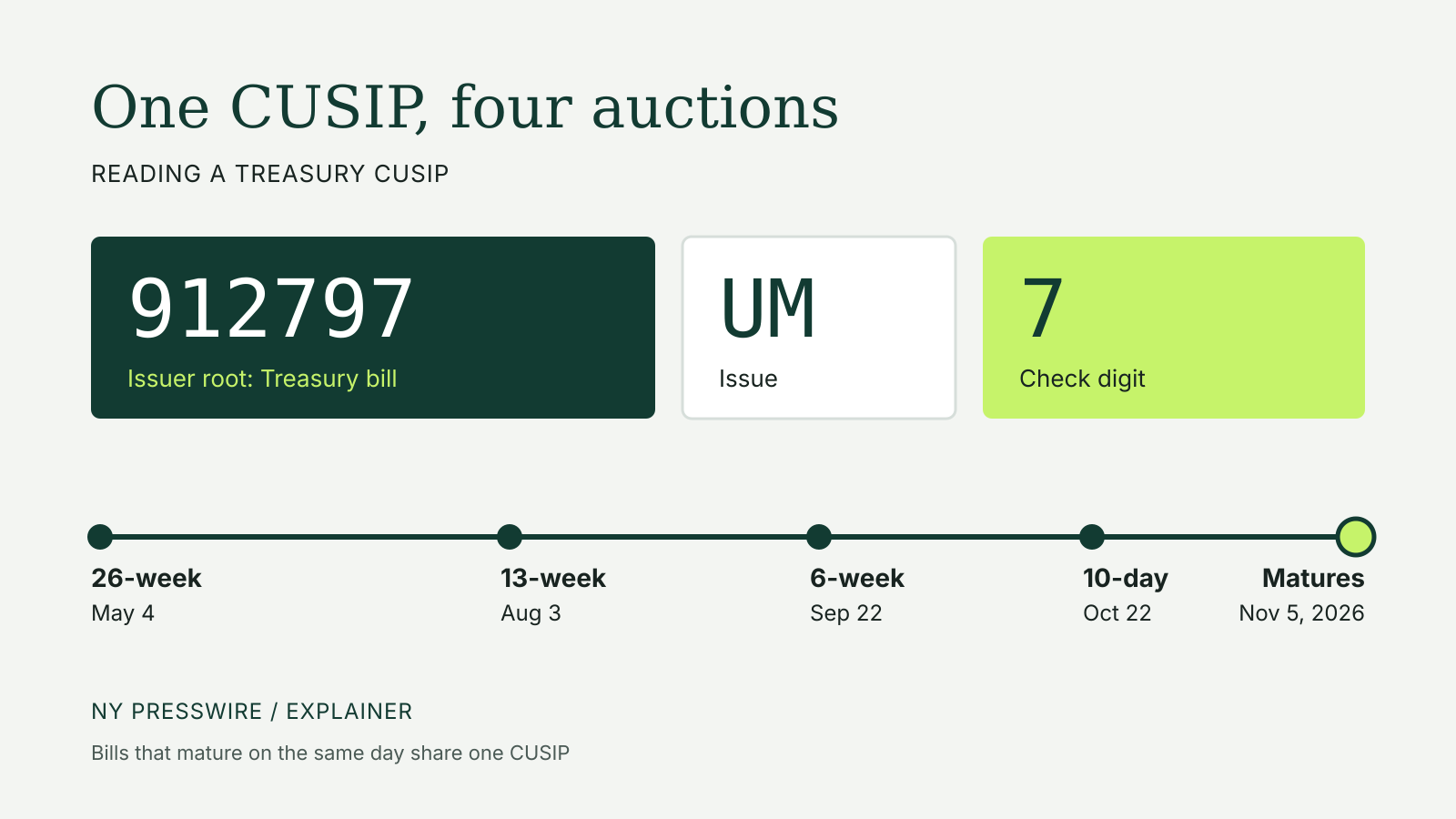
Treasury bill CUSIP 912797UM7 split into its issuer root 912797, issue code UM and check digit 7, above a timeline of the four auctions at which the bill was sold before it matured on November 5, 2026
Treasury ·

Treasury CUSIP Meaning: What 912797 and 91282C Tell You

What the 912797, 91282C and 912810 roots mean, and why one T-bill CUSIP is sold at several auctions.
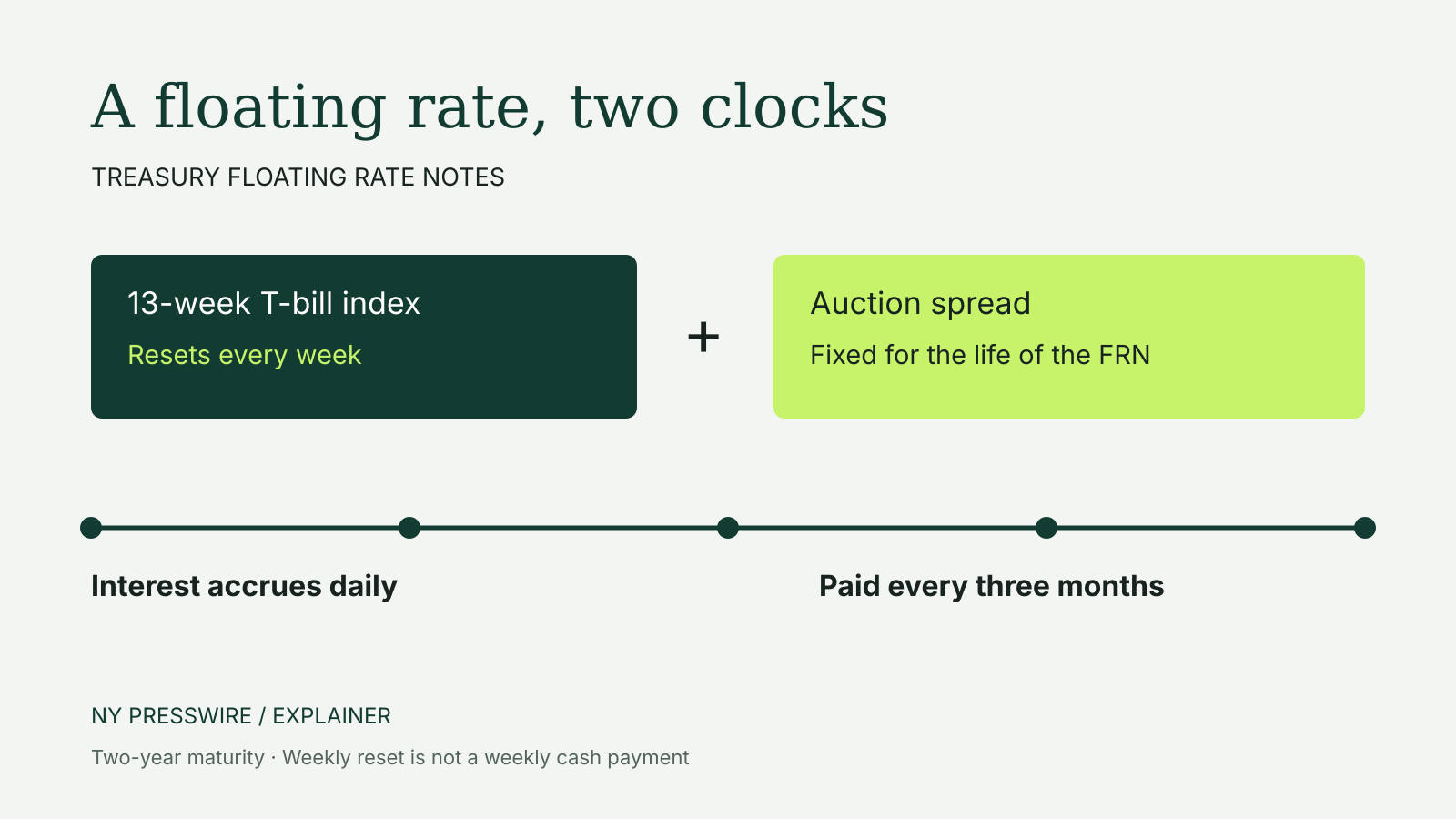
Treasury FRN rate equals a weekly-resetting 13-week Treasury bill index plus a fixed auction spread; interest accrues daily and is paid quarterly
Treasury ·

Treasury Floating Rate Notes: Two Clocks for Interest

How a Treasury FRN combines a weekly-resetting index, a fixed spread and quarterly interest payments.
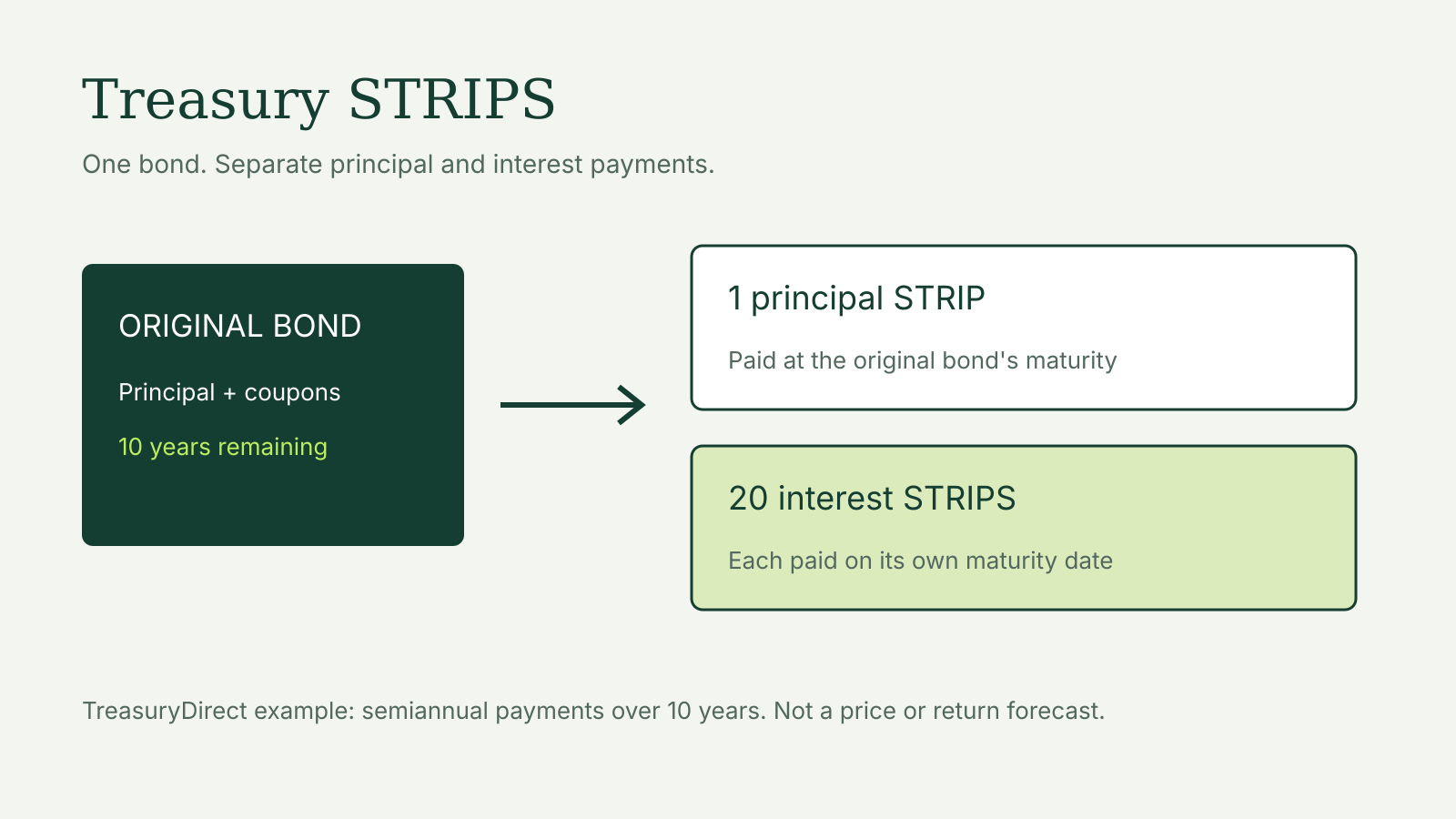
A Treasury bond with ten years remaining separates into one principal STRIP and twenty interest STRIPS
Treasuries ·

Treasury STRIPS explained: separating bond payments

How Treasury STRIPS turn principal and interest into separate securities, with one payment per component.
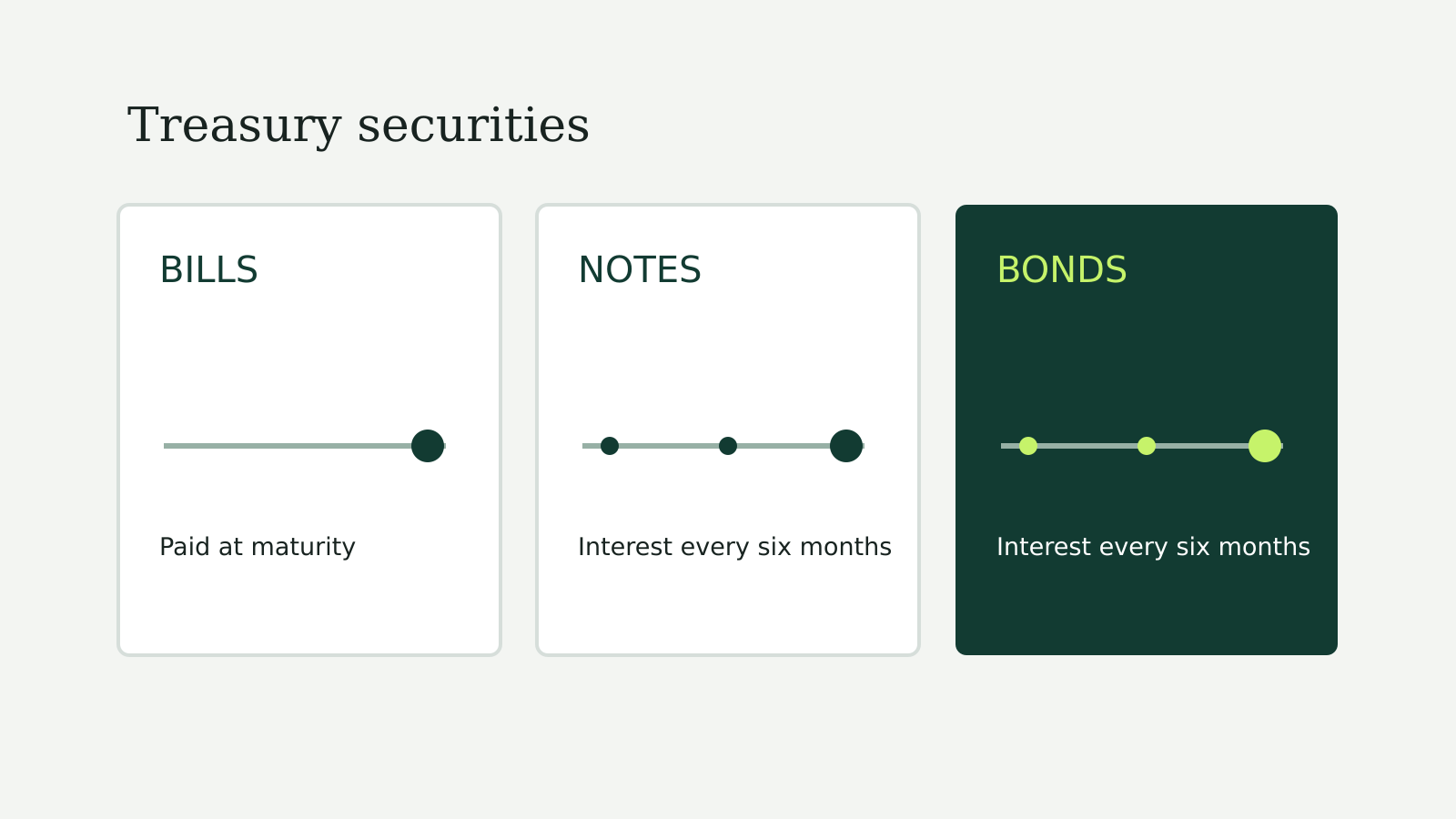
Three panels comparing Treasury bills, paid at maturity, with notes and bonds, which pay interest every six months.
Treasury ·

Treasury Bills vs Notes vs Bonds: Terms and Payments

Compare Treasury terms, interest payments and what happens at maturity.
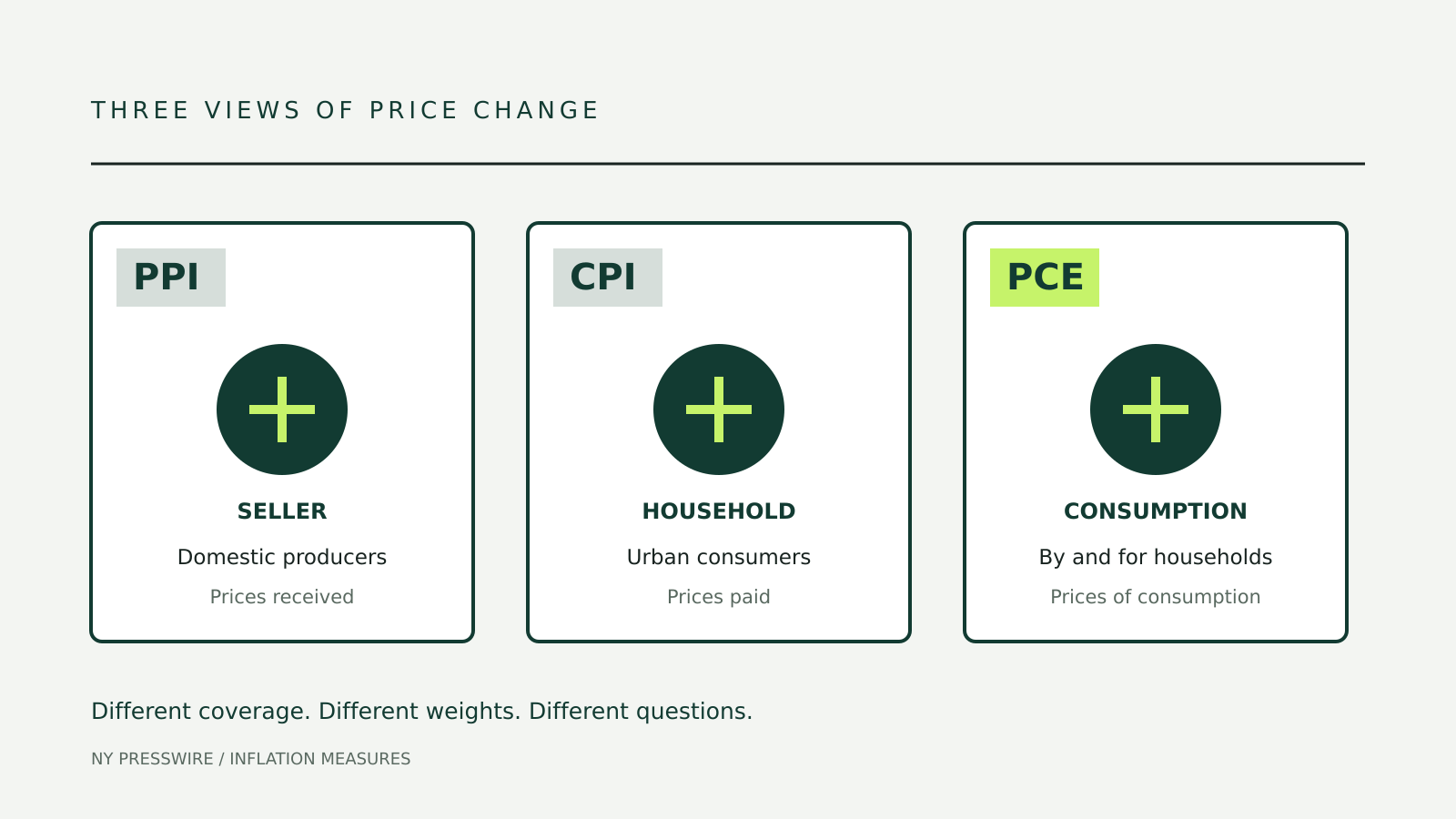
Three labeled panels comparing PPI producer prices, CPI household purchases and PCE consumption prices.
inflation ·

PPI vs CPI vs PCE: Three Views of US Inflation

Producer prices, household purchases and broader consumption measure different parts of US inflation.
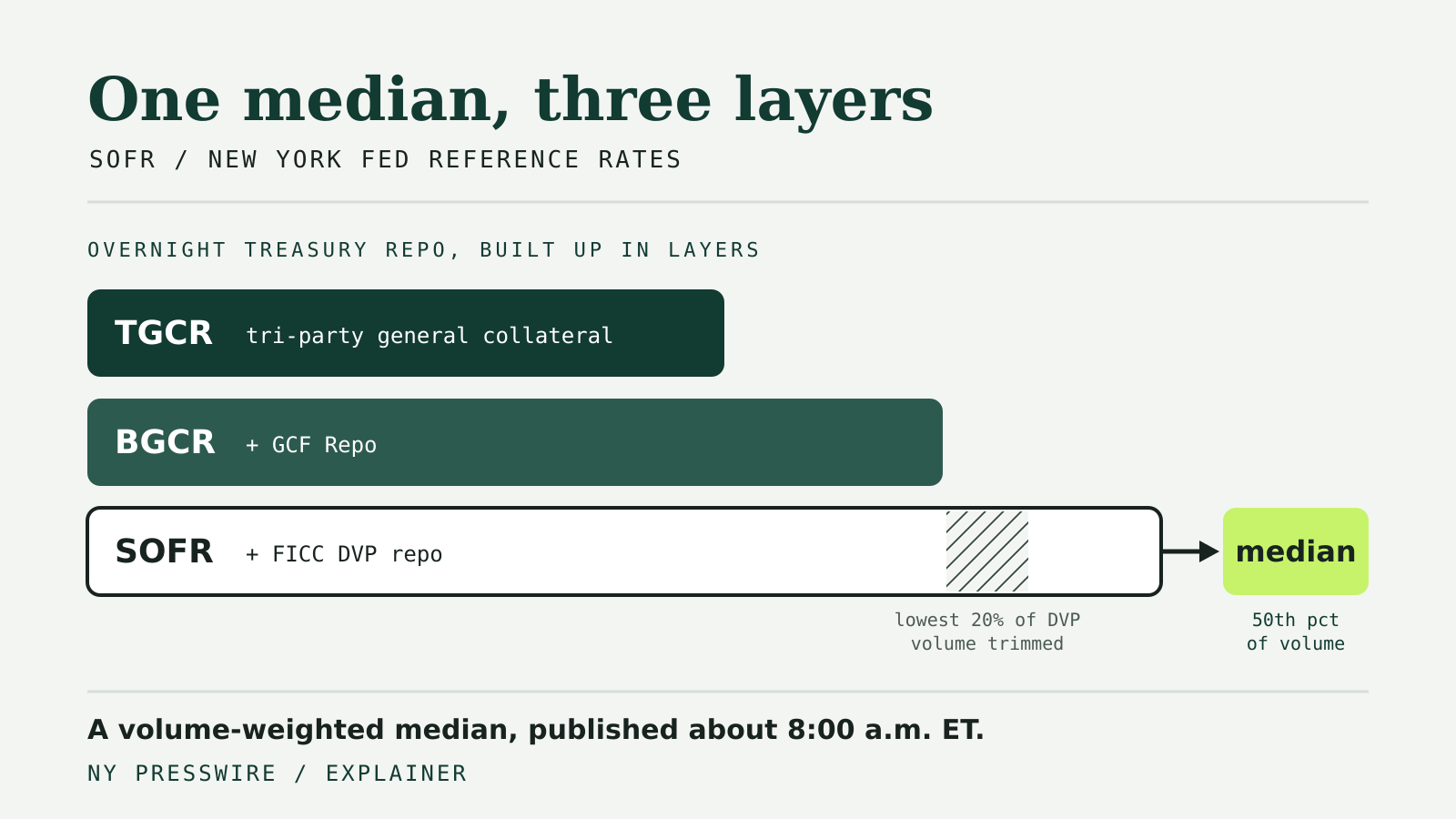
Nested bars showing TGCR, BGCR and SOFR repo data layers, with the lowest 20 percent of DVP volume trimmed before a volume-weighted median is taken
SOFR ·

What Is SOFR? How the New York Fed Calculates It

Where SOFR comes from, how repo trades become a volume-weighted median, and how the averages and index work.
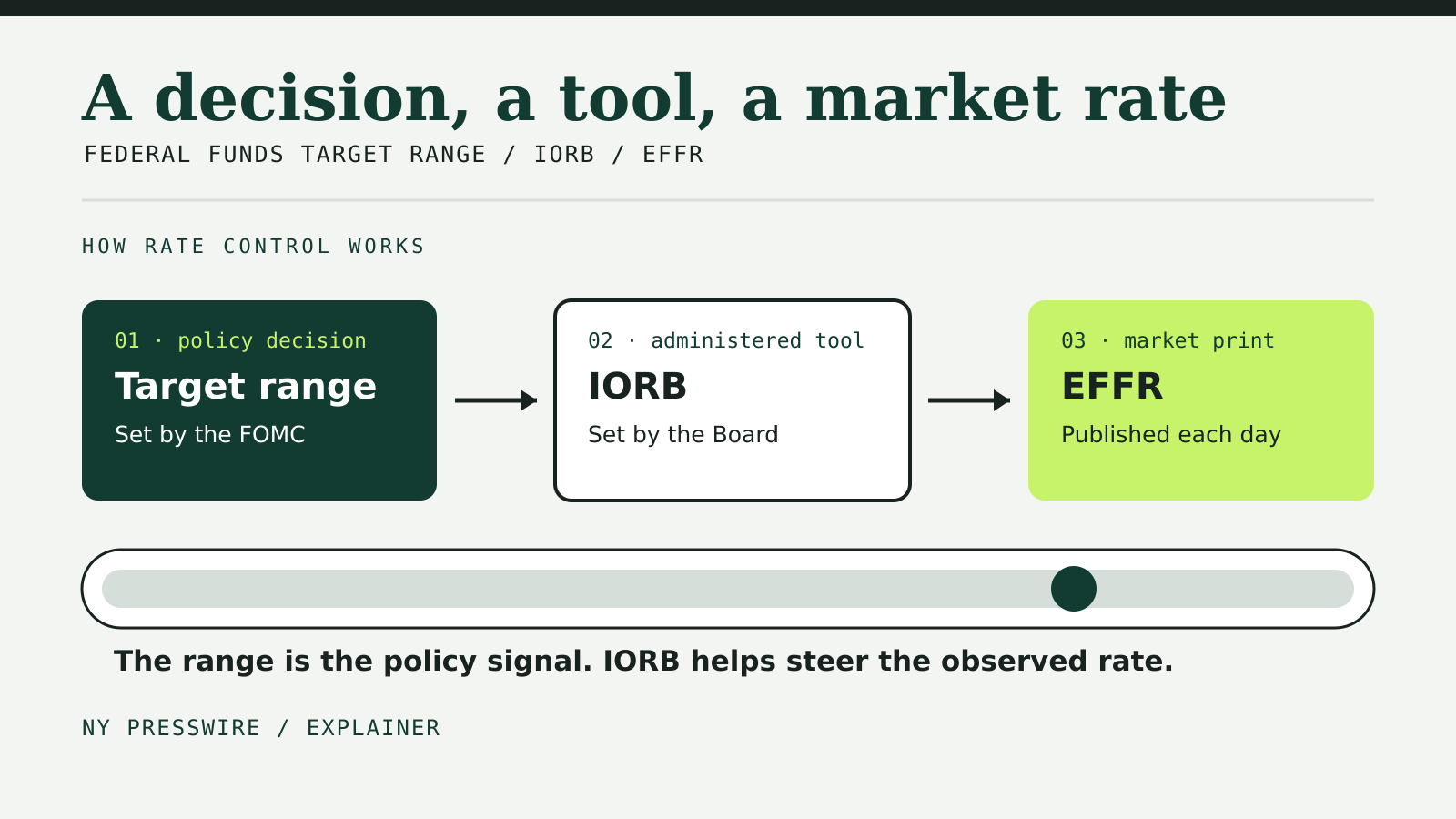
Diagram showing the relationship between the FOMC target range, the Federal Reserve's IORB tool and the daily effective federal funds rate, with a market-rate band below.
Federal funds rate ·

Federal Funds Target Range vs Effective Rate

The target range is the Fed's policy signal, IORB is an implementation tool and EFFR is the observed market rate.
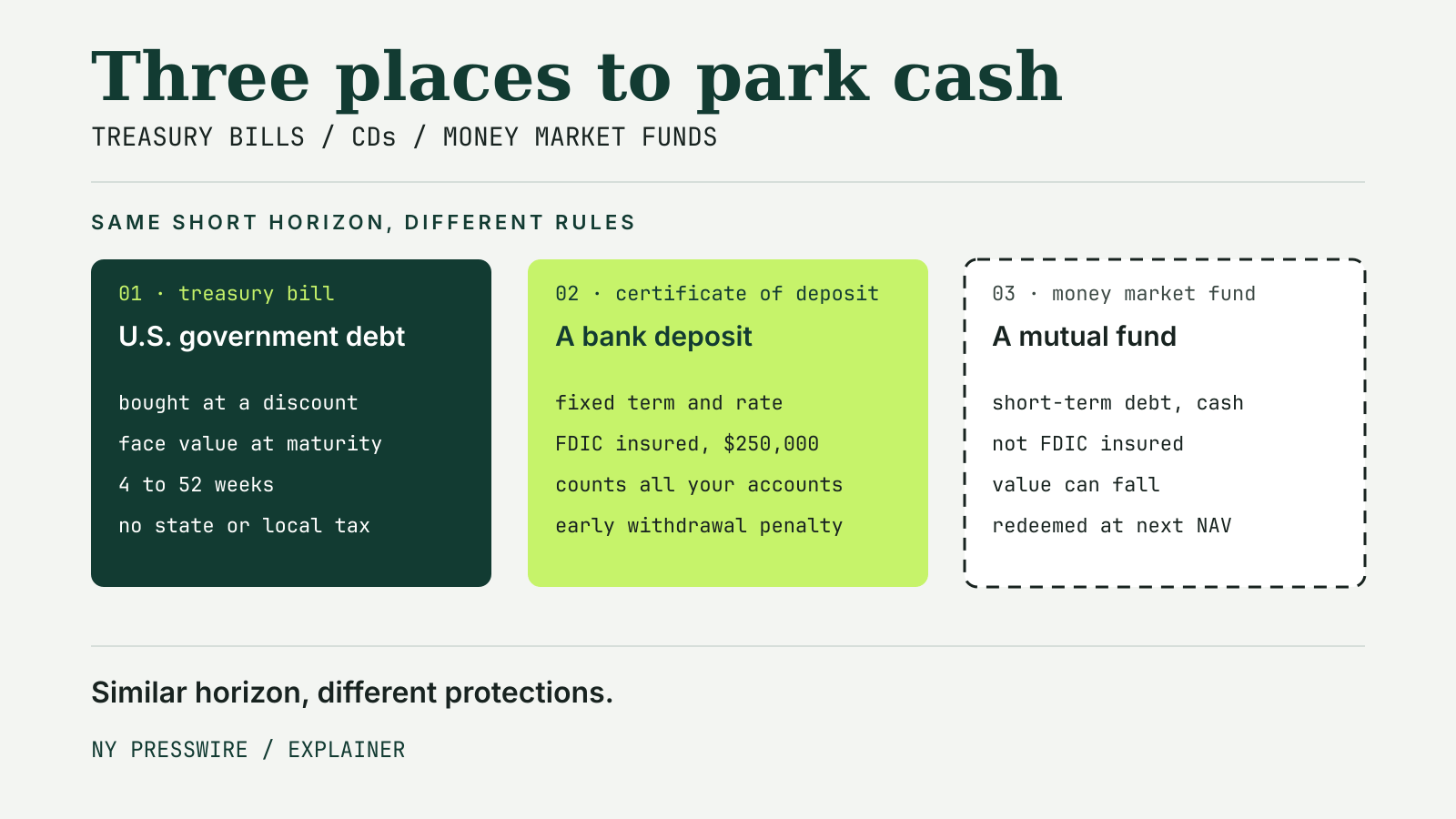
Three cards comparing a Treasury bill (U.S. government debt bought at a discount, 4 to 52 weeks, no state or local tax), a certificate of deposit (bank deposit, FDIC insured to $250,000, early withdrawal penalty) and a money market fund (mutual fund, not FDIC insured, value can fall).
Treasury bills ·

Treasury Bills vs CDs vs Money Market Funds: How Each One Works

A Treasury bill is government debt, a CD is a bank deposit and a money market fund is a fund. Here is what that changes.
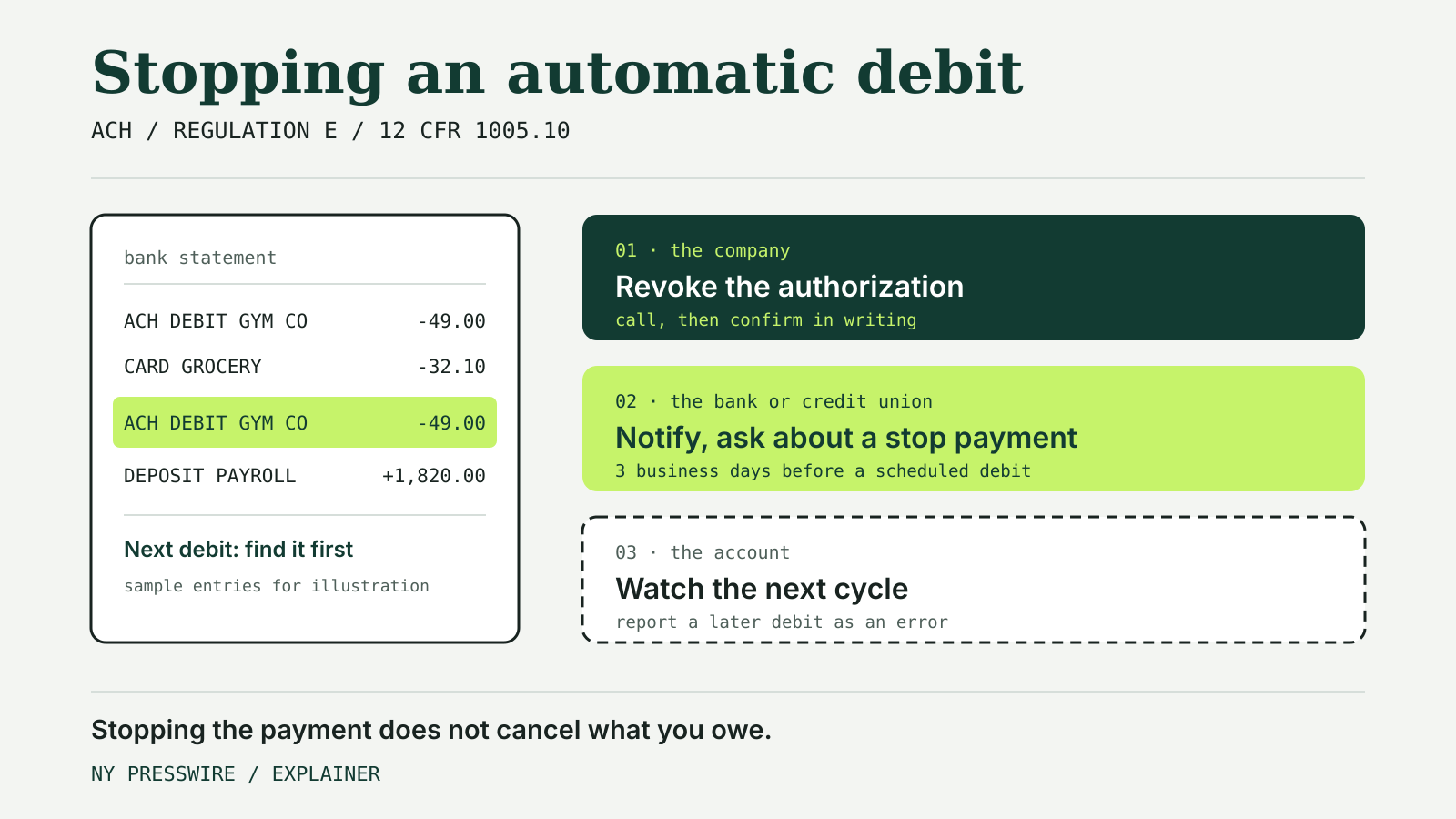
A sample bank statement with a recurring ACH debit highlighted, next to three steps for stopping it: revoke the authorization with the company, notify the bank or credit union about a stop payment at least three business days before a scheduled debit, and watch the next cycle
ACH ·

Stopping ACH Automatic Payments: A Step-by-Step Guide

A practical CFPB-based guide to revoking ACH authorization, notifying your bank and keeping the debt separate.
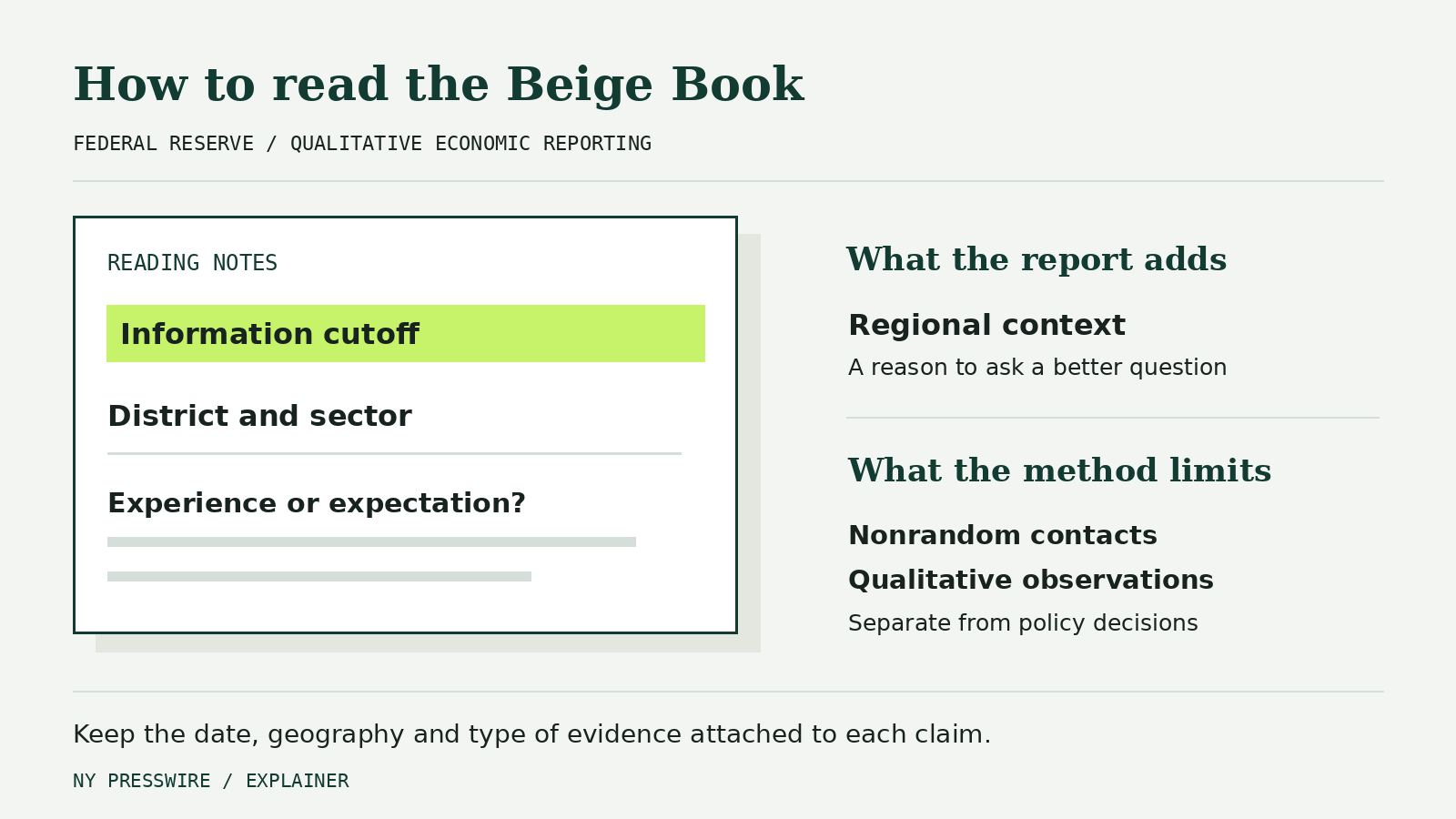
Reading-note sheet highlighting the information cutoff, District and sector, and experience versus expectation, beside the report's regional context and nonrandom qualitative method.
Federal Reserve ·

What Is the Fed Beige Book? How to Read Its Evidence

Read the Beige Book as regional evidence with dates, context and clear limits.
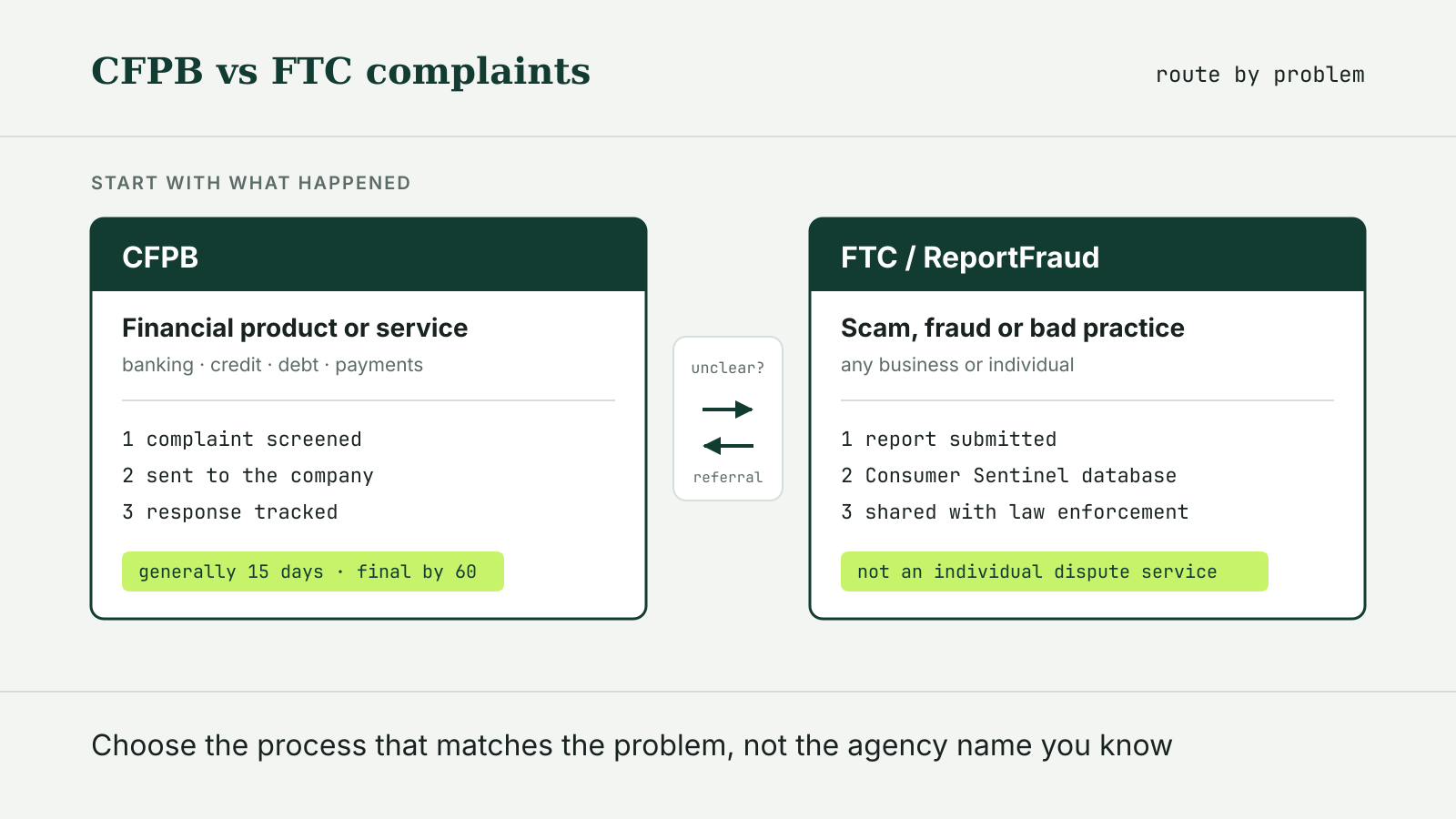
Comparison diagram routing financial product and service complaints to the CFPB company-response process, and scam, fraud or bad-practice reports to the FTC Consumer Sentinel database, with referral between the two
CFPB ·

CFPB vs FTC Complaints: Where to Report a Problem

Use the CFPB for financial product complaints; use ReportFraud for scams and bad business practices.
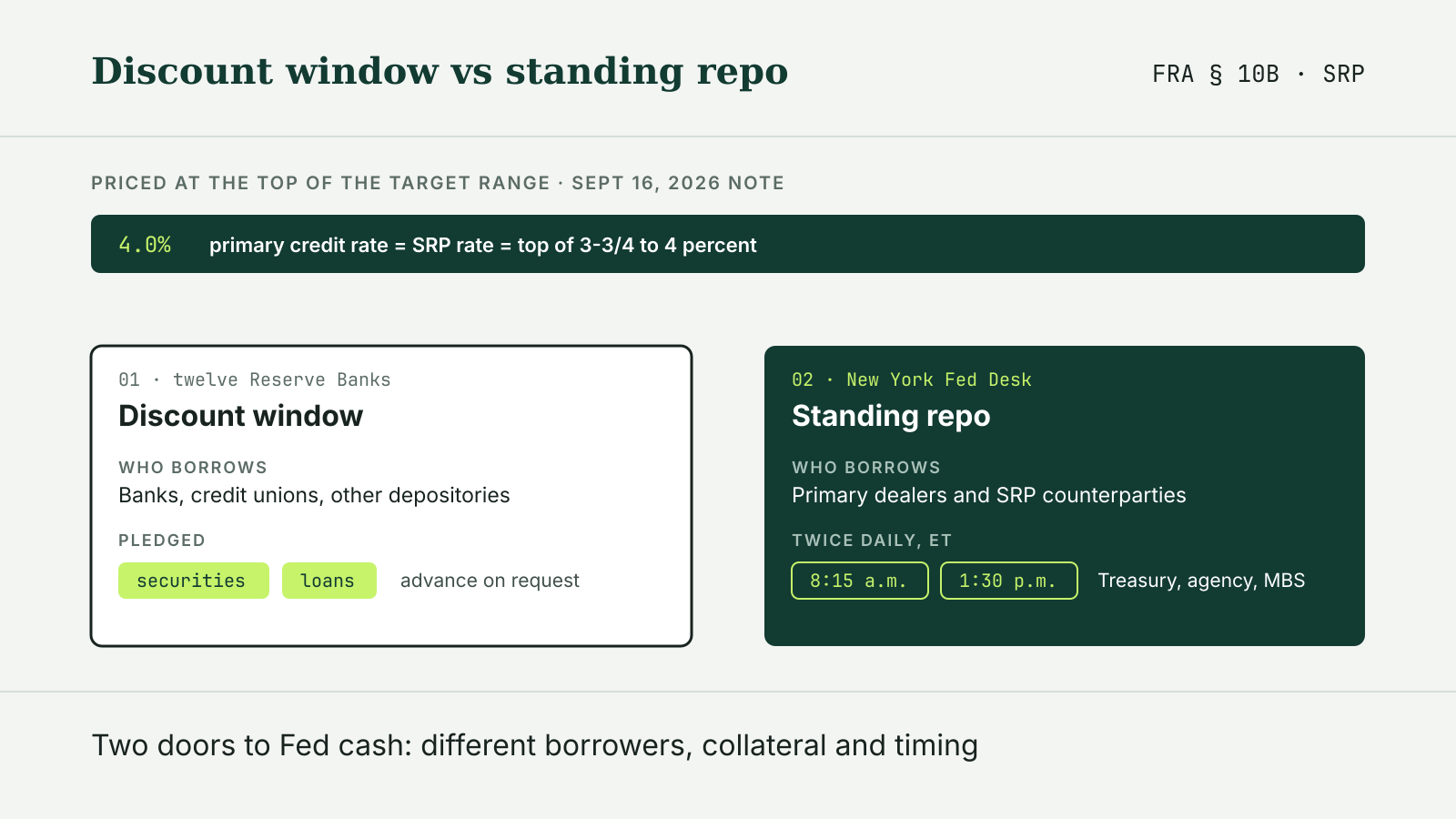
Comparison of the Federal Reserve discount window and standing repo operations: who borrows, what collateral is pledged and the two daily operation times, under a band showing both rates at 4.0 percent in the September 16, 2026 implementation note
Federal Reserve ·

Discount Window vs Standing Repo Facility: The Fed's Two Backstops

Who can borrow, what they pledge and how each is priced: the Fed's discount window and standing repo side by side.
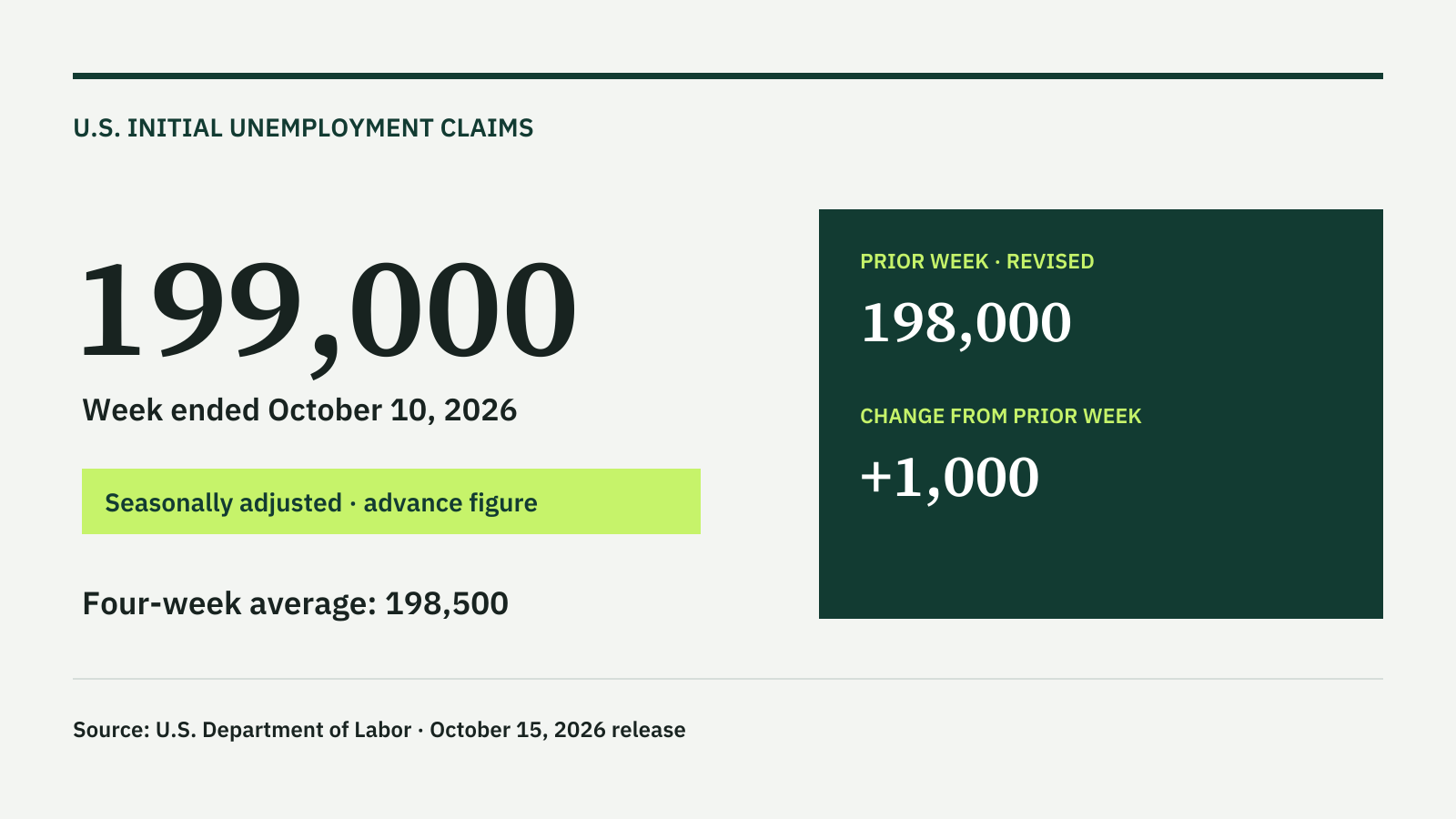
U.S. seasonally adjusted initial claims were 199,000 for the week ended October 10, up 1,000 from the revised prior week.
Jobless claims ·

U.S. Initial Jobless Claims Rise to 199,000

The October 15 release puts initial claims 1,000 above the revised prior week; continuing claims cover an earlier week.
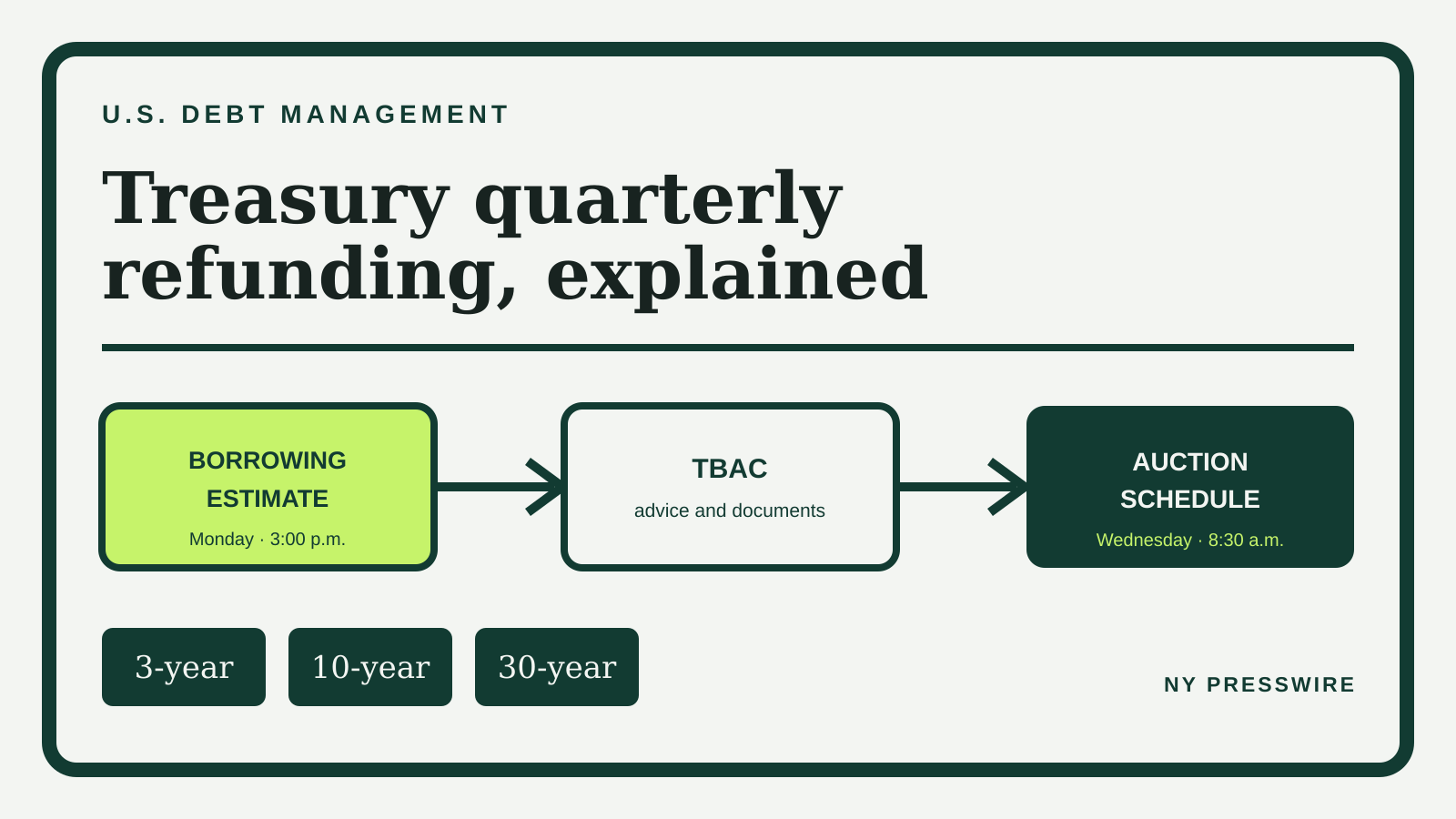
Illustrated flow from Treasury borrowing estimates through TBAC documents to the 3-year, 10-year and 30-year auction schedule.
Treasury ·

How Treasury Quarterly Refunding Works

A practical guide to Treasury borrowing estimates, TBAC materials and the auction package.
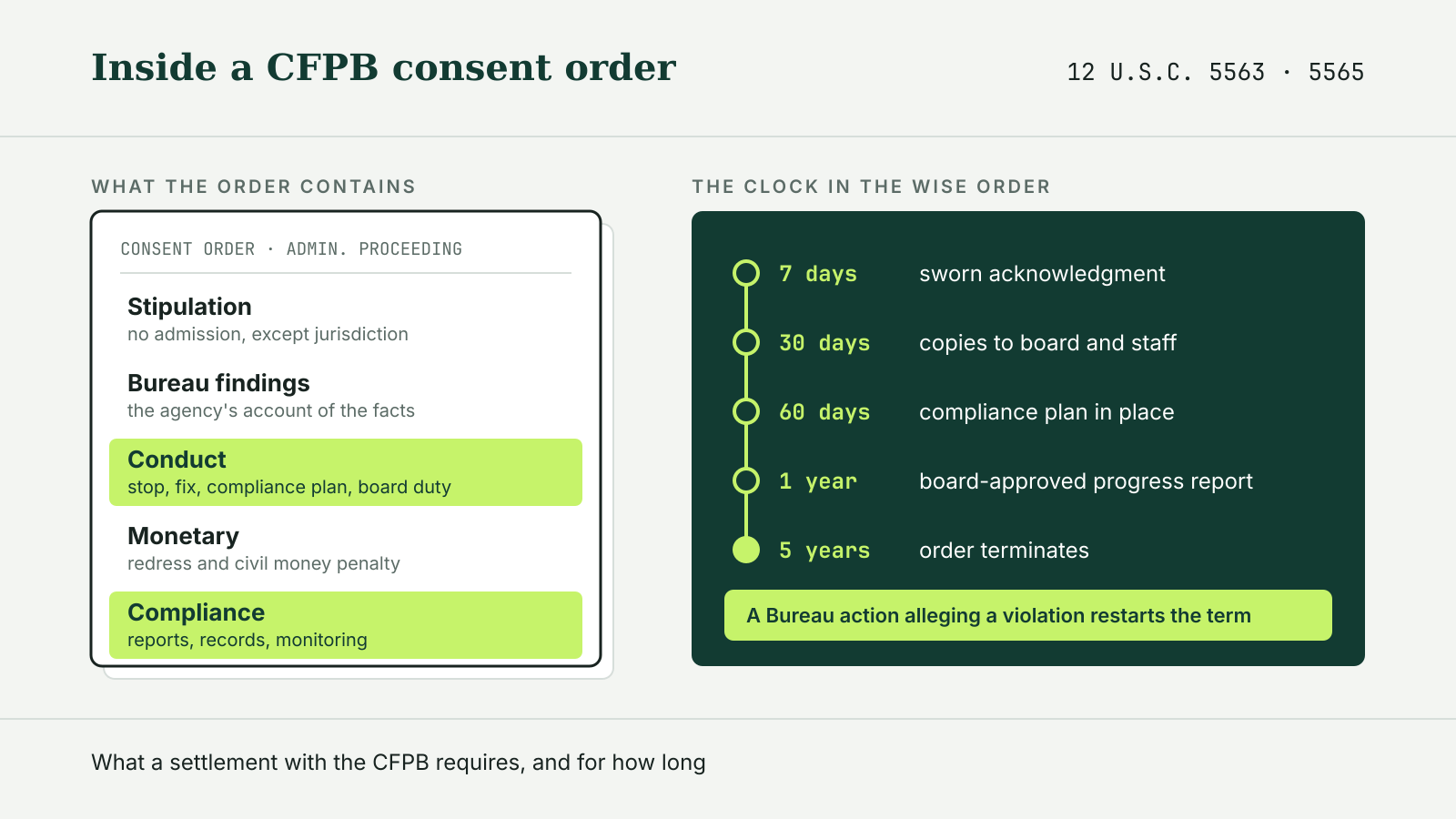
Diagram of a CFPB consent order's sections and the deadlines in the Wise order, from a 7-day acknowledgment to a five-year term
CFPB ·

What Is a CFPB Consent Order? Terms and How Long It Lasts

What a CFPB consent order requires of a company's board and compliance team, and when it ends.
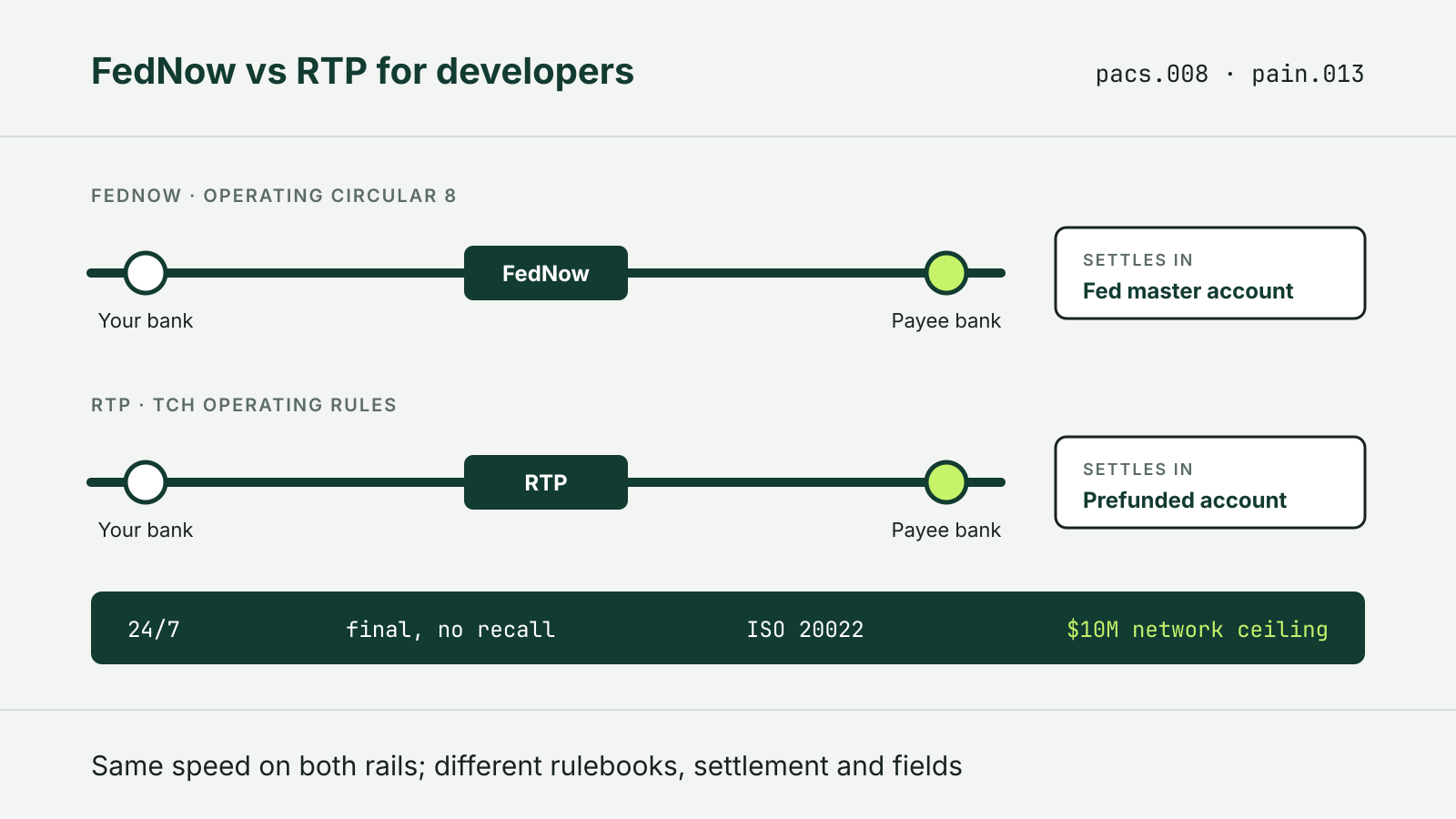
Diagram of two parallel payment rails, FedNow settling in a Federal Reserve master account and RTP settling in a prefunded account, with shared traits: 24/7, final, ISO 20022 and a $10 million network ceiling
FedNow ·

FedNow vs RTP for Developers: Two Instant Rails, Two Rulebooks

FedNow and RTP both settle instantly, 24/7. Their rulebooks, settlement, naming rules and fees differ.
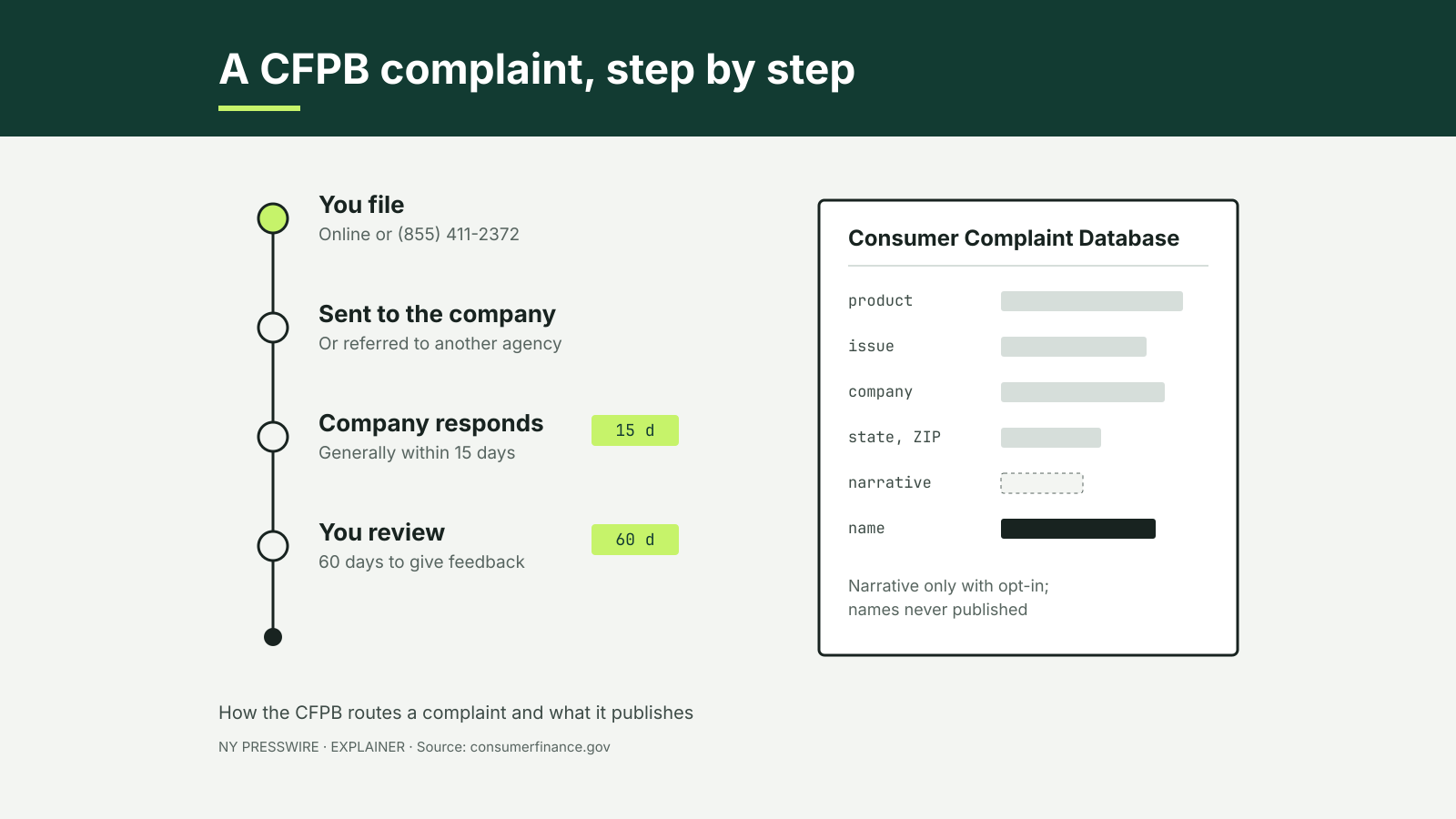
Timeline of a CFPB complaint from filing to company response within 15 days and 60 days for consumer feedback, beside the fields published in the Consumer Complaint Database
CFPB ·

How to File a CFPB Complaint, and What Happens Next

Filing steps, response deadlines, what the public database shows and how complaints differ from enforcement.
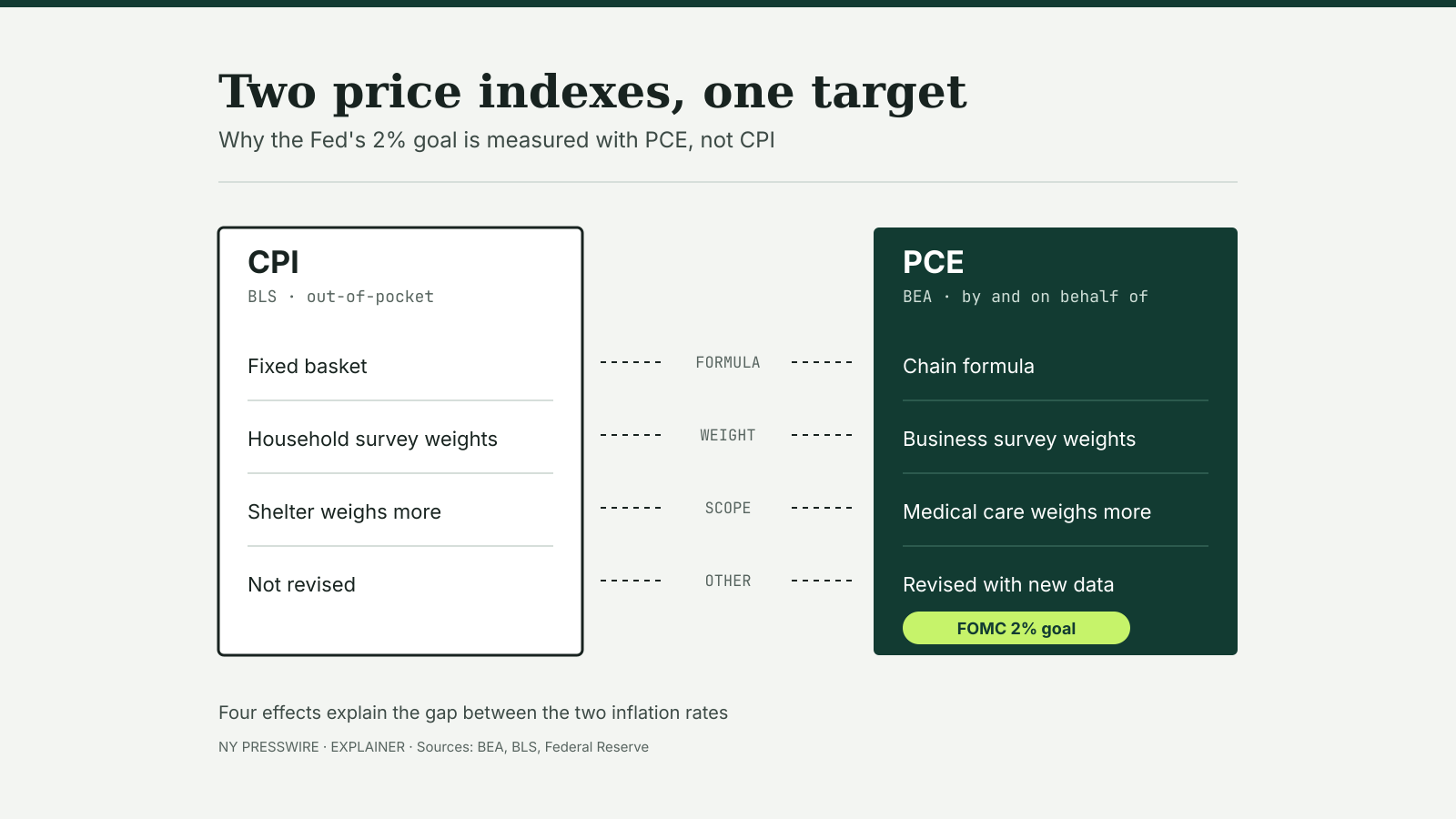
Diagram comparing the CPI and the PCE price index across formula, weight, scope and other effects, with PCE marked as the measure for the FOMC's 2% goal
PCE ·

PCE vs CPI: Why the Fed Targets a Different Inflation Gauge

Formula, weights and scope explain why PCE inflation usually runs below CPI, and why the Fed's 2% goal uses PCE.

Three employment bars inside a survey ring
BLS ·

Establishment vs household survey: US jobs data

The payroll and household surveys measure different populations, so monthly estimates can diverge.
CPI ·

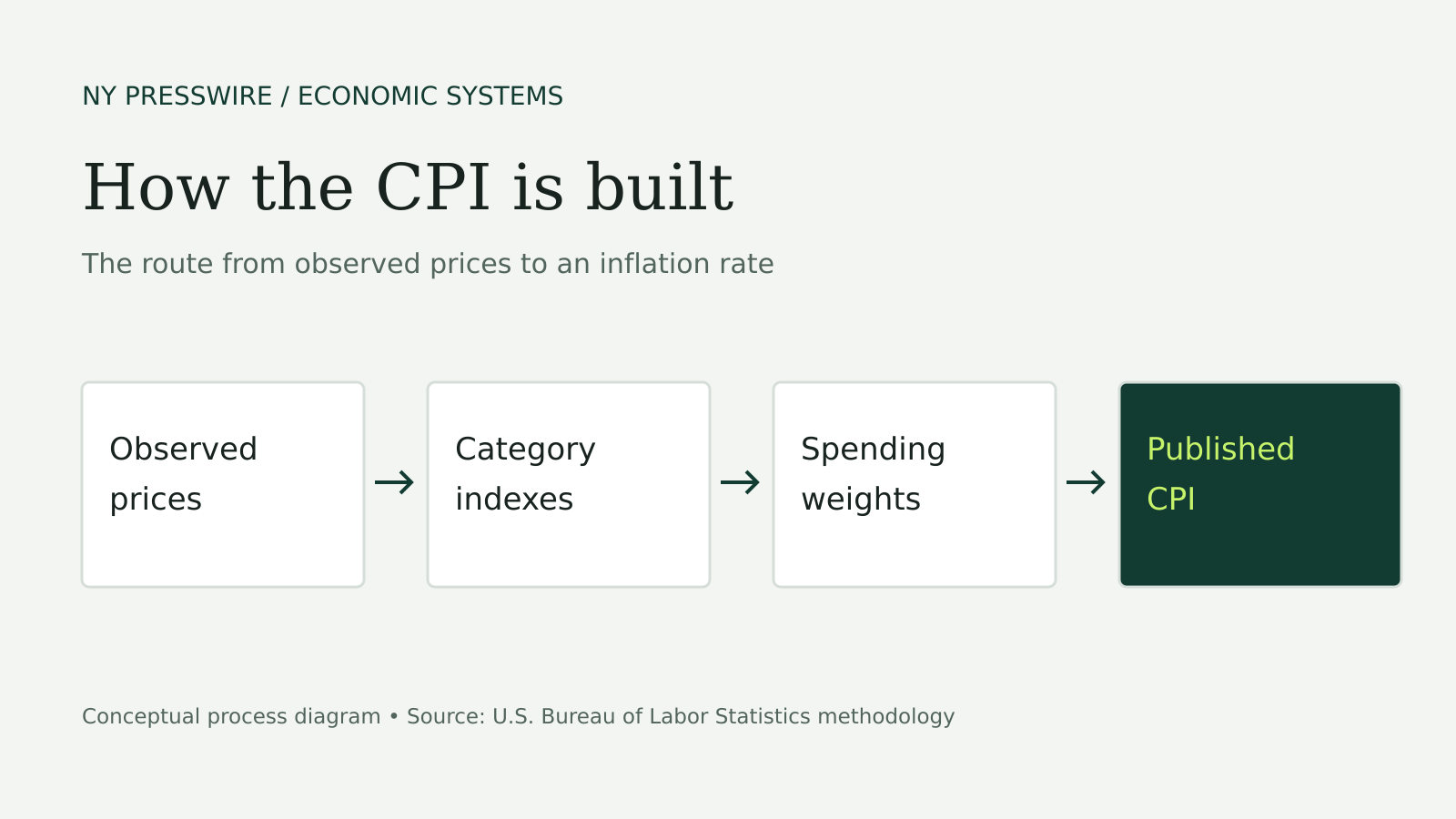
How CPI Is Calculated: Prices, Weights and Inflation

How sampled prices and household spending weights become the monthly US Consumer Price Index.
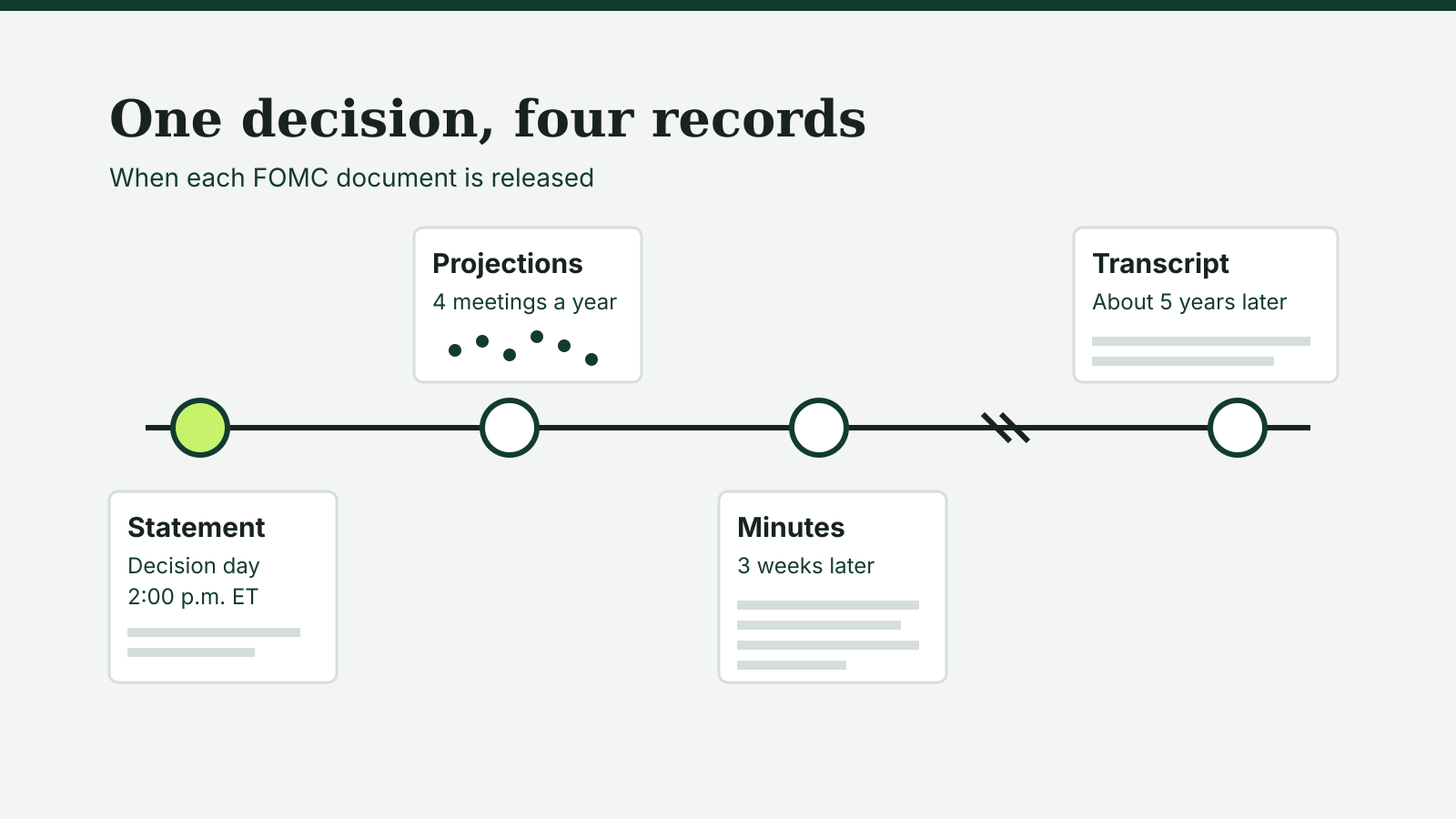
Timeline of FOMC documents: the statement on decision day at 2:00 p.m., projections at four meetings a year, minutes three weeks later and the transcript about five years later.
Federal Reserve ·

FOMC Statement vs Minutes: What Each Fed Release Tells You

The statement is the decision on the day; the minutes are the debate, released three weeks later.

NY Presswire

What are you looking for?

Search a topic or question