
Crypto
Stablecoins, custody, and the infrastructure behind digital assets.
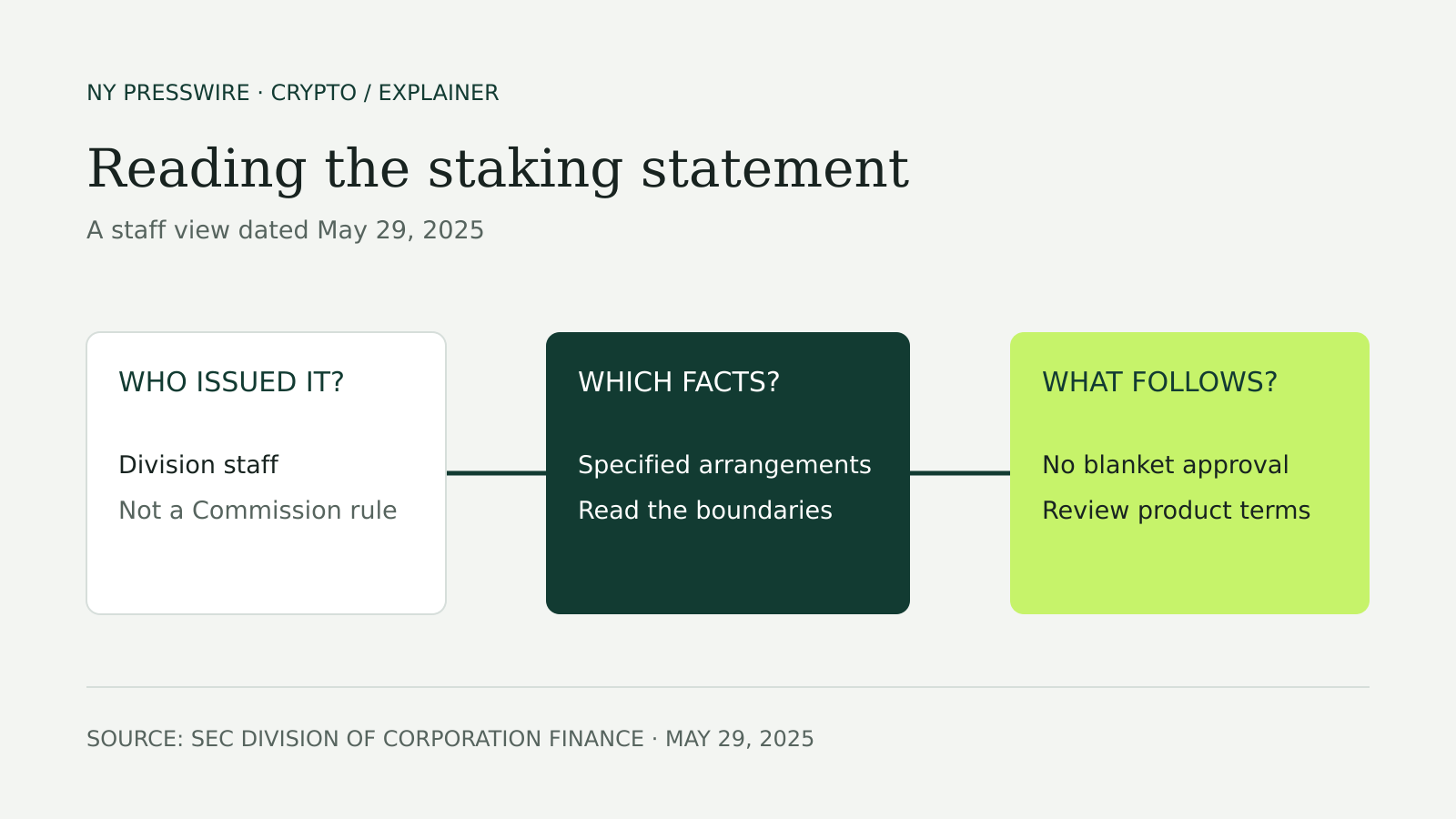
SEC Protocol Staking Statement: Scope and Limits
What the SEC staff's May 2025 staking statement covers, why commissioners disagreed and how to read its limits.
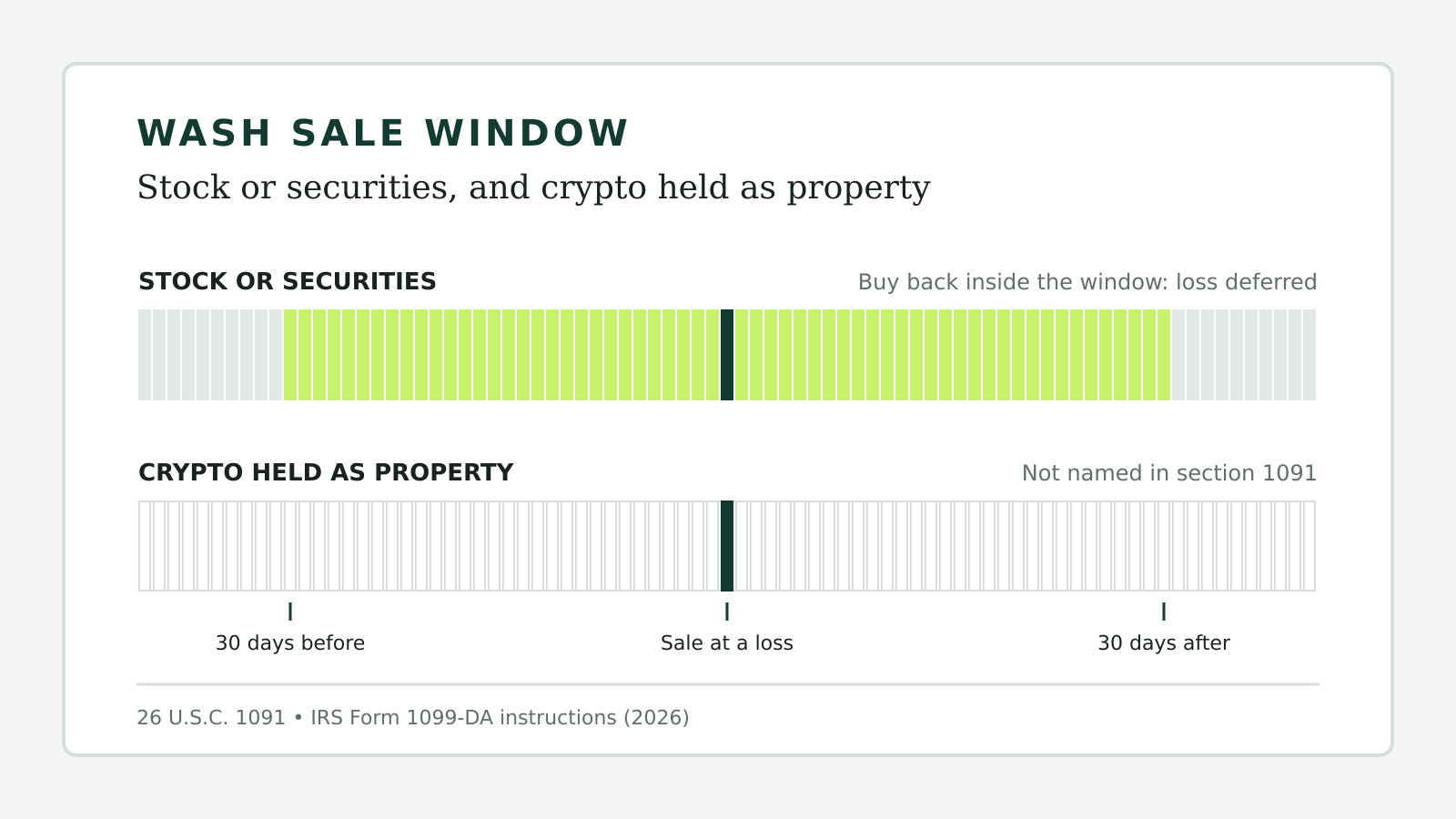
Crypto Wash Sale Rule: Does Section 1091 Apply?
What section 1091 covers, how the IRS classifies digital assets and where Form 1099-DA draws the line.
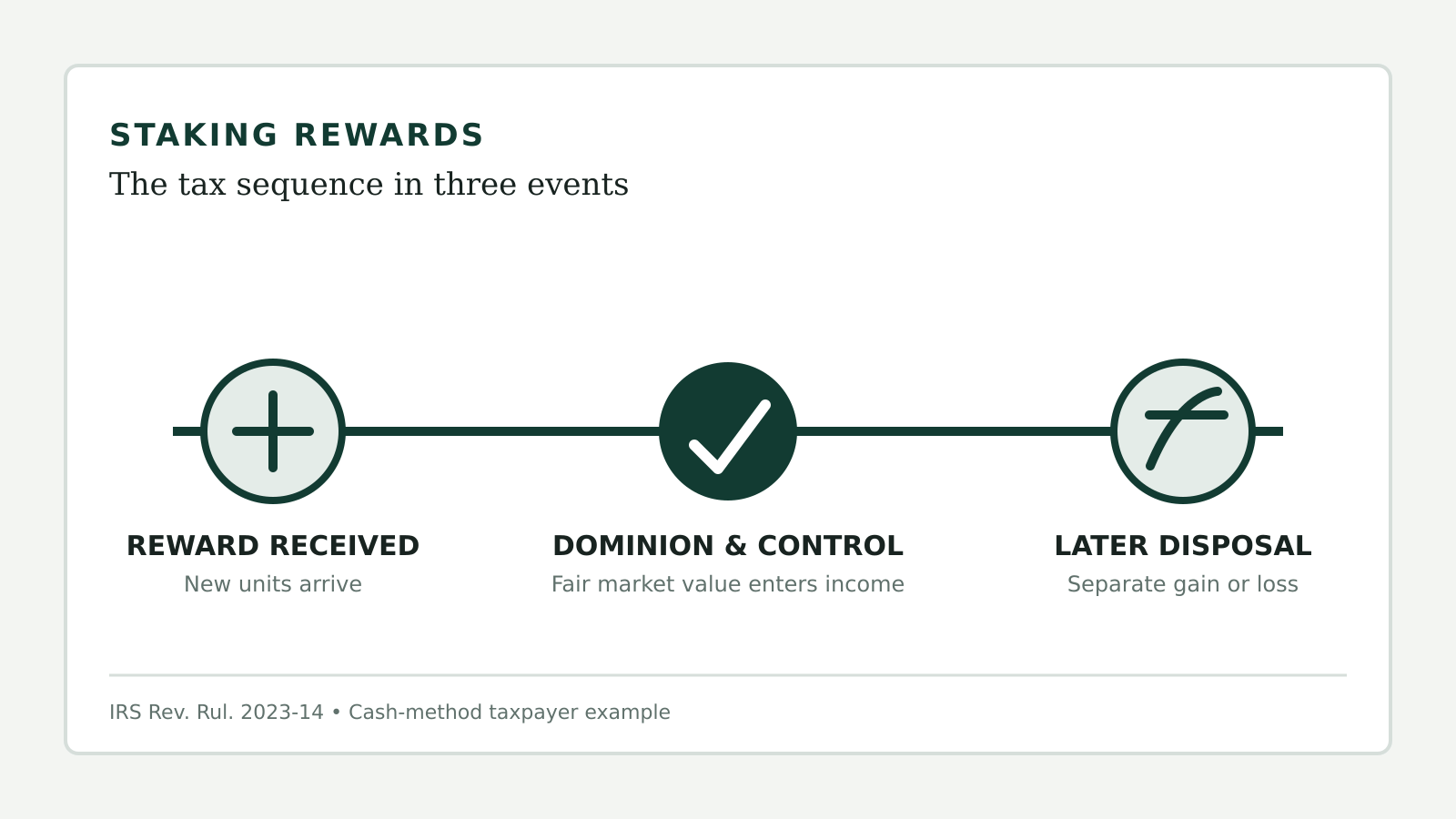
Crypto Staking Rewards Taxes: How the IRS Rule Works
When staking rewards become income, how fair market value sets the amount and why a later disposal is separate.
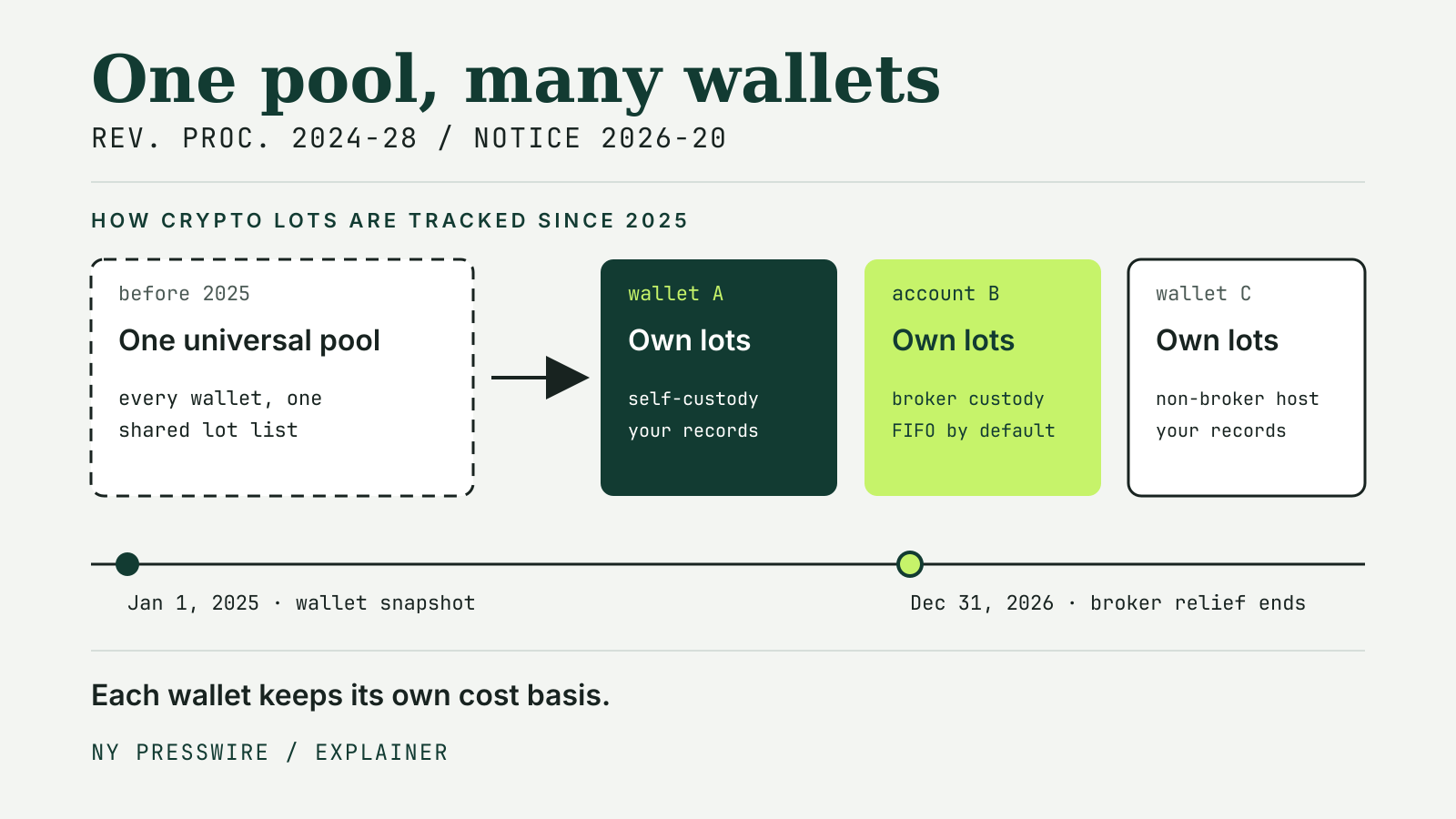
Crypto Cost Basis Wallet by Wallet: The IRS Lot Rules
IRS lot rules now apply per wallet or account: the 2025 snapshot, and broker relief that ends December 31, 2026.
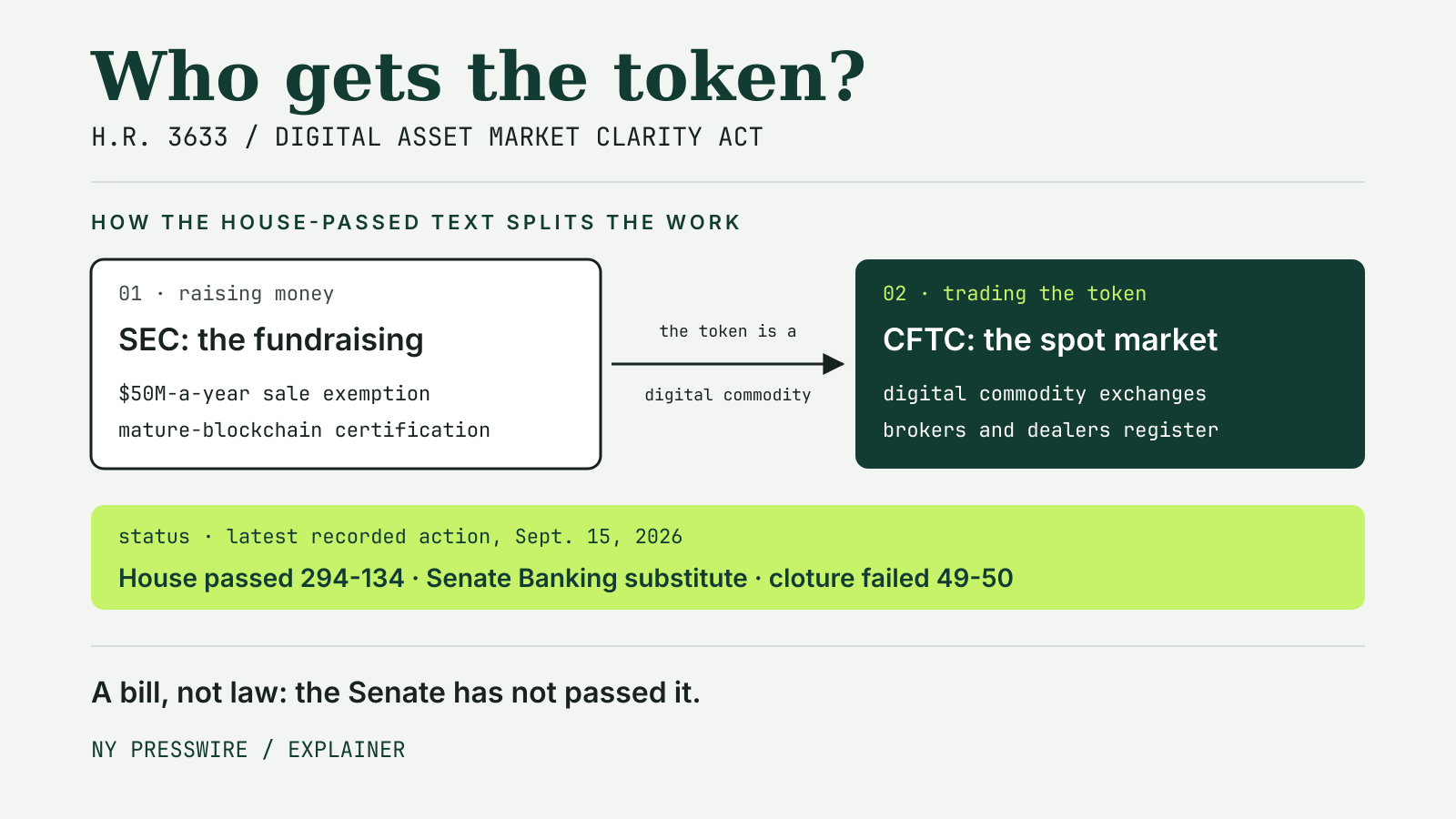
CLARITY Act Crypto Market Structure: How the SEC and CFTC Split Tokens
The House bill gives token fundraising to the SEC and spot trading to the CFTC. The Senate Banking text differs.
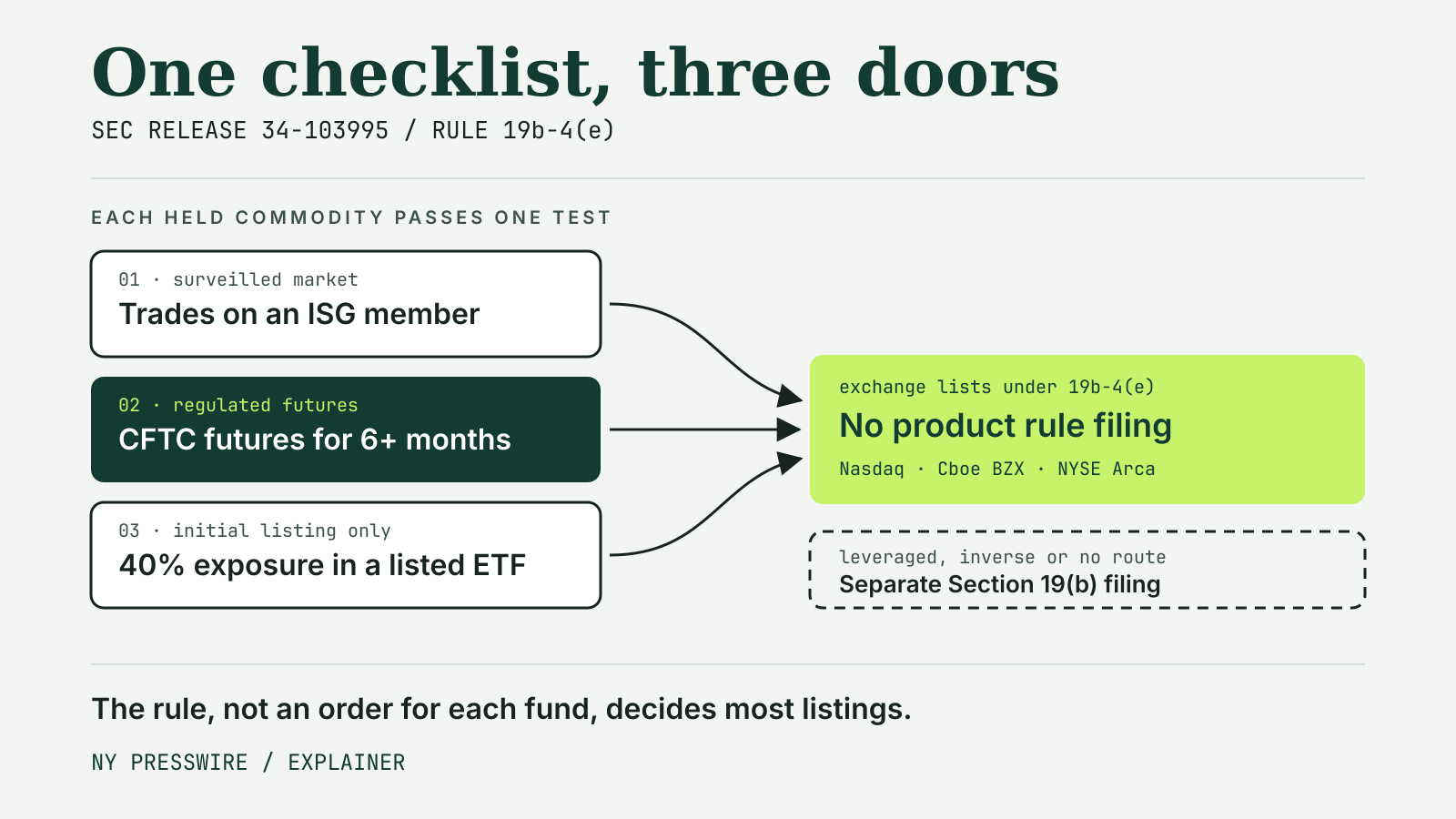
Generic Listing Standards for Crypto ETFs: How the Checklist Works
Since September 2025, exchanges can list qualifying crypto trusts under a published checklist, not a filing per fund.
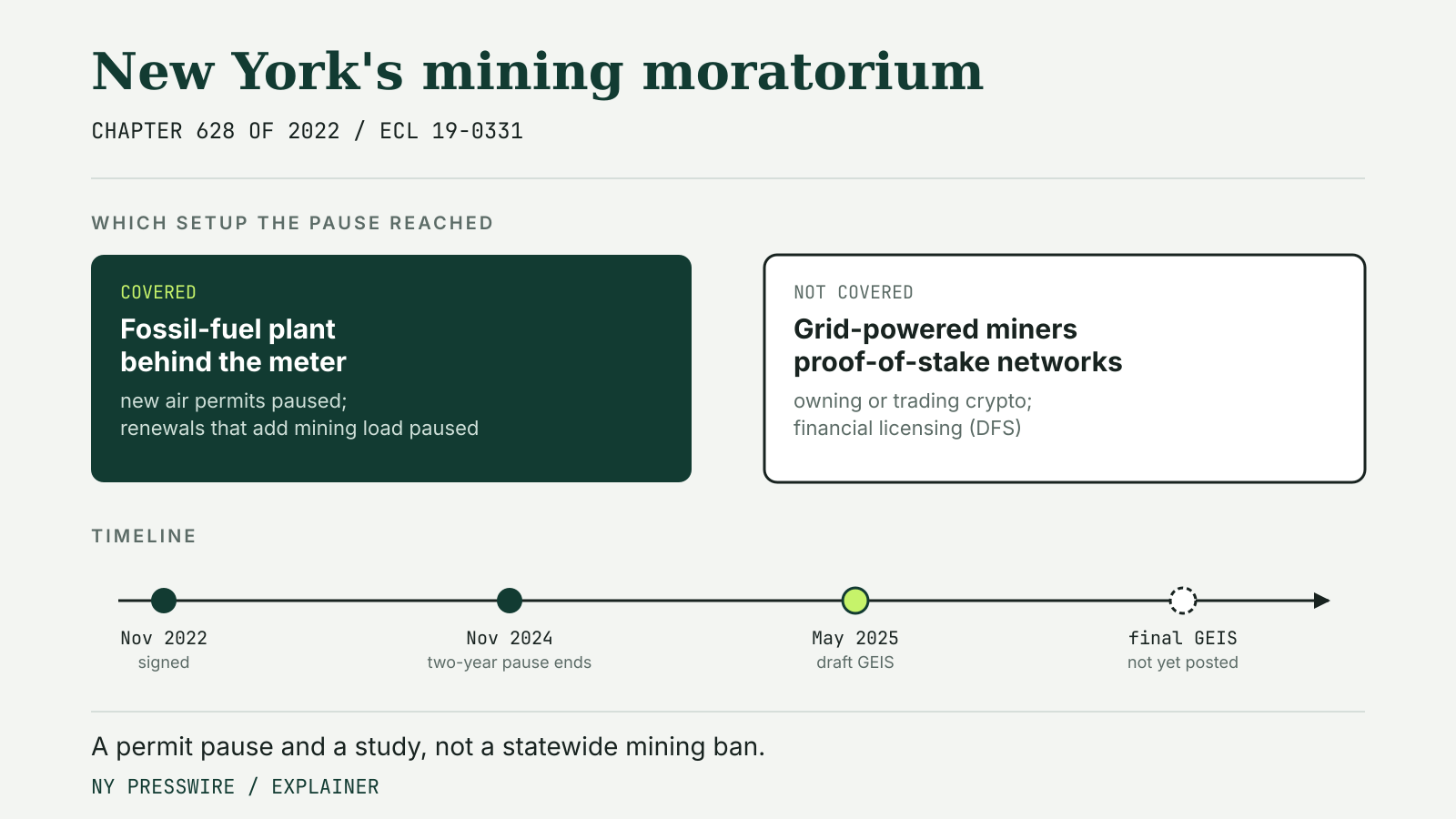
New York's Crypto Mining Moratorium: The 2022 Law and DEC's Study
A two-year air permit pause and a study still in draft: what New York's 2022 mining law covered.
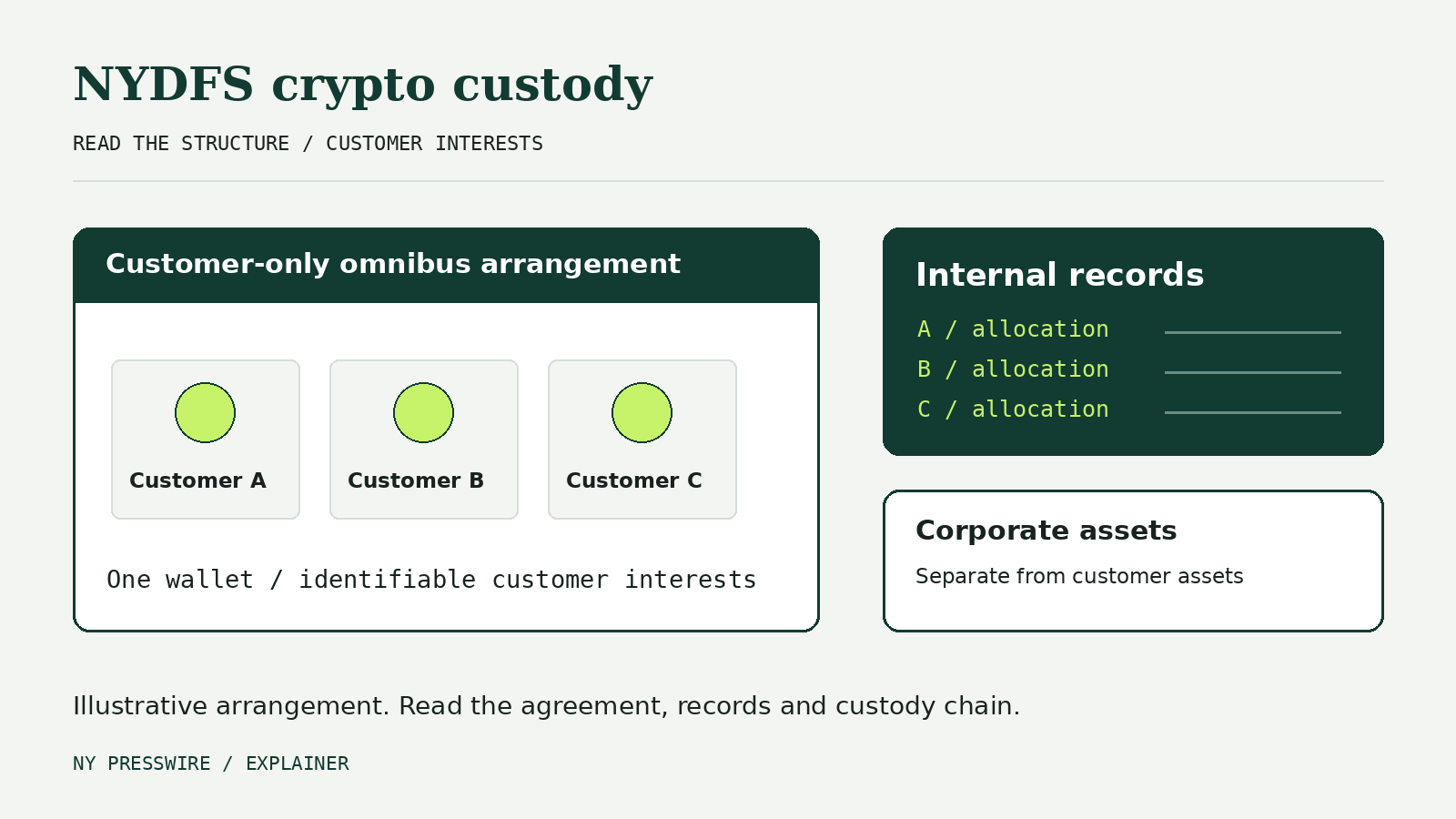
NYDFS Crypto Custody Guidance: Wallets and Agreements
Connect the custody agreement with wallets, customer records and any sub-custodian.
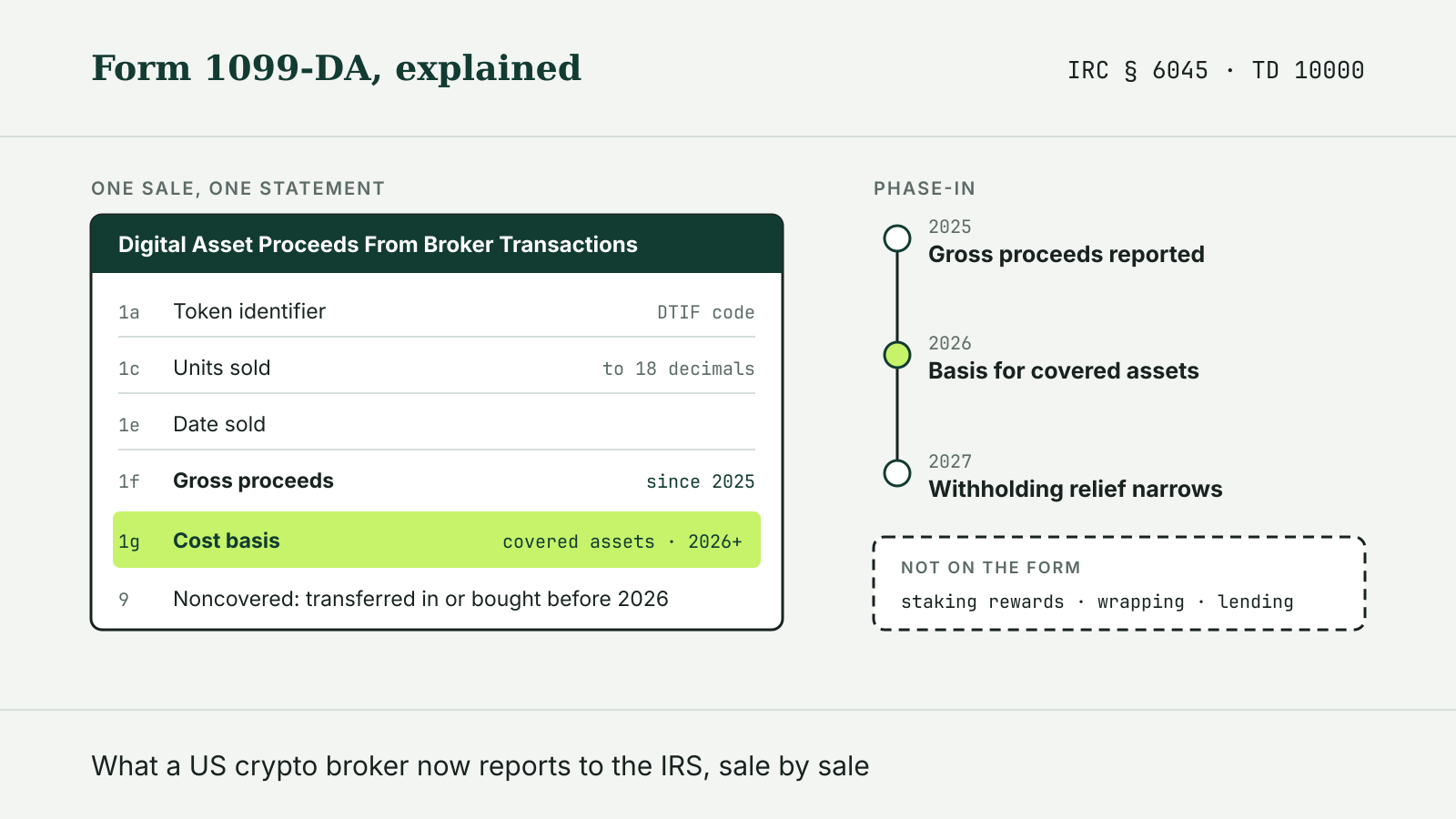
Form 1099-DA Explained: What Crypto Brokers Report to the IRS
Who files Form 1099-DA, what each box reports, why cost basis is often blank and what changes for 2026 sales.
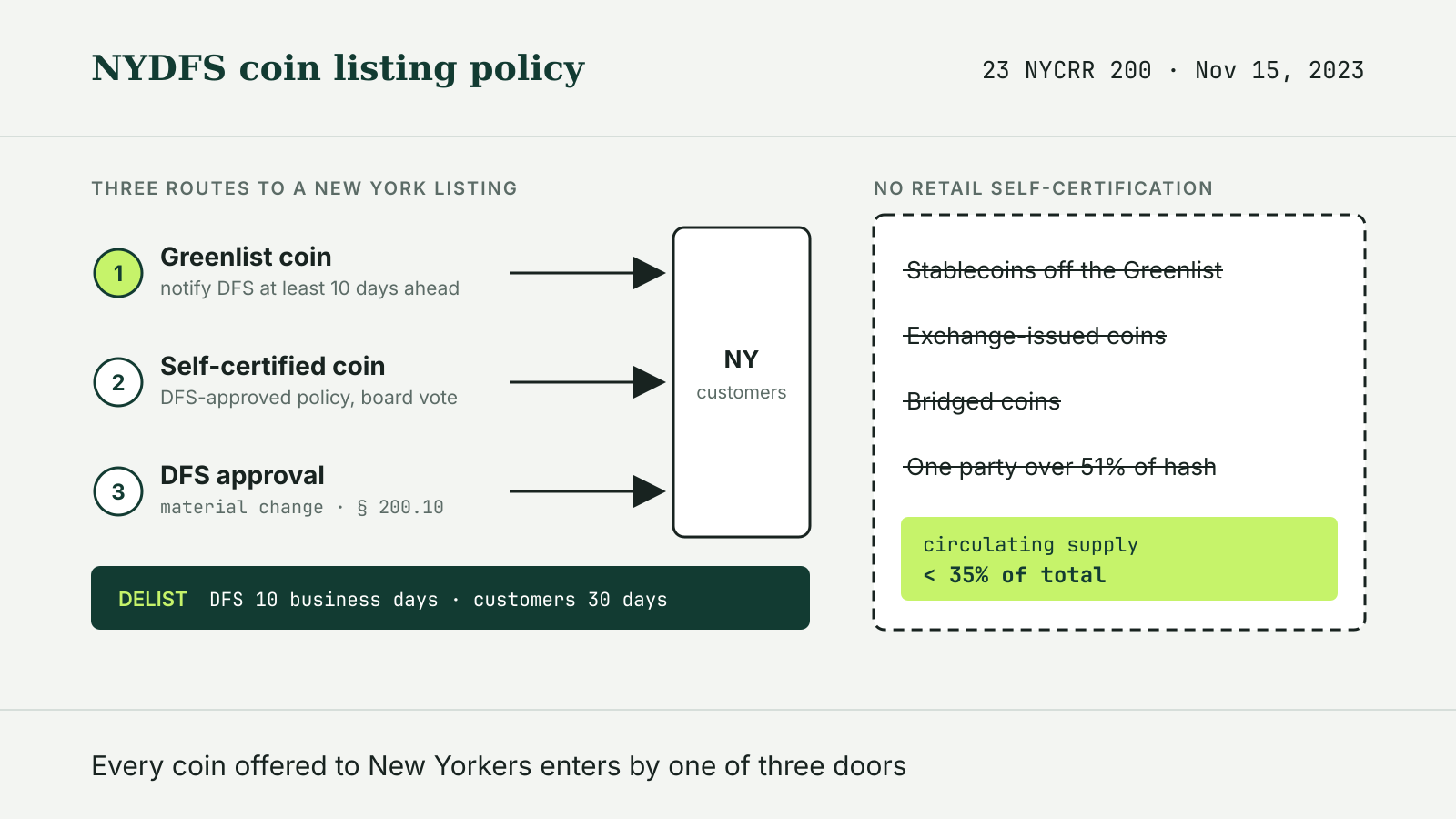
NYDFS Coin Listing Policy: Greenlist, Self-Certification, Delisting
How a New York-licensed crypto firm may add a coin: the Greenlist, self-certification and delisting rules.
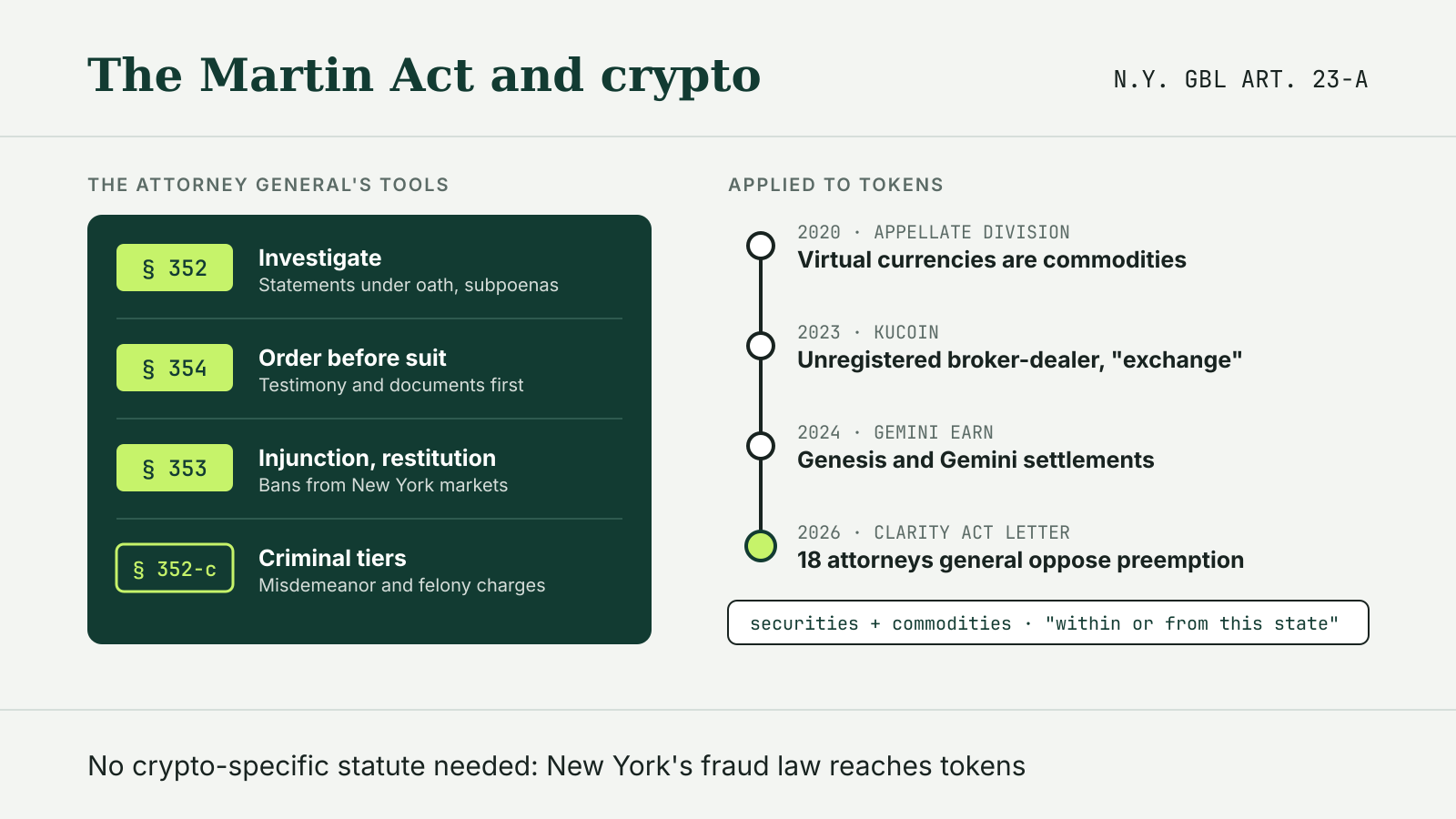
The Martin Act and Crypto: How New York Polices Tokens Without a Crypto Law
How New York's securities and commodities fraud law reaches crypto platforms, from Tether and KuCoin to Gemini Earn.
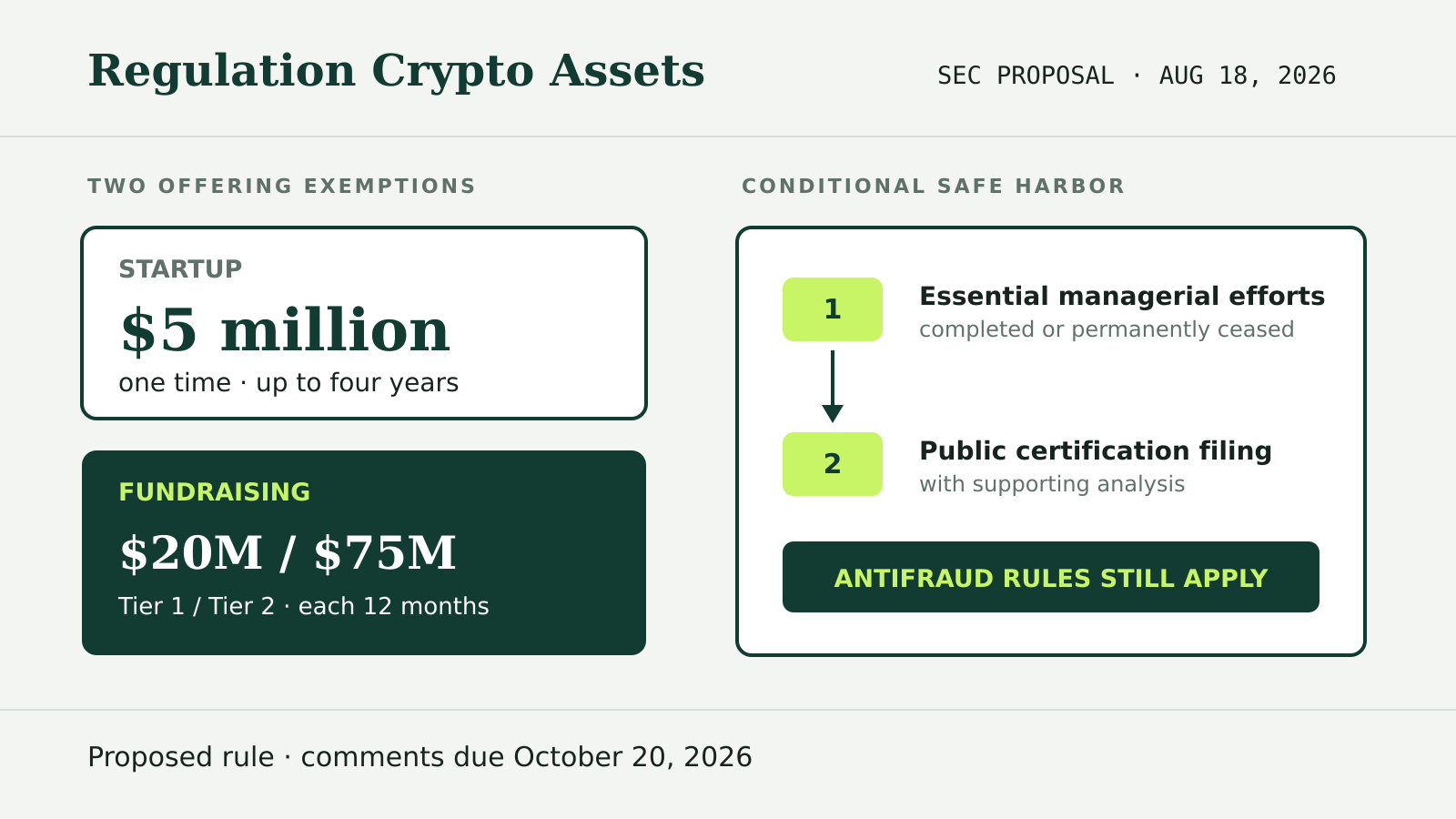
Regulation Crypto Assets Proposal: Two SEC Exemptions
The SEC proposes a $5M startup route, two fundraising tiers and a conditional safe harbor for crypto contracts.

SEC innovation exemption for tokenized stocks
The SEC relief covers defined DLT venues and conditions. Tokenized stocks remain securities.
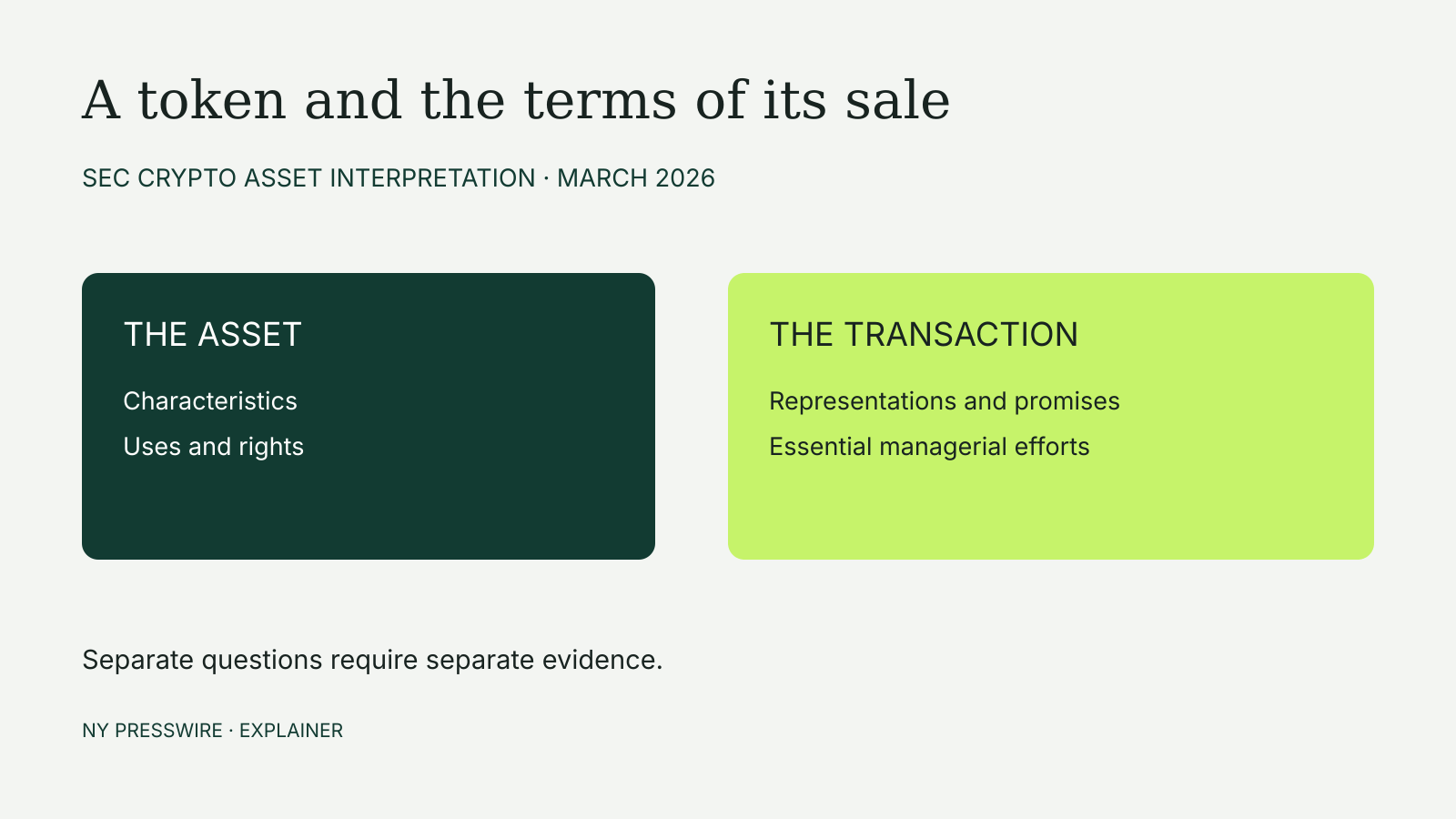
The SEC Crypto Asset Interpretation of 2026, Explained
The March interpretation separates a token's classification from the circumstances of its sale.
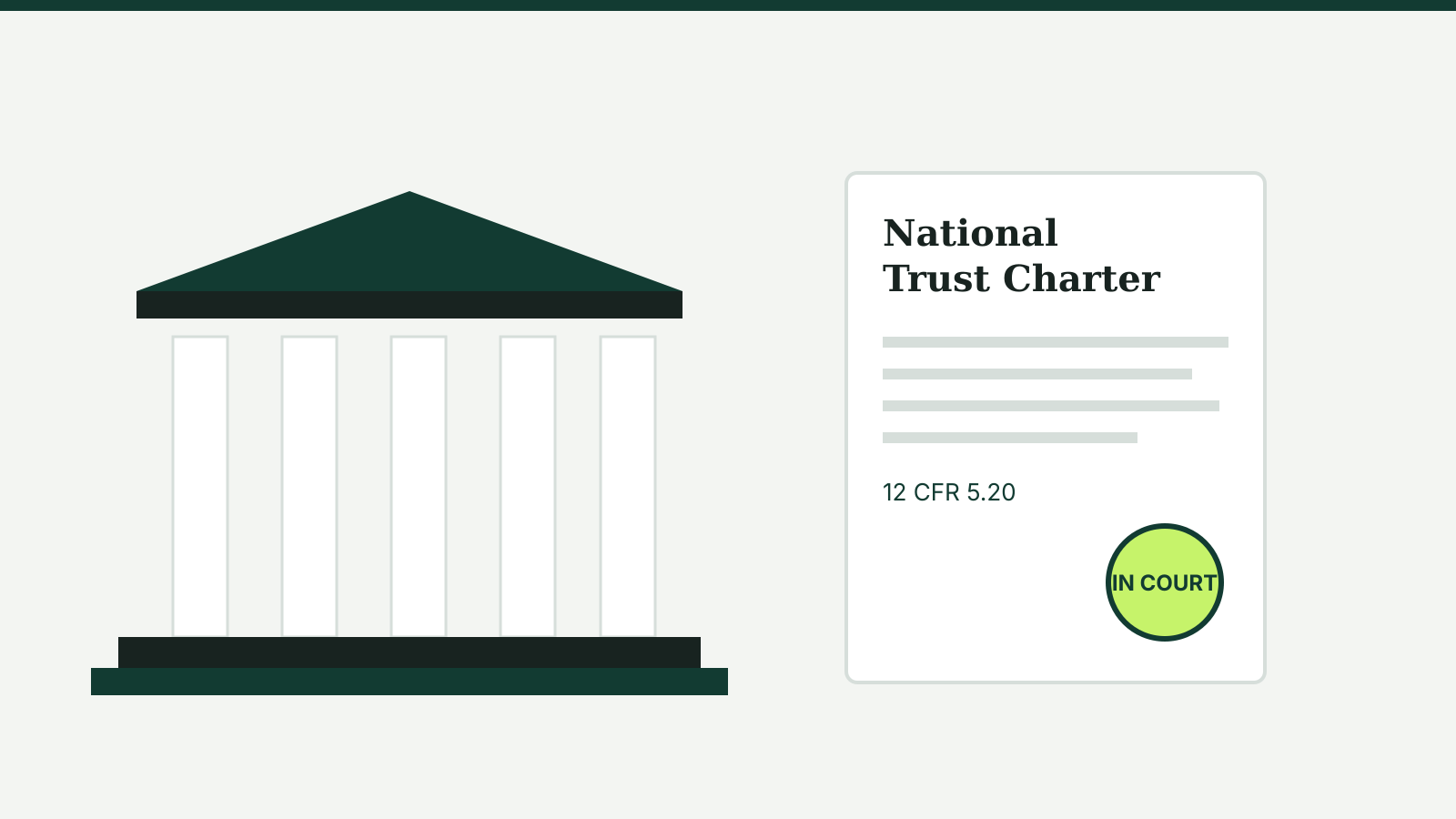
ICBA Lawsuit Asks Court to Undo the OCC Trust Charter Rule
Community bankers asked a court on October 2 to vacate the OCC rule behind crypto trust charters.
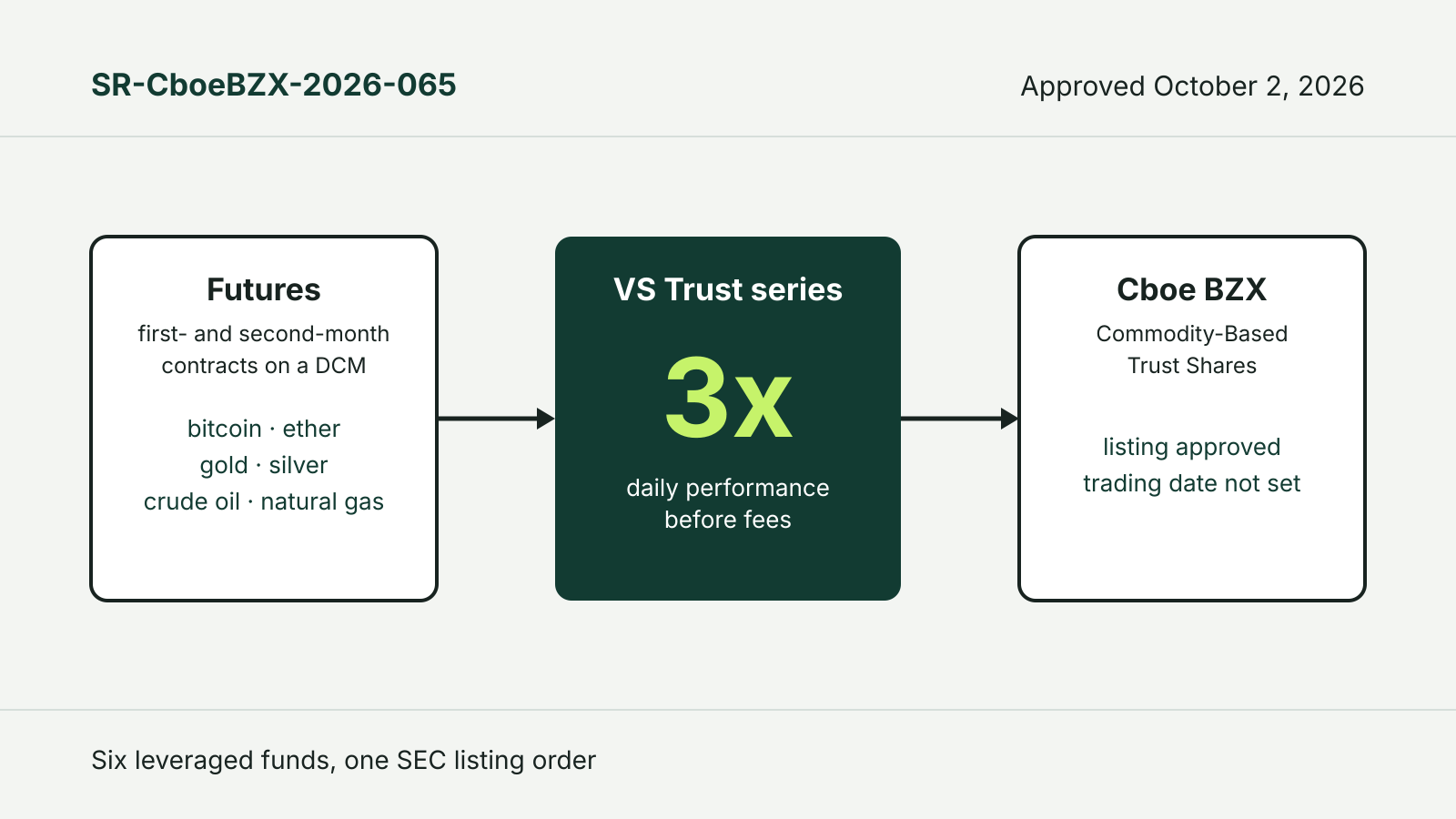
3x Bitcoin ETF Approval: SEC Clears Cboe to List Six Leveraged Funds
An SEC order lets Cboe BZX list 3x Bitcoin and 3x Ether funds from Volatility Shares. No trading date is set.
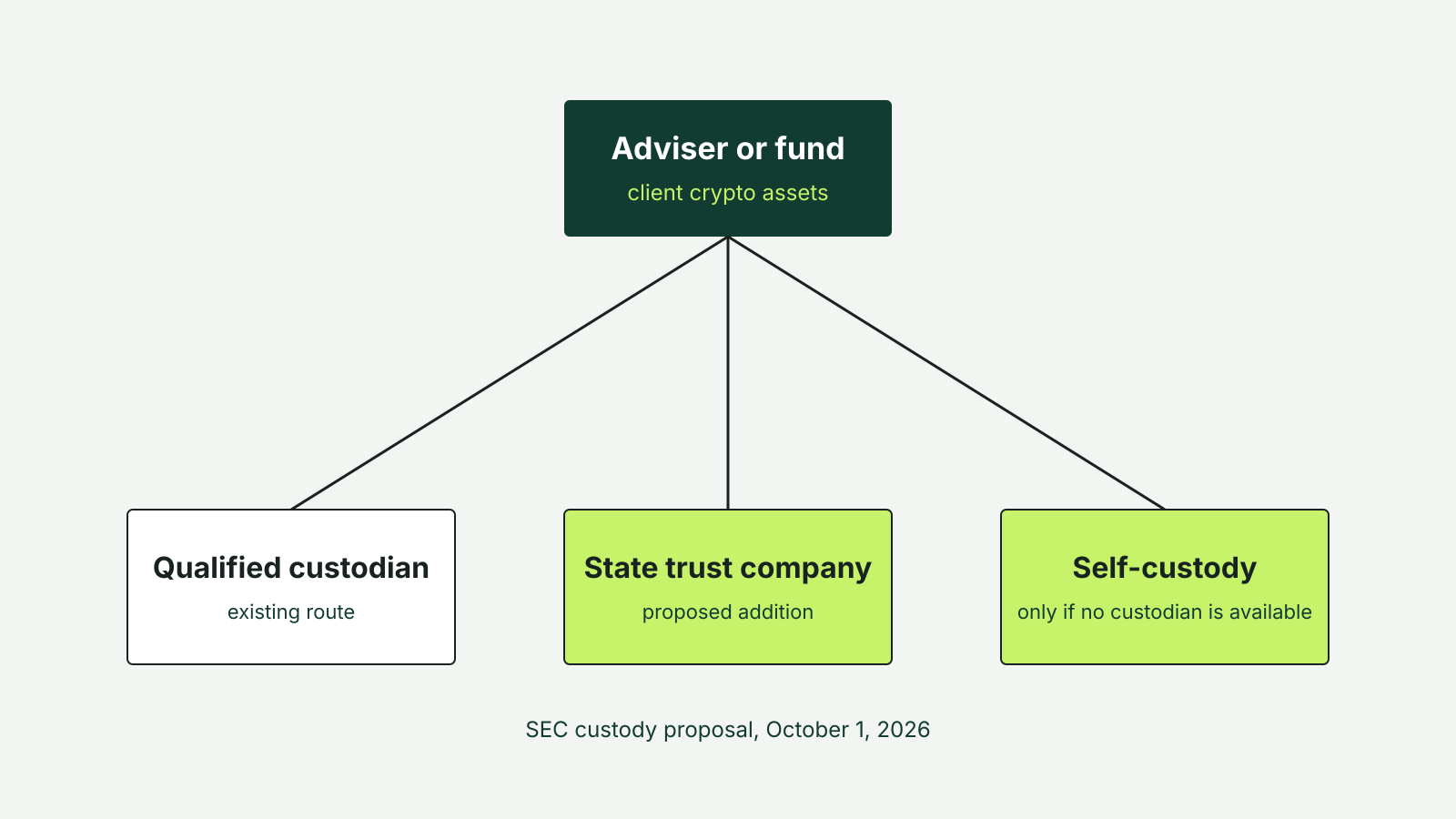
SEC Crypto Custody Proposal Opens a Path for State Trust Companies
Advisers and funds could use state trust companies or, in narrow cases, self-custody. Comments close December 7.
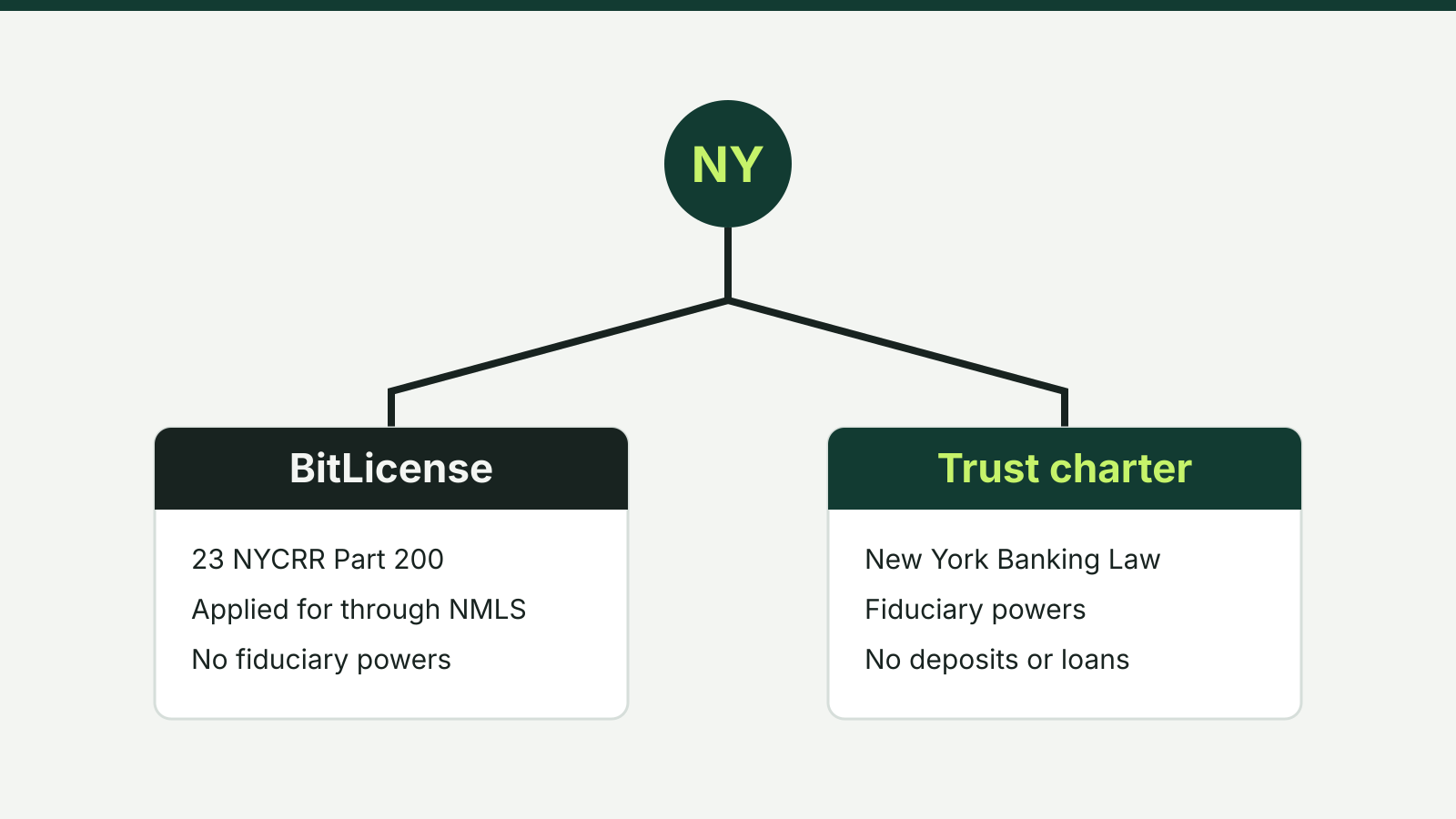
BitLicense vs Trust Charter: New York's Two Routes for Crypto Firms
BitLicense vs trust charter: both open New York to crypto firms, but only the charter brings fiduciary powers.
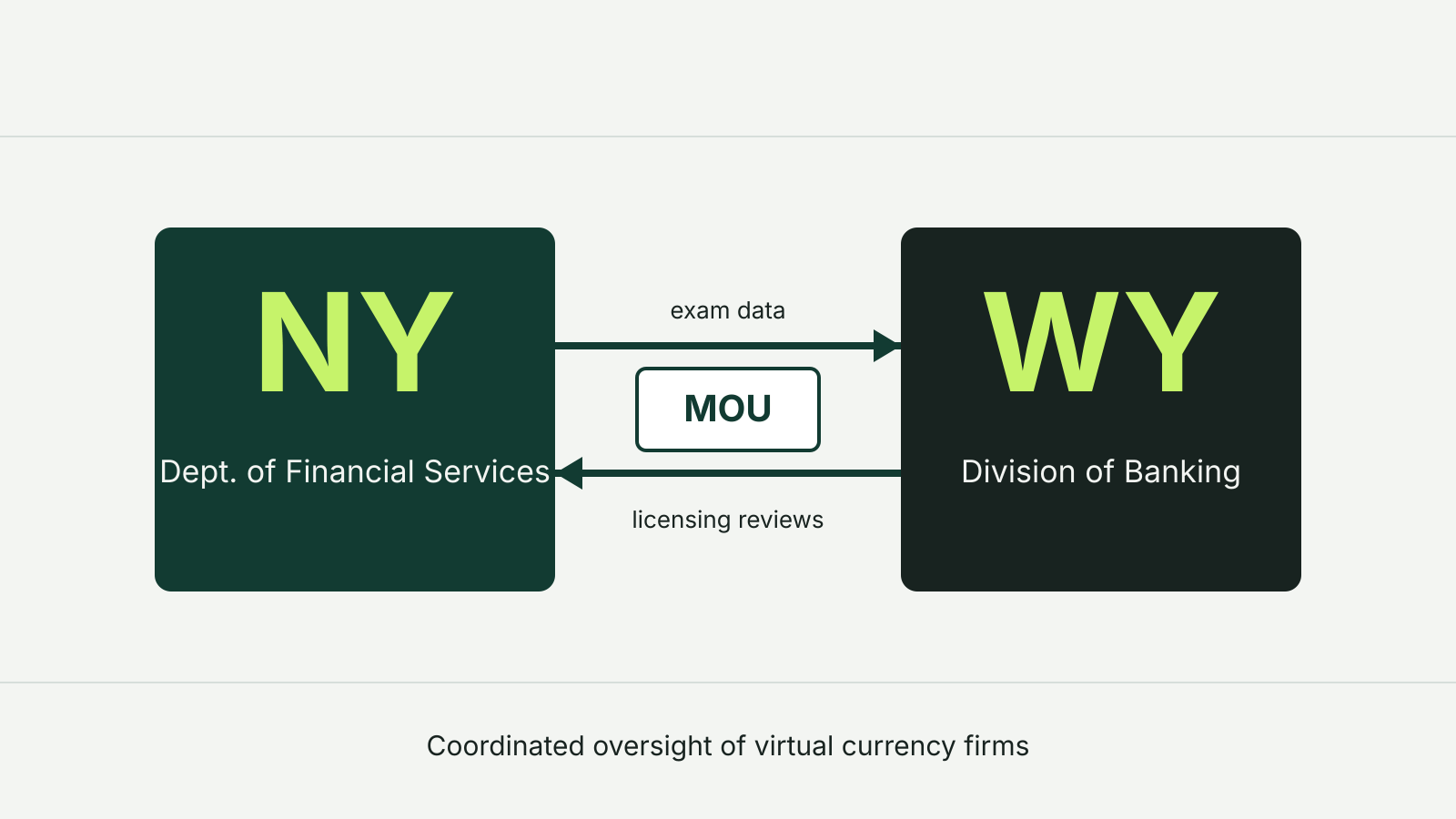
New York-Wyoming Crypto MOU Sets a Faster Review for Established Firms
The New York-Wyoming crypto MOU shares exam data and speeds licensing for firms with three clean years.
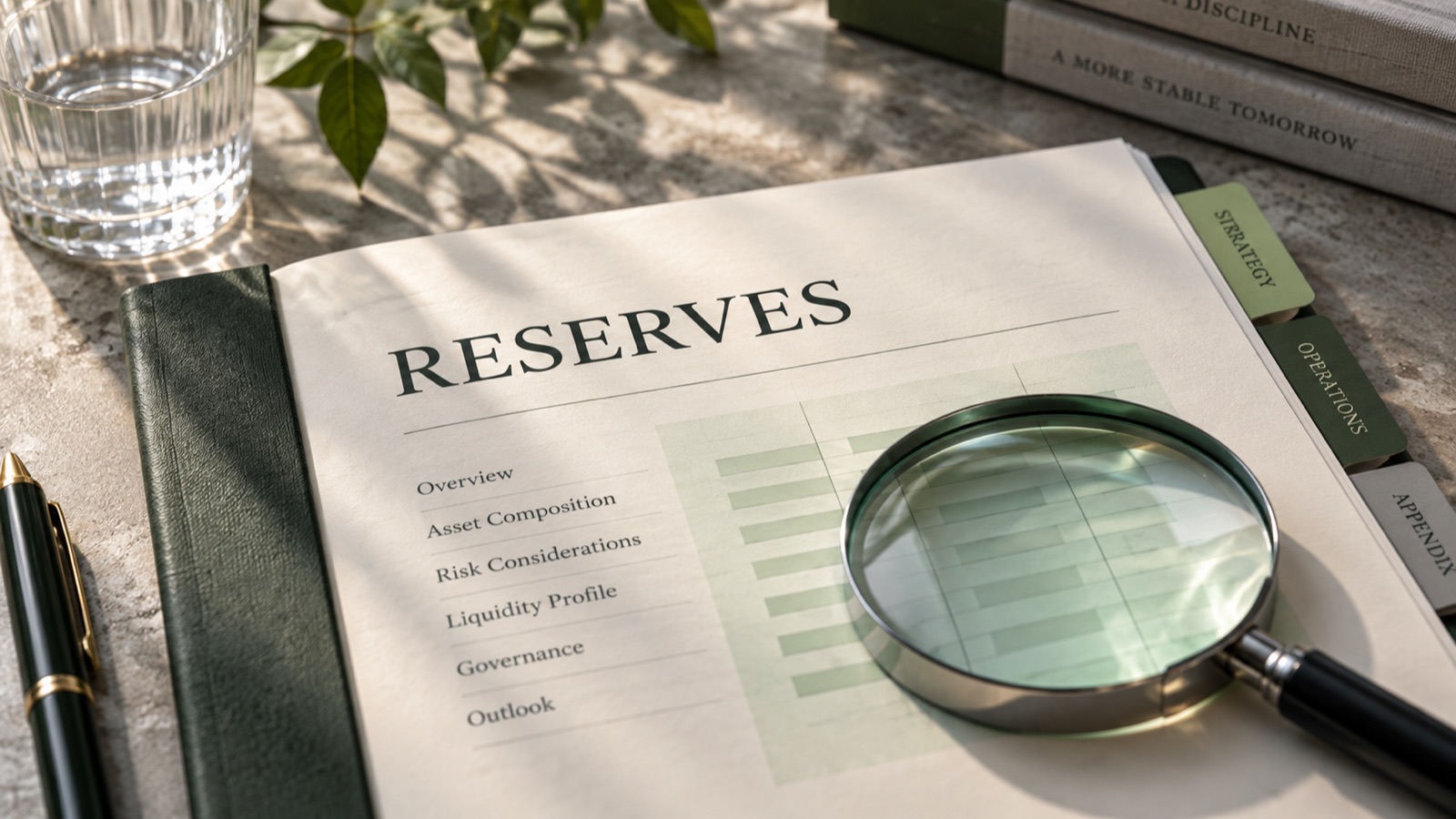
How to Read a Stablecoin Reserve Report
A reserve total answers one question. Dates, definitions and the scope of the examination answer several more.
This section explains what happens beneath a token’s price: who issues it, how reserves are described, who controls access, and how a transaction reaches its destination. Coverage includes wallets, blockchain networks, tokenized assets, and the relationships between digital assets and ordinary financial institutions. We distinguish issuer statements from the evidence supporting them and explain the limits of each source.
Begin with our guide to reading a stablecoin reserve report. It separates the reporting date, the assets included, and the accountant’s stated scope from the separate question of how a holder redeems a token. For the wider movement of money, read Fintech. For account protection, explore Tech. Our editorial approach describes sourcing and corrections.