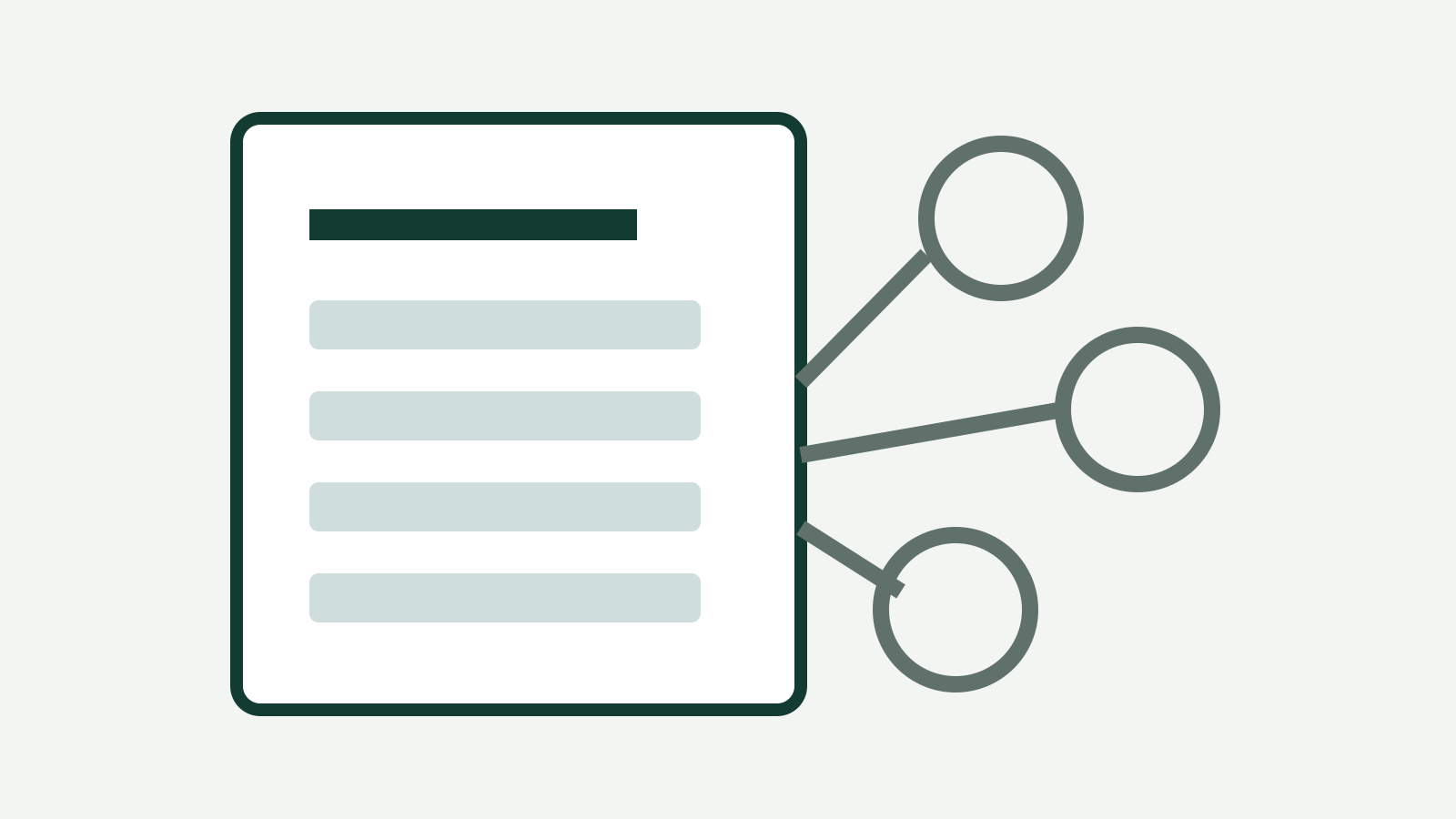
The establishment vs household survey comparison explains why the US jobs report can show strong payroll growth while employment measured from households moves differently. The two surveys use different samples, definitions and estimation methods.
The Bureau of Labor Statistics explains both in the Employment Situation technical note.
The establishment survey
The Current Employment Statistics survey samples businesses and government agencies. It estimates nonfarm payroll employment, hours and earnings by industry.
A person with two payroll jobs can be counted twice because the unit is a job on an establishment payroll. The survey excludes some groups, including self-employed workers, unpaid family workers, private household workers and farm workers.
Payroll estimates are revised as more reports arrive and again through annual benchmarking to unemployment-insurance tax records.
The household survey
The Current Population Survey samples households. It measures people: employed, unemployed and not in the labor force. It supports the unemployment rate and demographic breakdowns.
A person with several jobs is counted once as employed. The survey includes categories that payroll data excludes, such as the self-employed and agricultural workers, subject to its definitions.
Because the household sample is smaller for detecting month-to-month employment changes, its monthly employment estimate can be more volatile.
Why they diverge
The surveys can move apart because they cover different populations, count jobs versus people, use different seasonal adjustments and face different sampling error.
New business formation is another source of uncertainty. Payroll estimates use a model for business births and deaths until administrative records are available. Household estimates do not use that same establishment framework.
A one-month gap is not evidence that one survey is false. It is a prompt to read the definitions and look at a longer period.
Which number answers which question?
Use the establishment survey for:
- change in nonfarm payroll jobs;
- industry employment;
- average hourly earnings;
- average weekly hours.
Use the household survey for:
- unemployment rate;
- labor-force participation;
- employment-population ratio;
- employment by age, sex and other demographic characteristics;
- self-employment within the survey definitions.
Do not combine a payroll numerator with a household denominator without explaining the mismatch.
Revisions matter
Initial payroll estimates are updated in the next two releases as additional employer reports arrive. Annual benchmark revisions align the series with more complete tax records.
Household estimates are also affected by updated population controls. A level shift tied to new controls is not necessarily a change that occurred in one month.
When reporting a record or turning point, note whether the figure is preliminary and whether prior months changed.
A good reading routine
- Identify which survey produced the number.
- Check whether it counts jobs or people.
- Read the sampling-error and revision notes.
- Compare three- and six-month trends, not only one month.
- Separate unemployment, participation and payroll growth.
- Return after revisions.
The BLS publishes both because the labor market has more than one useful dimension. Divergence is information about measurement and coverage, not a reason to choose whichever headline supports a preferred story.
For another BLS measurement guide, read how the CPI is calculated.