
AI / FINTECH / CRYPTO / TECH

NY Presswire

Understand the systems shaping money.

Stories

Read NY Presswire’s latest coverage of technology and digital finance.
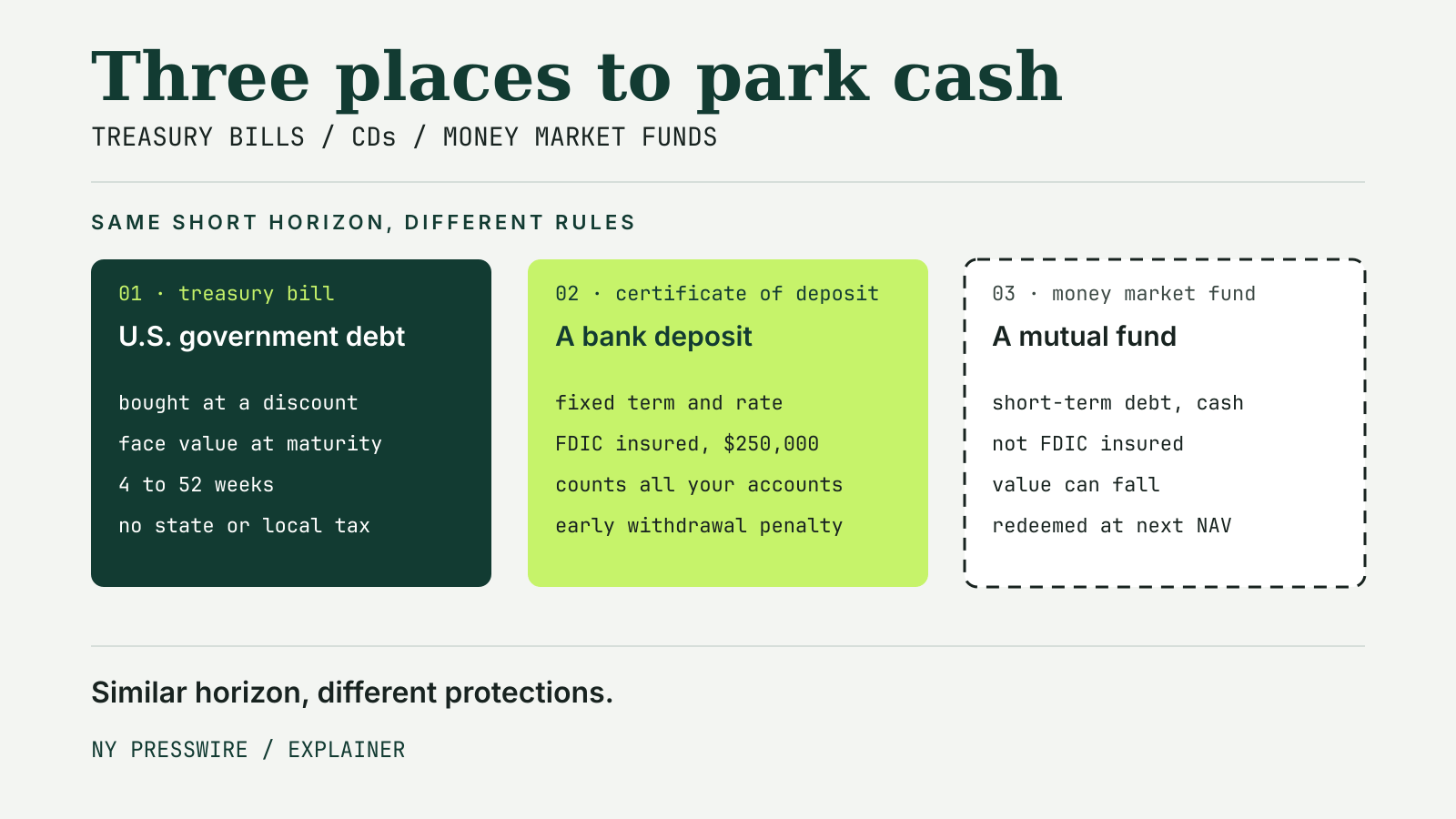
Three cards comparing a Treasury bill (U.S. government debt bought at a discount, 4 to 52 weeks, no state or local tax), a certificate of deposit (bank deposit, FDIC insured to $250,000, early withdrawal penalty) and a money market fund (mutual fund, not FDIC insured, value can fall).
Treasury bills ·

Treasury Bills vs CDs vs Money Market Funds: How Each One Works

A Treasury bill is government debt, a CD is a bank deposit and a money market fund is a fund. Here is what that changes.
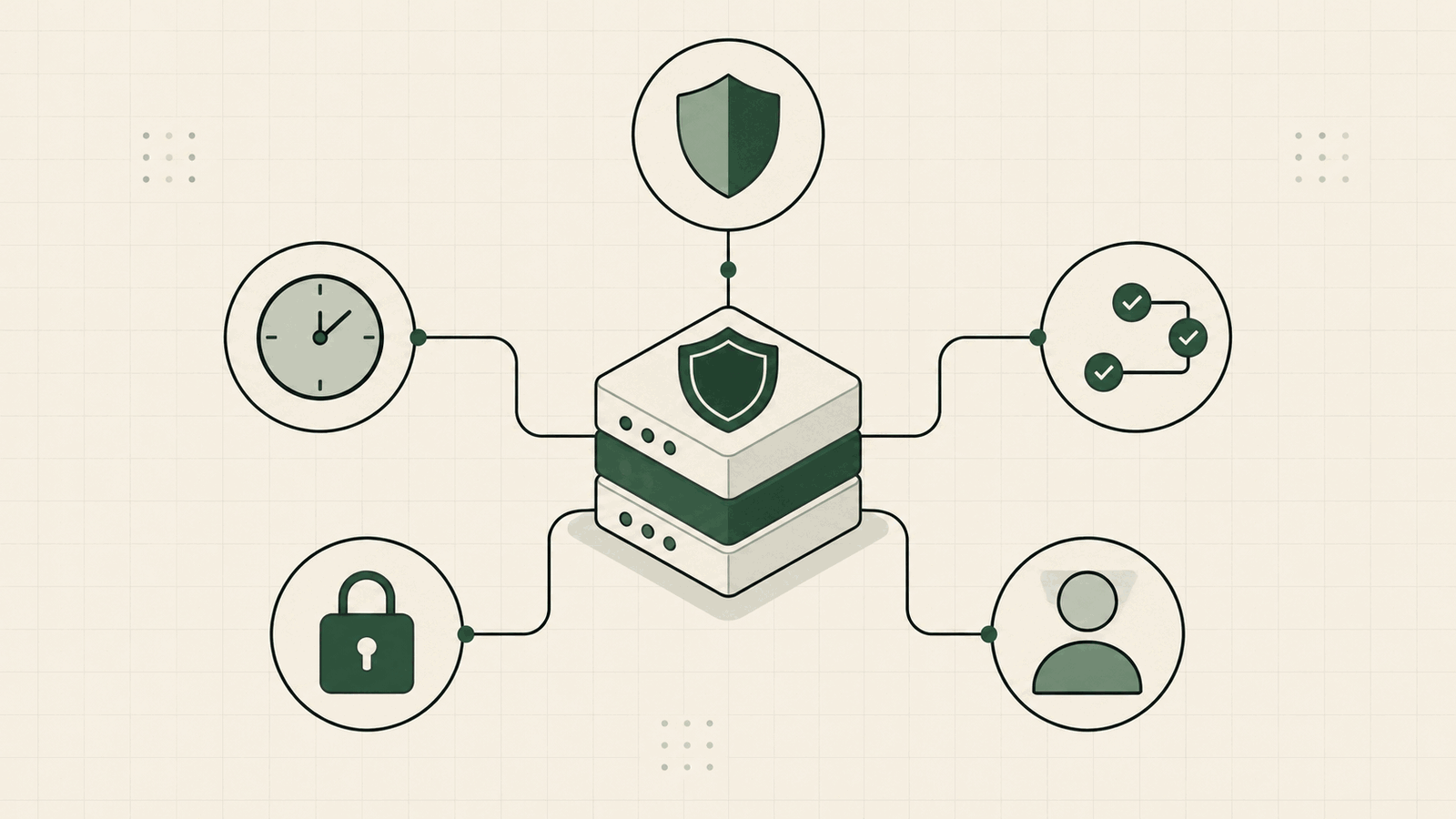
Diagram of what a SOC 2 report examines: a system boundary of production services, identity and admin paths, key subservice vendors, change and incident workflows and customer-side controls; the Trust Services Criteria placed in scope; and the Type 1 date or Type 2 period covered.
SOC 2 ·

SOC 2 for Fintech Startups: What the Report Actually Covers

What a SOC 2 report covers, how to set scope and which controls a fintech startup must operate consistently.
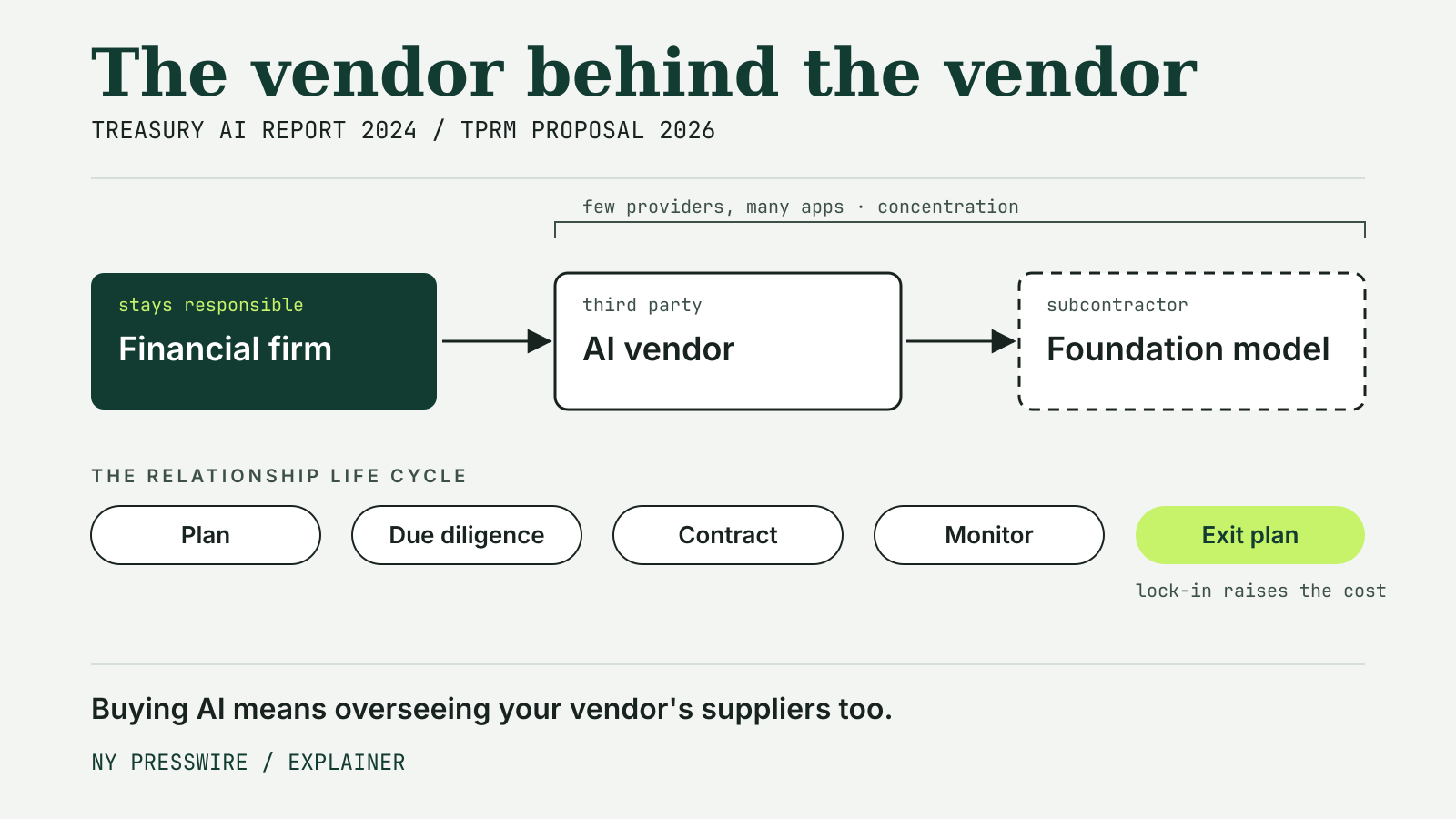
Diagram of an AI supply chain in financial services: a financial firm that stays responsible, an AI vendor as the third party and a foundation model provider as subcontractor, above the five stages of the vendor relationship life cycle from planning to an exit plan.
AI governance ·

Third-Party AI Risk in Financial Services: What Regulators Say

Most financial firms buy their AI. Treasury's 2024 report and a 2026 proposal show what that means for vendor oversight.
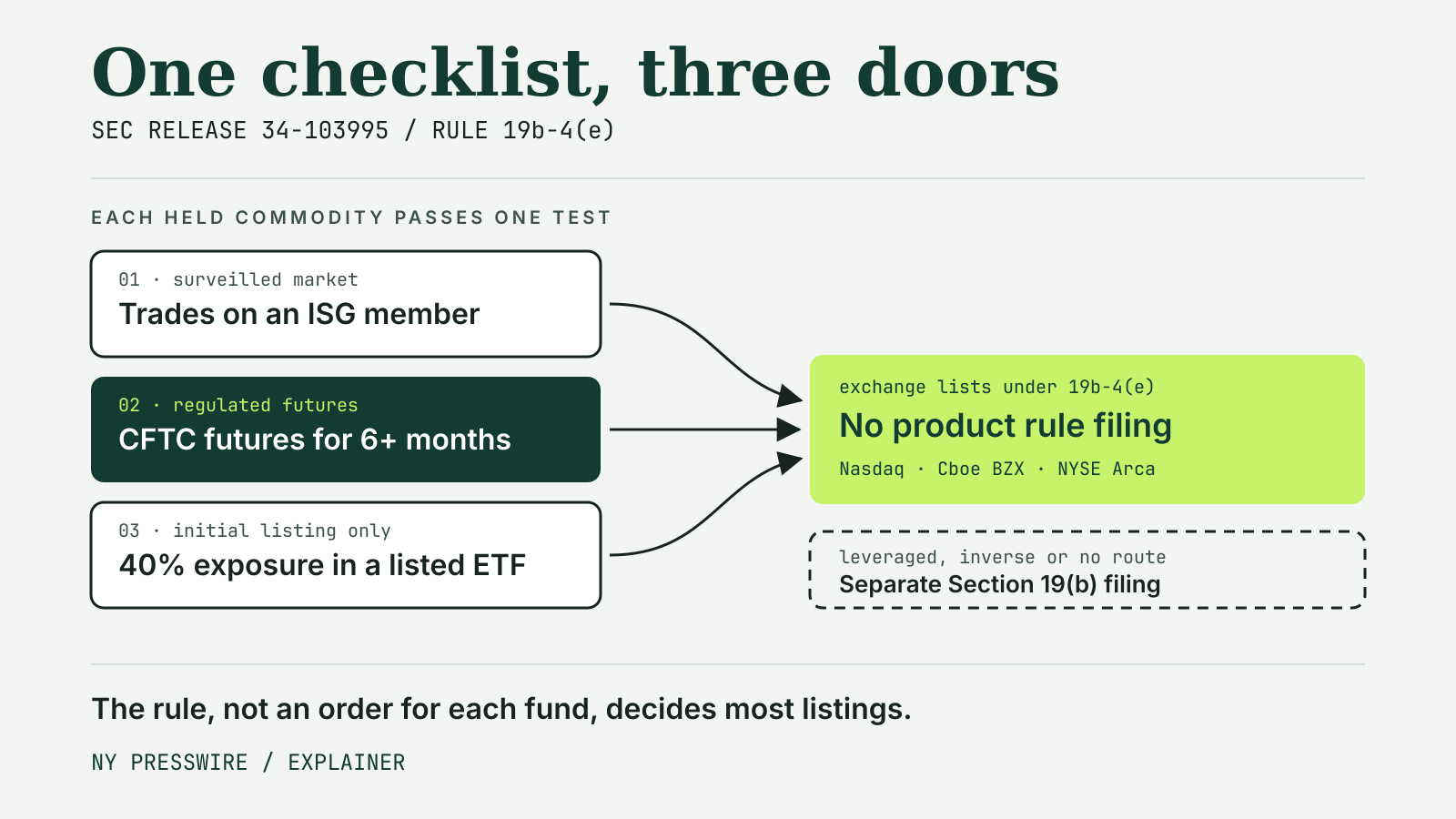
Diagram of the three eligibility routes under the generic listing standards for commodity trusts: trading on an ISG member market, CFTC-regulated futures for at least six months, or 40% exposure in a listed ETF, leading to listing without a product rule filing, while leveraged or inverse products need a separate Section 19(b) filing.
Crypto ETFs ·

Generic Listing Standards for Crypto ETFs: How the Checklist Works

Since September 2025, exchanges can list qualifying crypto trusts under a published checklist, not a filing per fund.
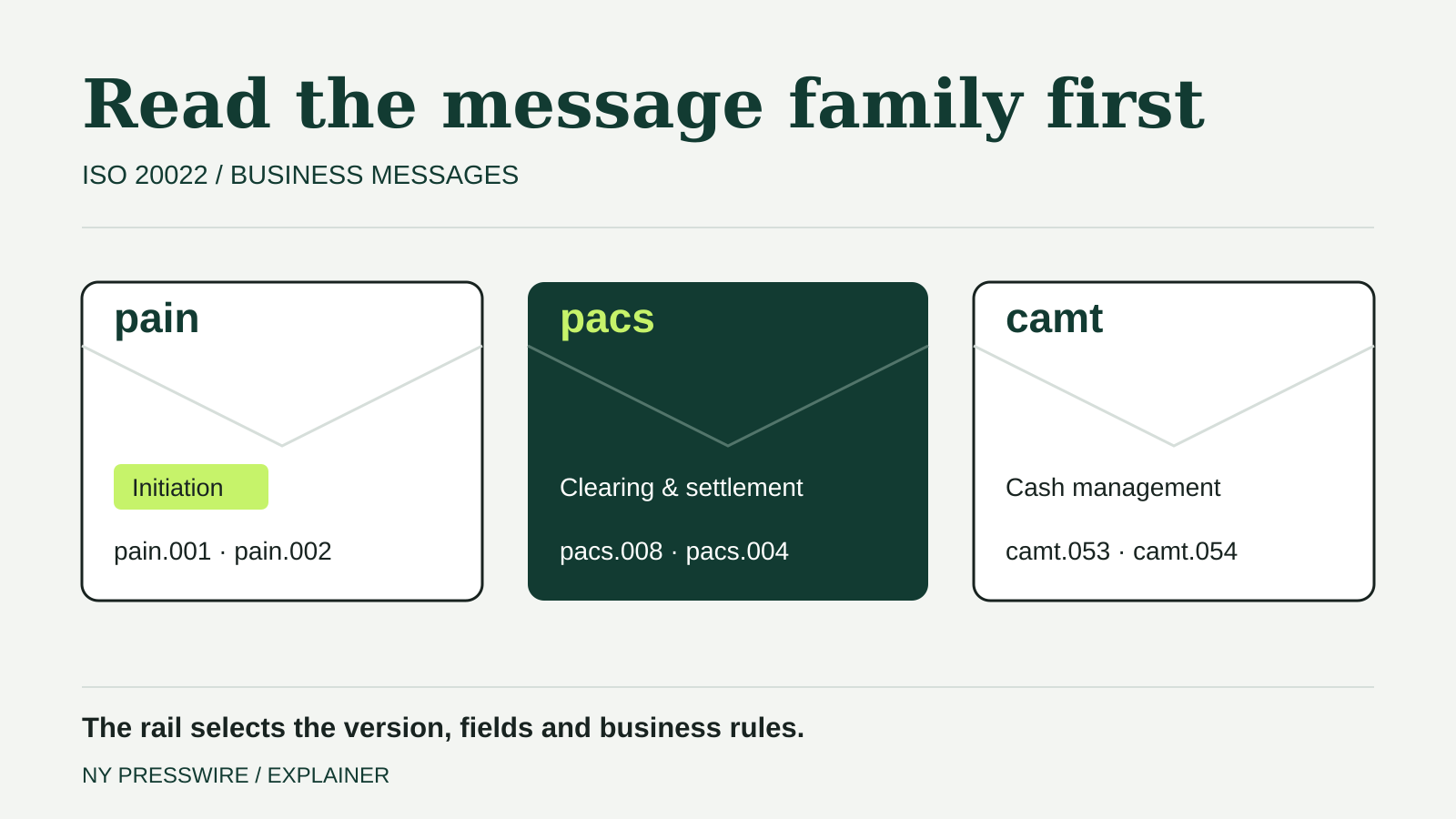
Three ISO 20022 message families: pain for initiation, pacs for clearing and settlement, and camt for cash management.
Payment APIs ·

ISO 20022 Messages Explained: pain, pacs and camt

Read pain, pacs and camt by their business jobs, then check the rail's version and implementation rules.
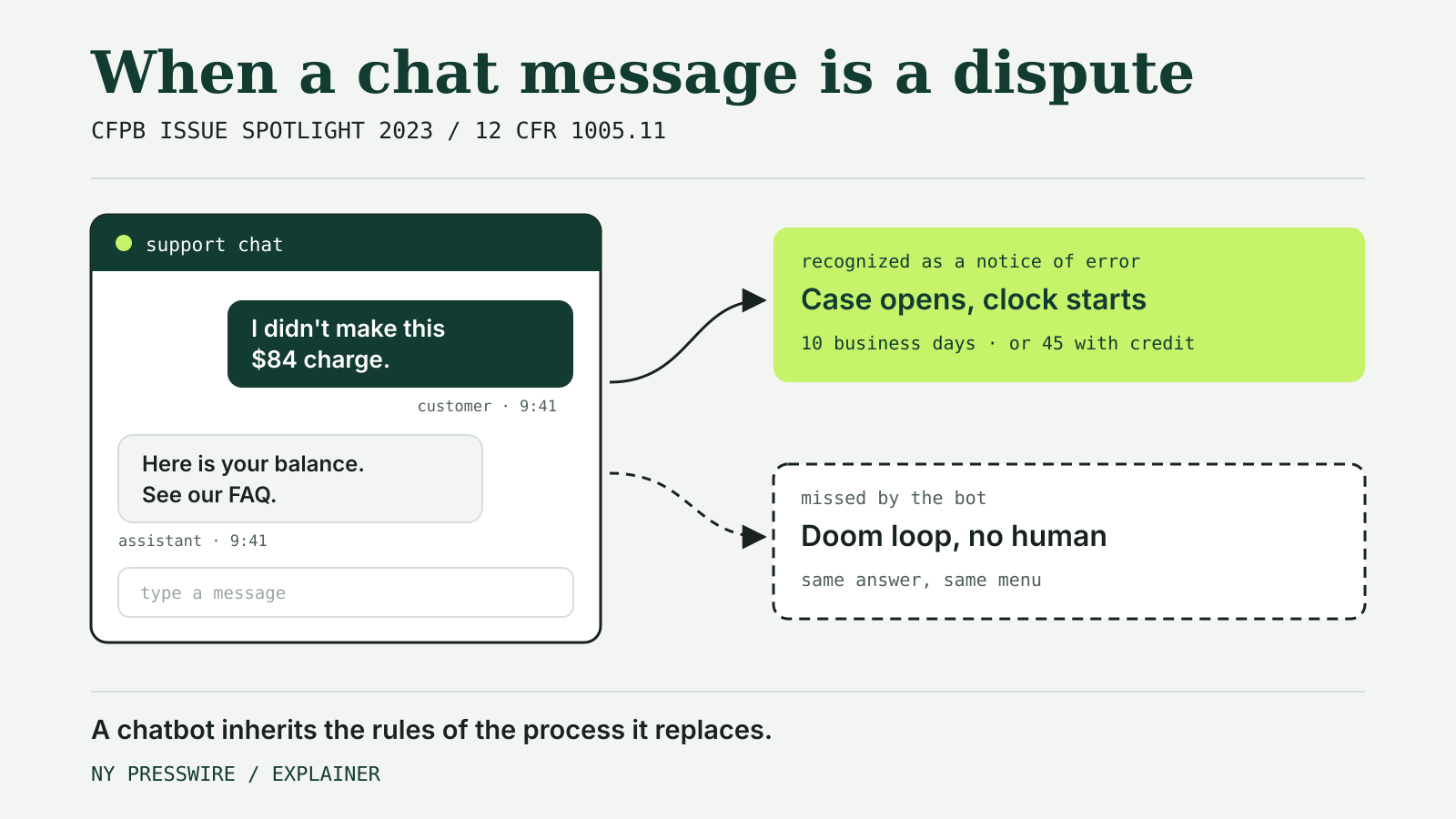
Illustration of a bank support chat in which a customer says they did not make a charge, with two outcomes: the message is recognized as a notice of error and a case opens with the Regulation E investigation clock, or the bot misses it and the customer is stuck in a loop with no human
chatbots ·

CFPB on Chatbots in Consumer Finance: What It Means for AI Support

What the CFPB's chatbot report found and how its dispute and human-help concerns apply to AI support.
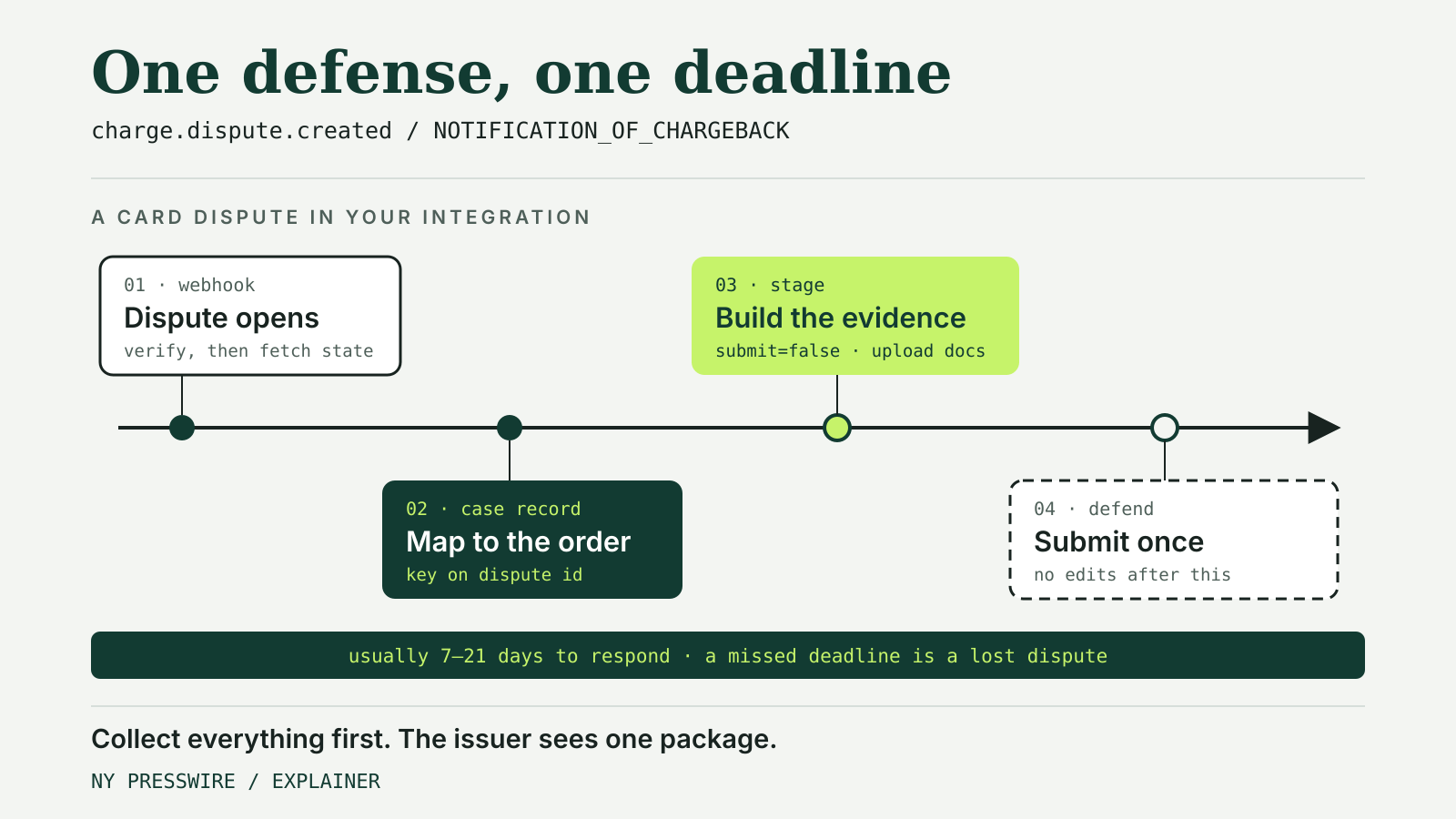
Timeline of a card dispute in a payment integration: the dispute webhook arrives, the case is mapped to the order by dispute ID, evidence is staged, and the defense is submitted once, with a note that merchants usually have 7 to 21 days to respond
chargebacks ·

Chargeback API Disputes: Webhooks, Evidence and Deadlines

How Stripe and Adyen report card disputes, stage evidence and take a one-shot defense before the deadline.
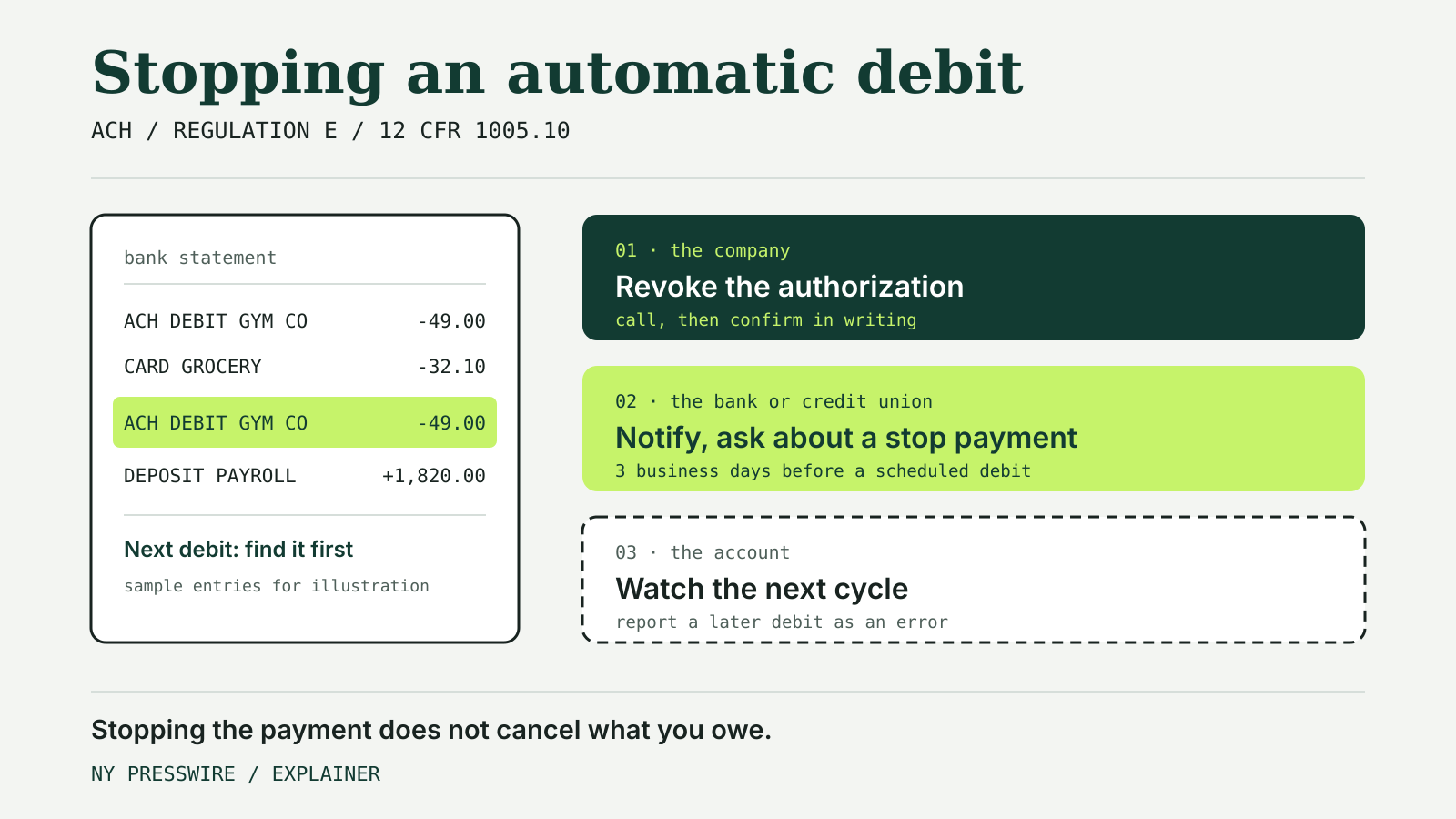
A sample bank statement with a recurring ACH debit highlighted, next to three steps for stopping it: revoke the authorization with the company, notify the bank or credit union about a stop payment at least three business days before a scheduled debit, and watch the next cycle
ACH ·

Stopping ACH Automatic Payments: A Step-by-Step Guide

A practical CFPB-based guide to revoking ACH authorization, notifying your bank and keeping the debt separate.
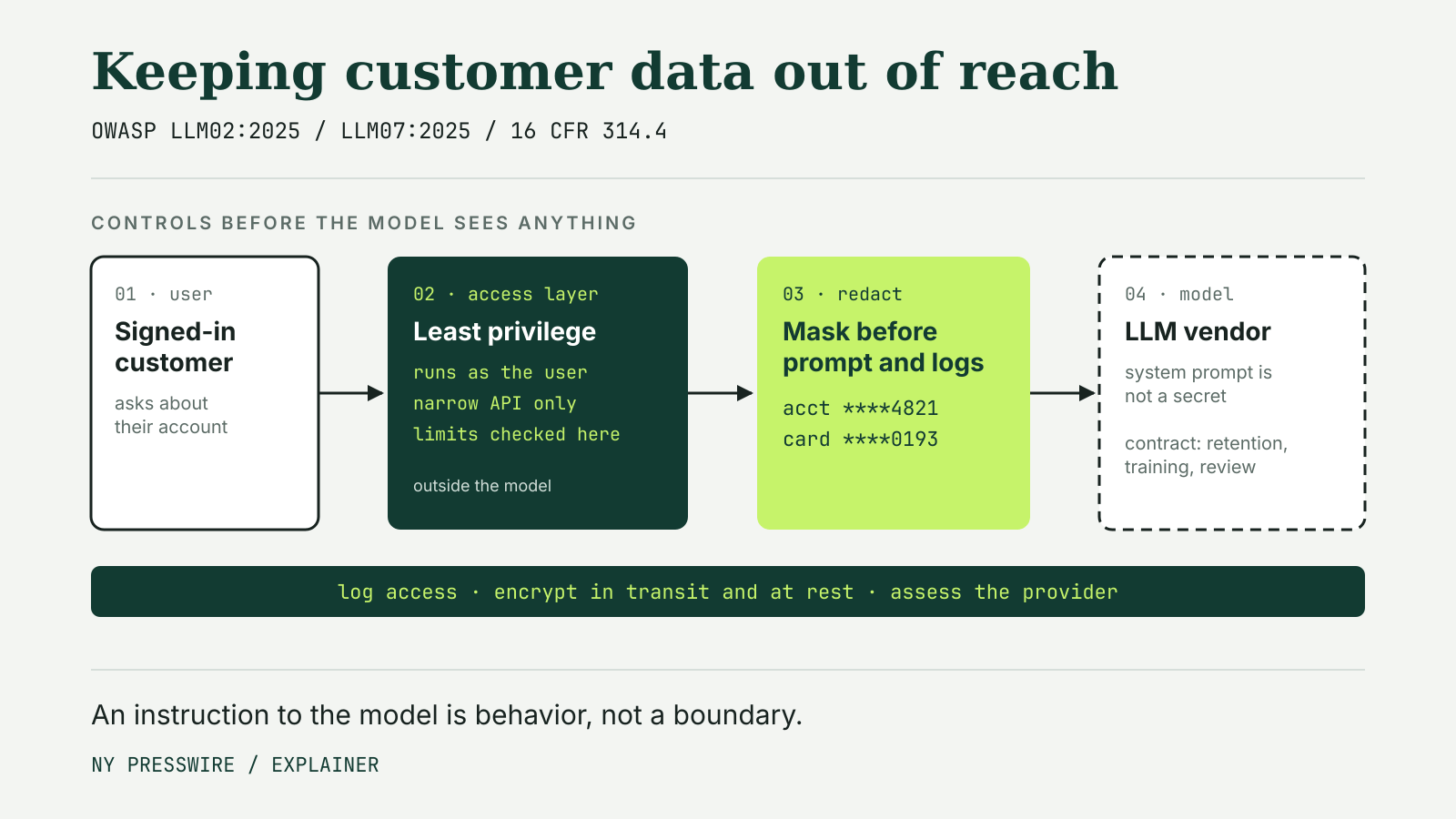
Flow diagram of controls that protect customer data in an LLM app: the signed-in customer, an access layer that runs with the user's permissions, masking of account and card numbers before the prompt and logs, and the model vendor, with logging, encryption and provider assessment underneath
LLM security ·

LLM Sensitive Information Disclosure in Fintech AI Apps

Why a system prompt cannot hide customer data, and the controls outside the model that can.
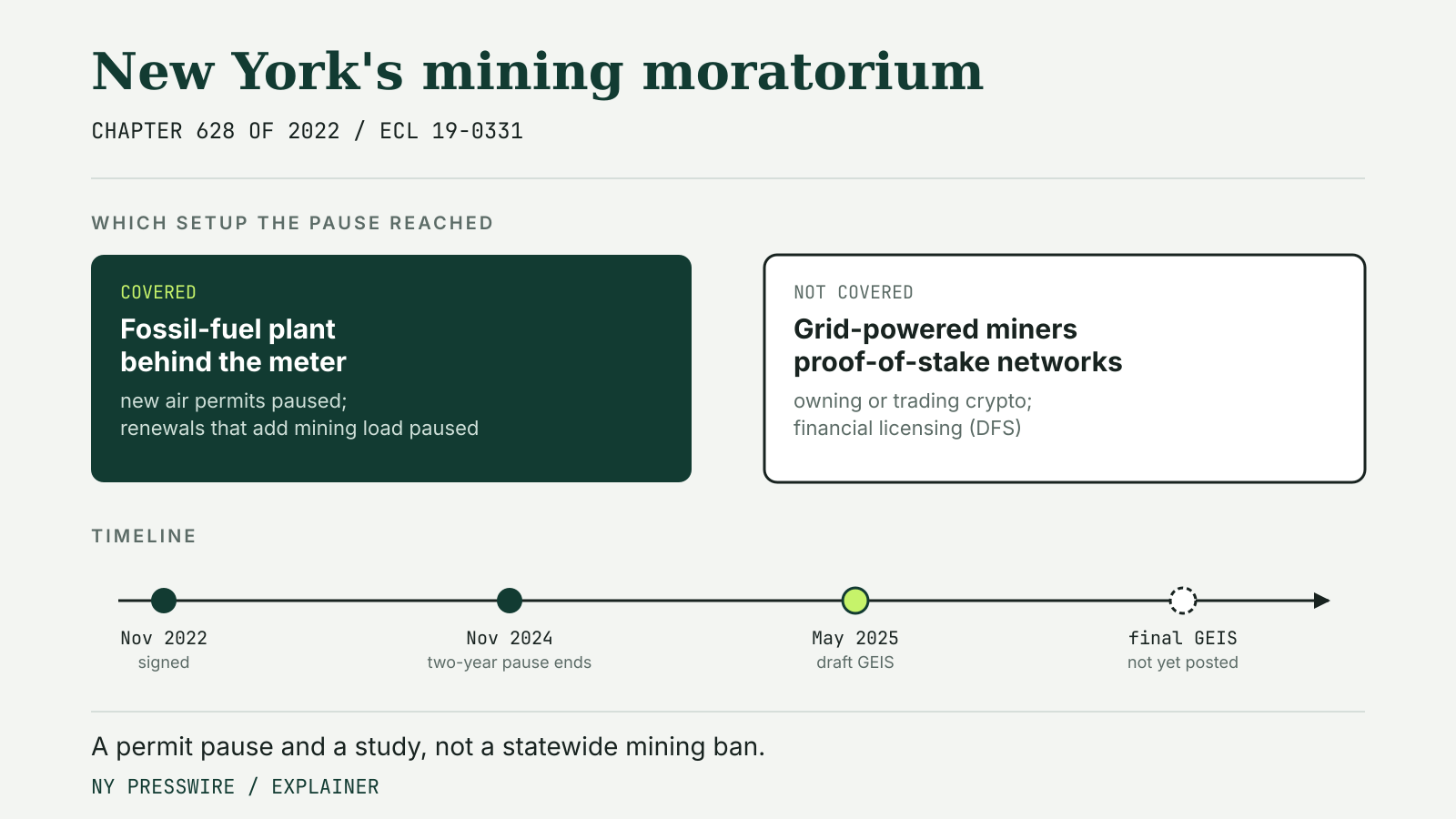
Chart of New York's 2022 crypto mining moratorium showing that it covered fossil-fuel plants powering proof-of-work miners behind the meter, not grid-powered miners, with a timeline from the 2022 signing to the 2024 end of the pause and the 2025 draft environmental study
Crypto mining ·

New York's Crypto Mining Moratorium: The 2022 Law and DEC's Study

A two-year air permit pause and a study still in draft: what New York's 2022 mining law covered.
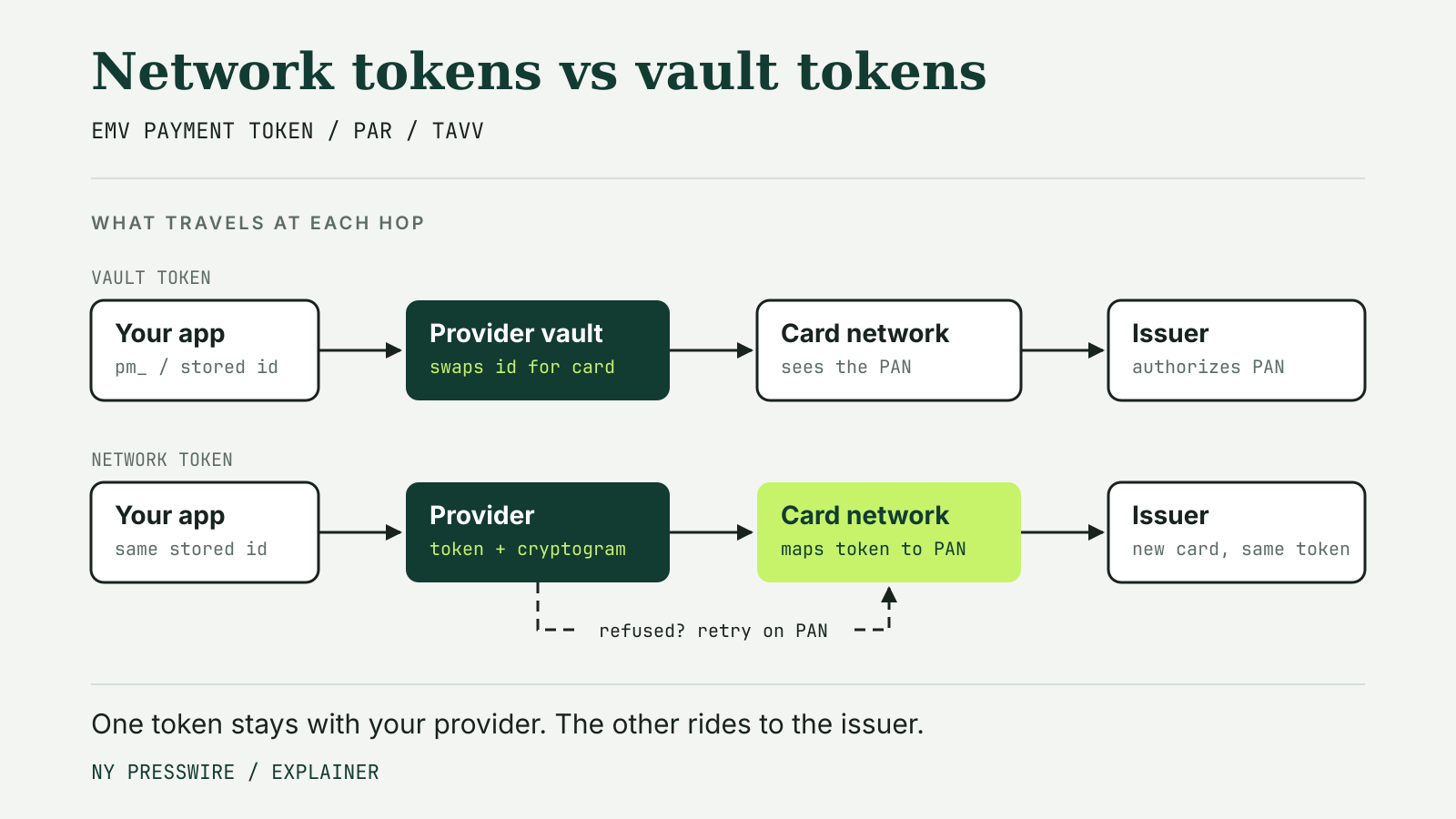
Diagram comparing a vault token, which the payment provider swaps for the card number, with a network token that travels with a cryptogram to the card network and issuer, with a fallback retry on the card number
Payment APIs ·

Network Tokenization Explained: Network Tokens vs Vault Tokens

How card network tokens differ from a provider's vault token, and what that changes for developers.
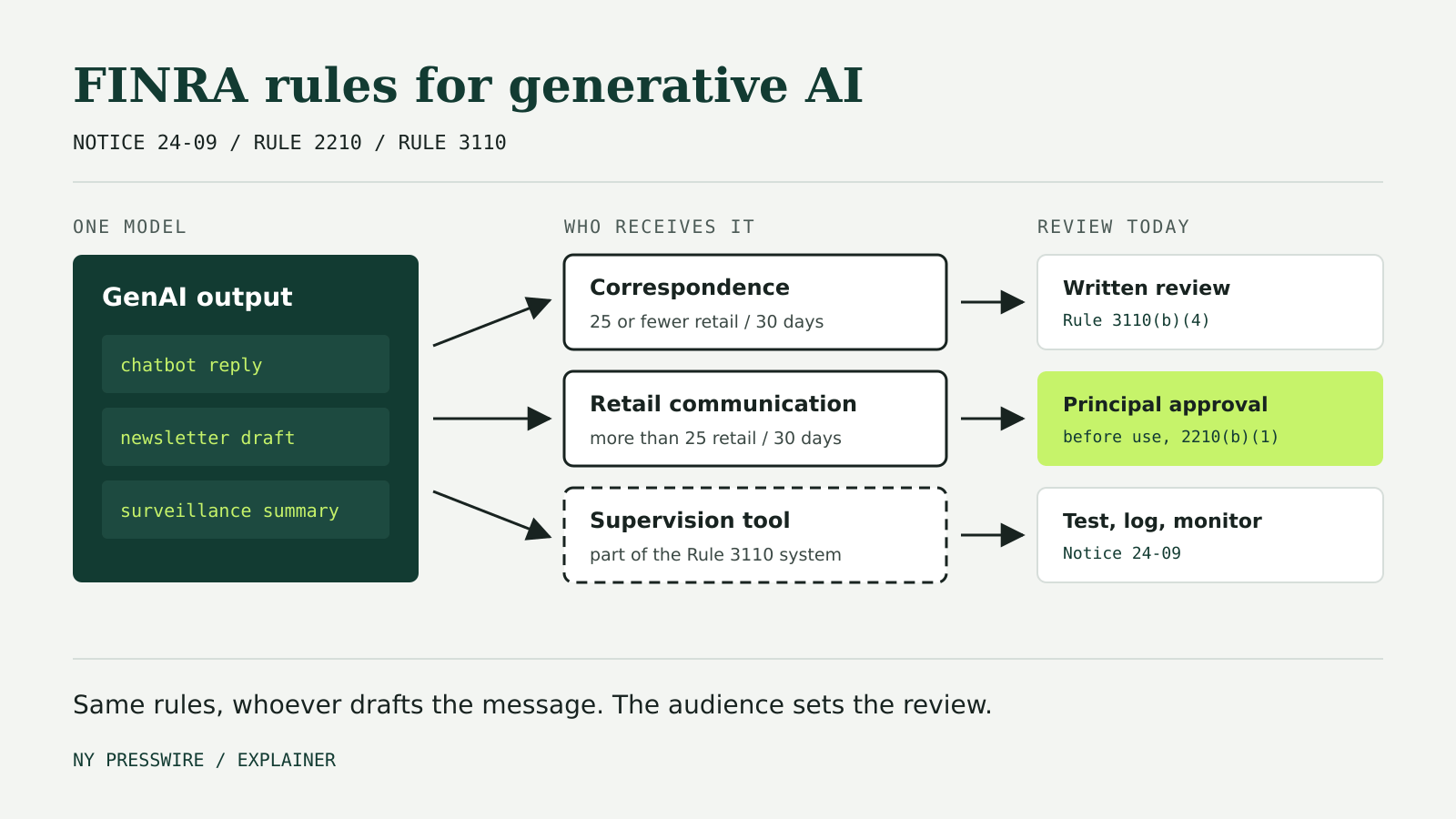
Diagram: a generative AI output such as a chatbot reply, newsletter draft or surveillance summary is classified as correspondence, a retail communication or a supervision tool, each leading to its FINRA review requirement.
FINRA ·

FINRA Generative AI Guidance: Chatbots, Supervision and Rule 2210

How FINRA's supervision and communications rules apply to chatbots, AI-drafted content and AI review tools.
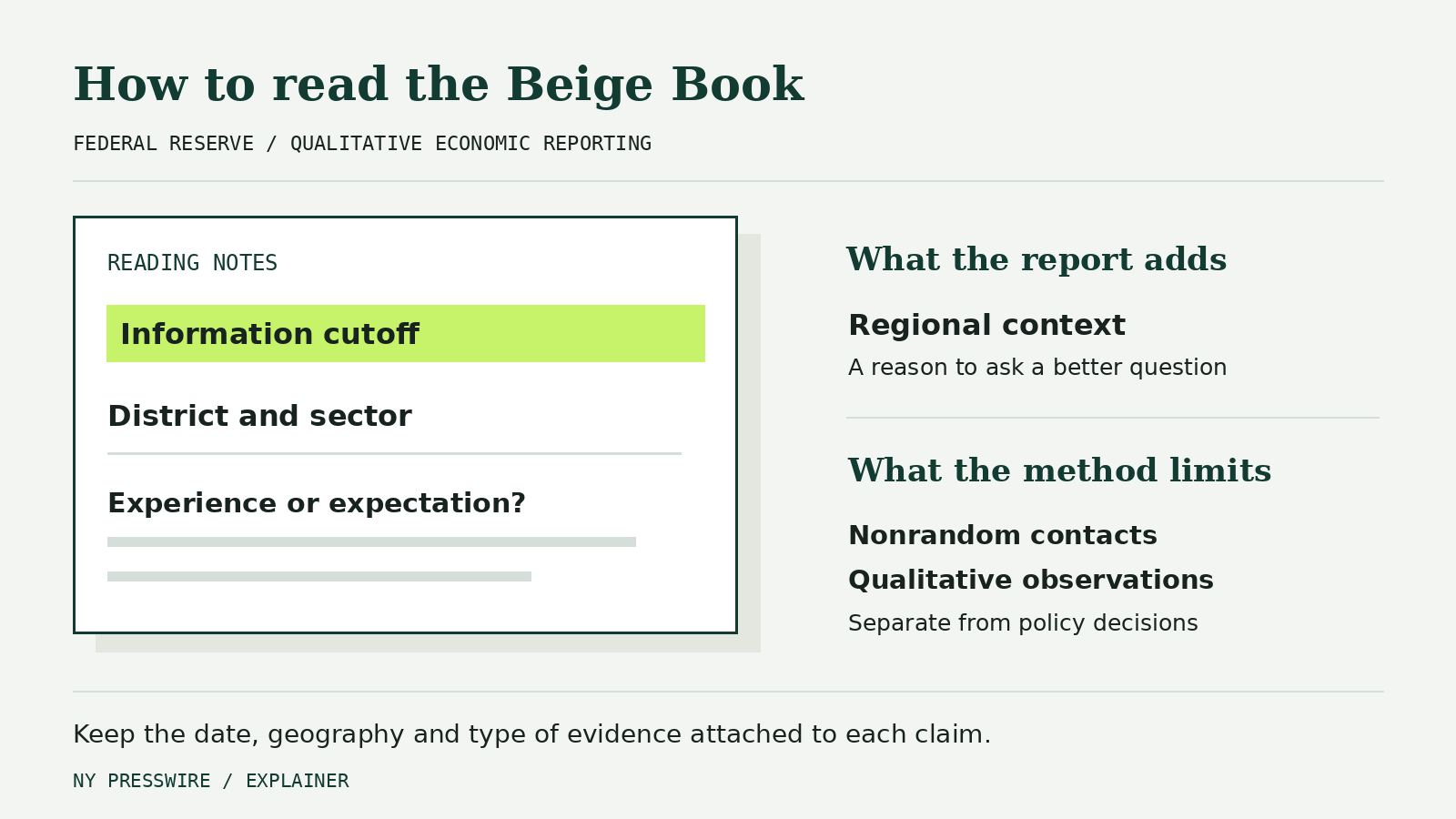
Reading-note sheet highlighting the information cutoff, District and sector, and experience versus expectation, beside the report's regional context and nonrandom qualitative method.
Federal Reserve ·

What Is the Fed Beige Book? How to Read Its Evidence

Read the Beige Book as regional evidence with dates, context and clear limits.
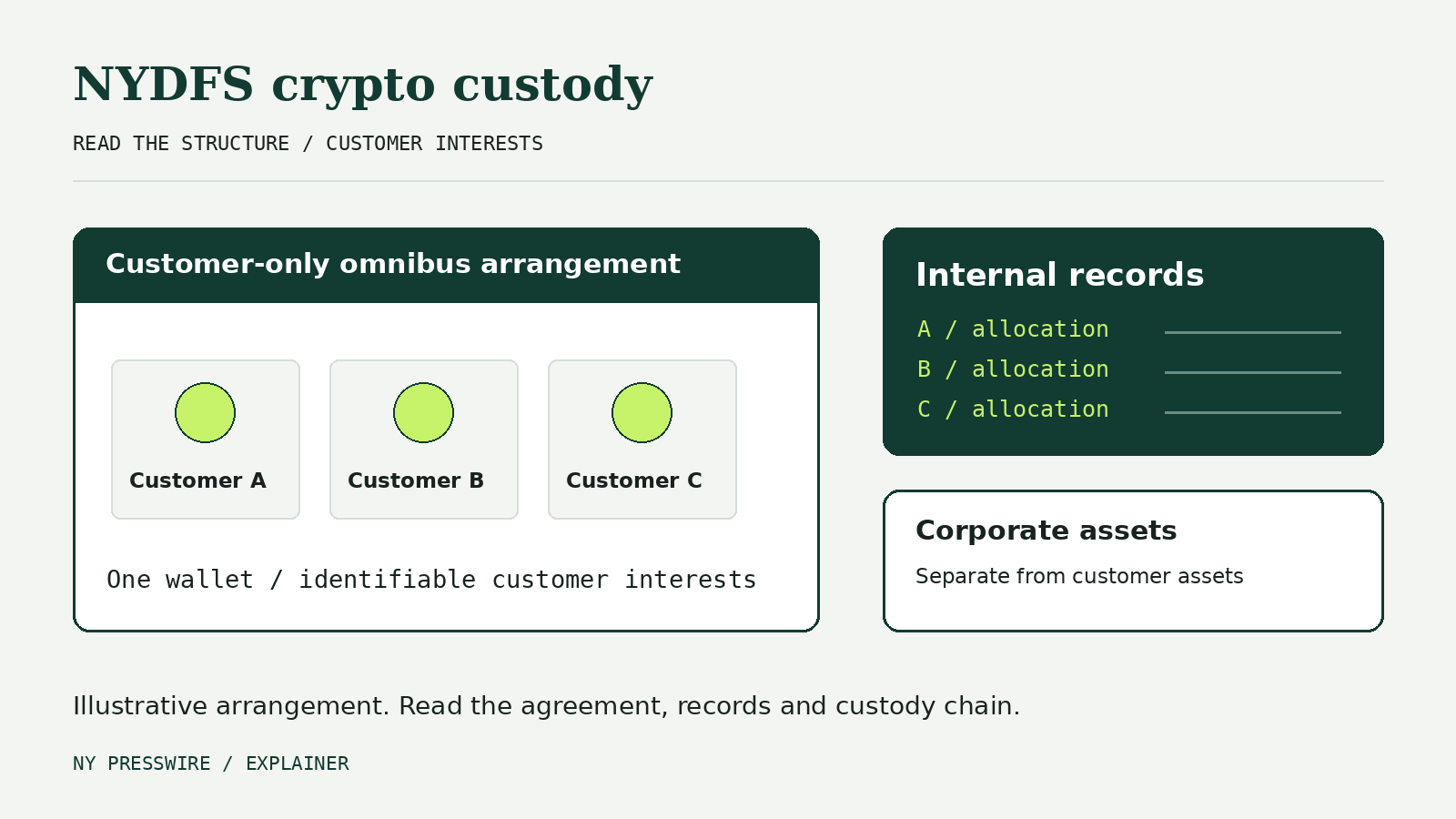
Illustrative customer-only omnibus arrangement: one wallet contains identifiable customer interests, internal records allocate them, and corporate assets remain separate.
NYDFS ·

NYDFS Crypto Custody Guidance: Wallets and Agreements

Connect the custody agreement with wallets, customer records and any sub-custodian.
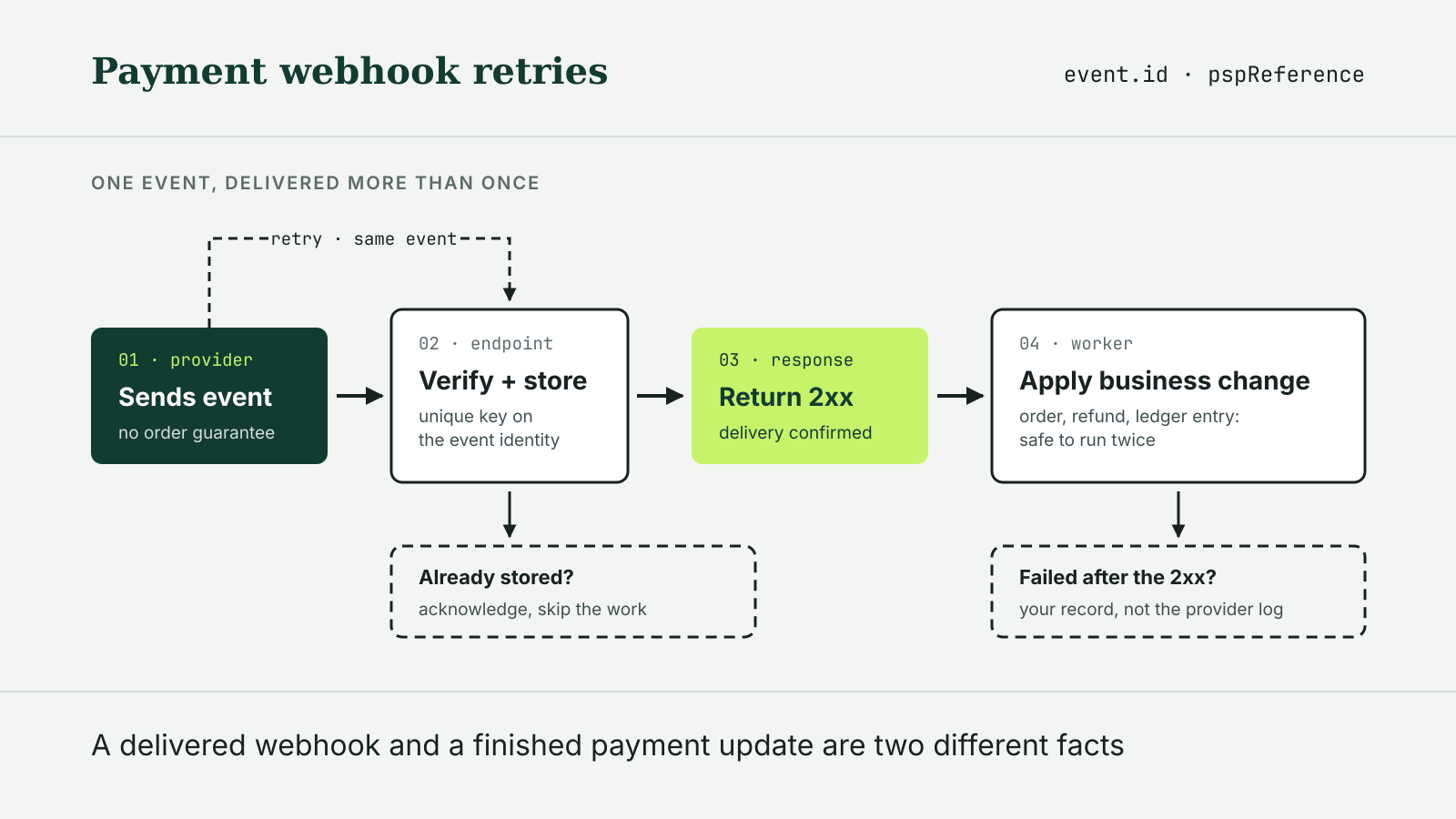
Flow diagram of a payment webhook: the provider sends an event, the endpoint verifies and stores it under a unique event key, returns 2xx, and a worker applies the business change, with a retry loop and checks for duplicates and failures after acknowledgment
Payment APIs ·

Payment Webhook Retries: Duplicates, Order and Recovery

Separate delivery acknowledgment from payment processing, and make repeated events safe.
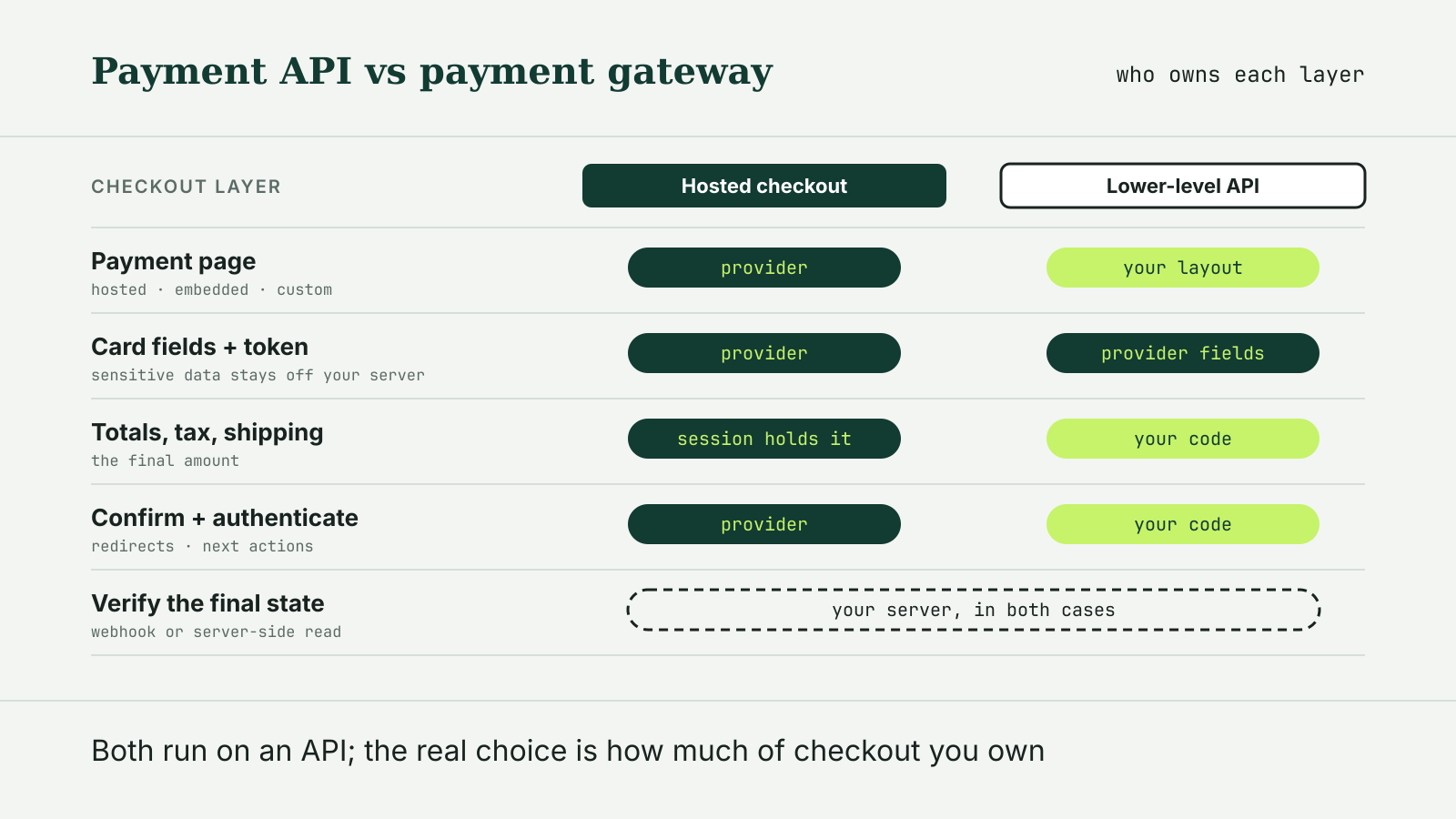
Table comparing hosted checkout with a lower-level payment API across five layers: payment page, card fields and tokens, totals, confirmation and final-state verification, showing which layers the provider or your code owns
Payment APIs ·

Payment API vs Payment Gateway: What You Actually Integrate

Hosted checkout bundles the payment UI; a lower-level API leaves more of the payment lifecycle in your code.
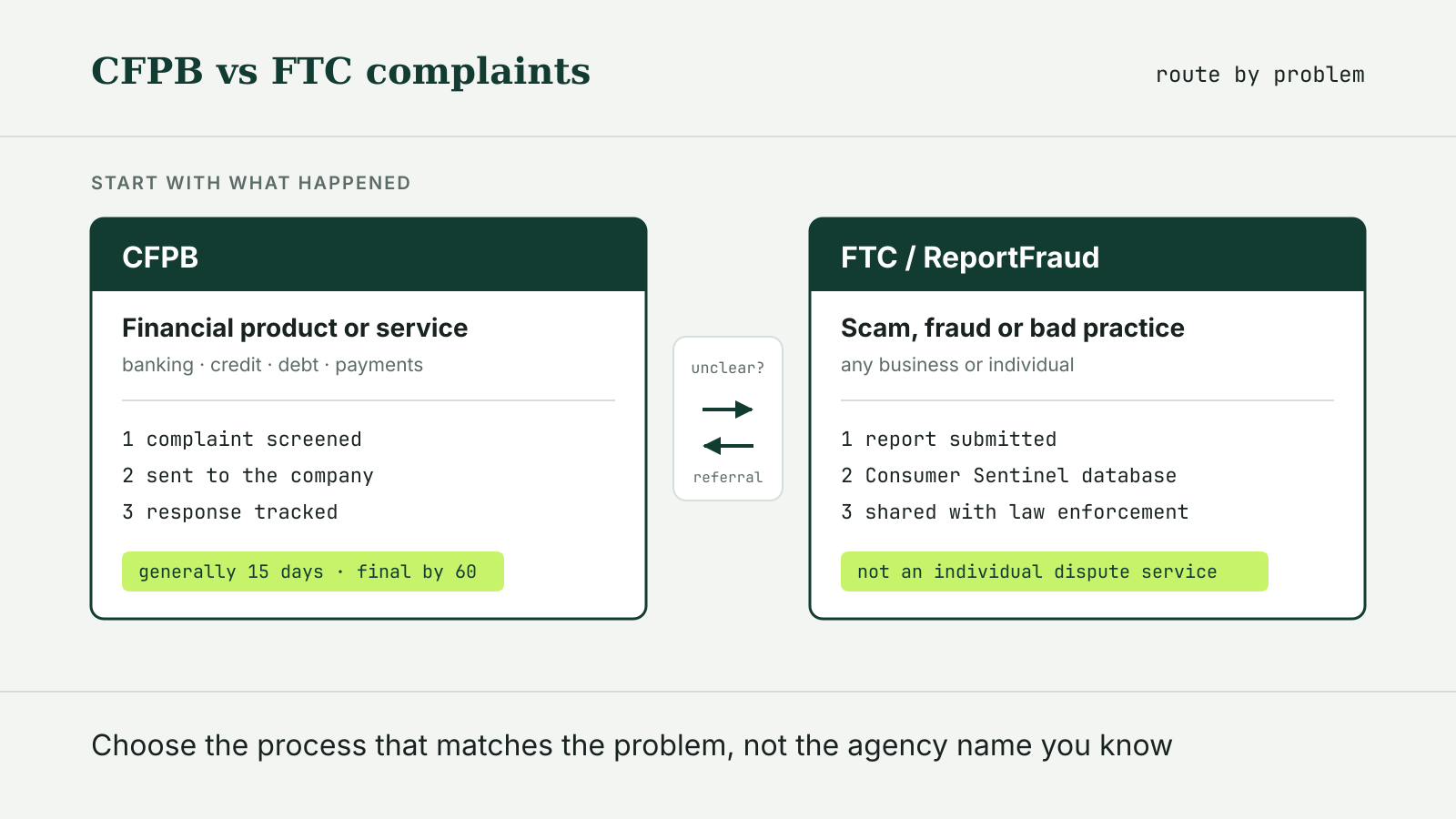
Comparison diagram routing financial product and service complaints to the CFPB company-response process, and scam, fraud or bad-practice reports to the FTC Consumer Sentinel database, with referral between the two
CFPB ·

CFPB vs FTC Complaints: Where to Report a Problem

Use the CFPB for financial product complaints; use ReportFraud for scams and bad business practices.
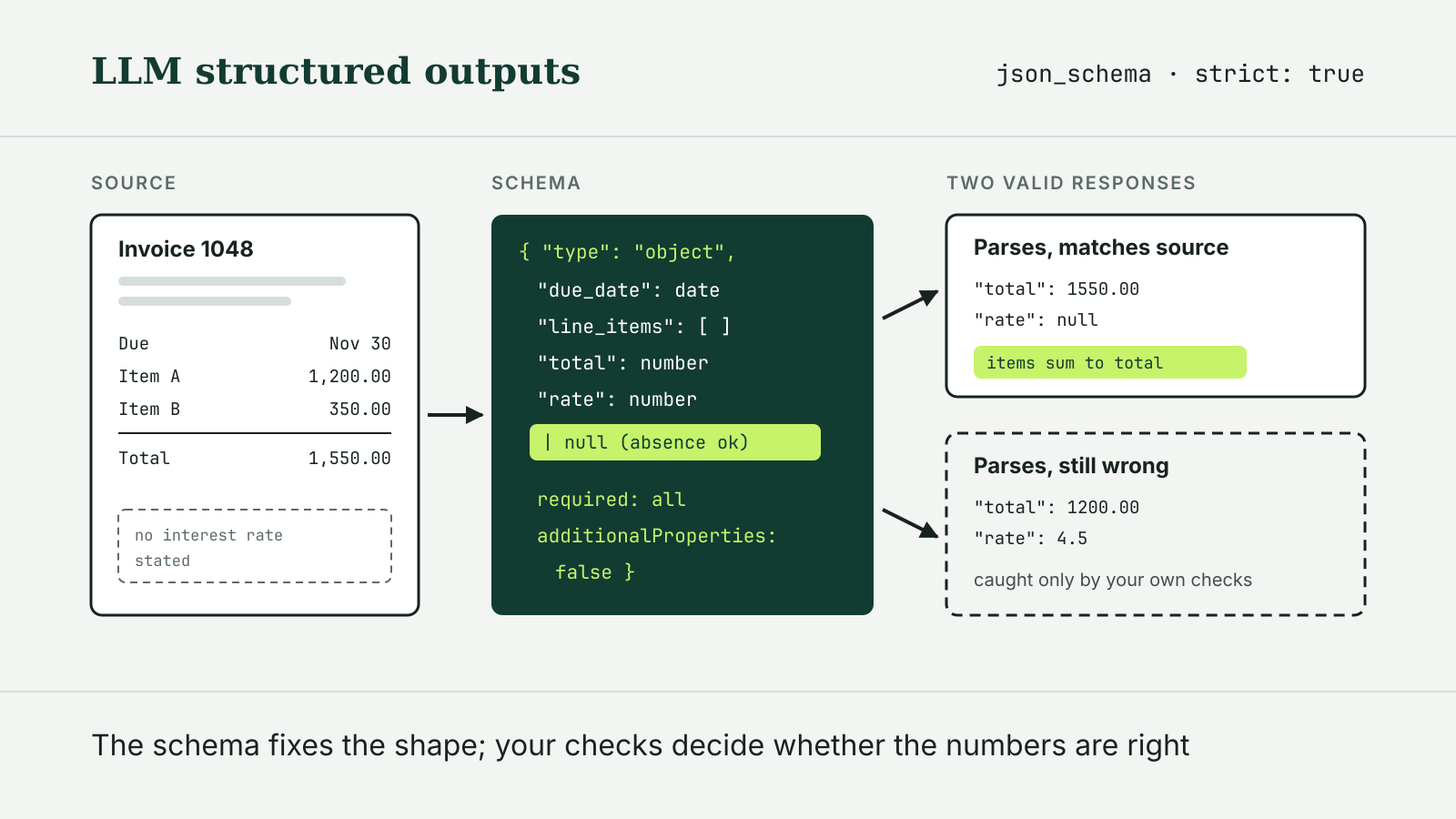
Diagram of an invoice passed through a JSON Schema to produce two schema-valid responses, one that matches the source and one with a wrong total and an invented rate
Structured outputs ·

LLM Structured Outputs: JSON Schema Validity Is Not Accuracy

How OpenAI and Anthropic enforce a JSON Schema, and the checks financial data extraction still needs.
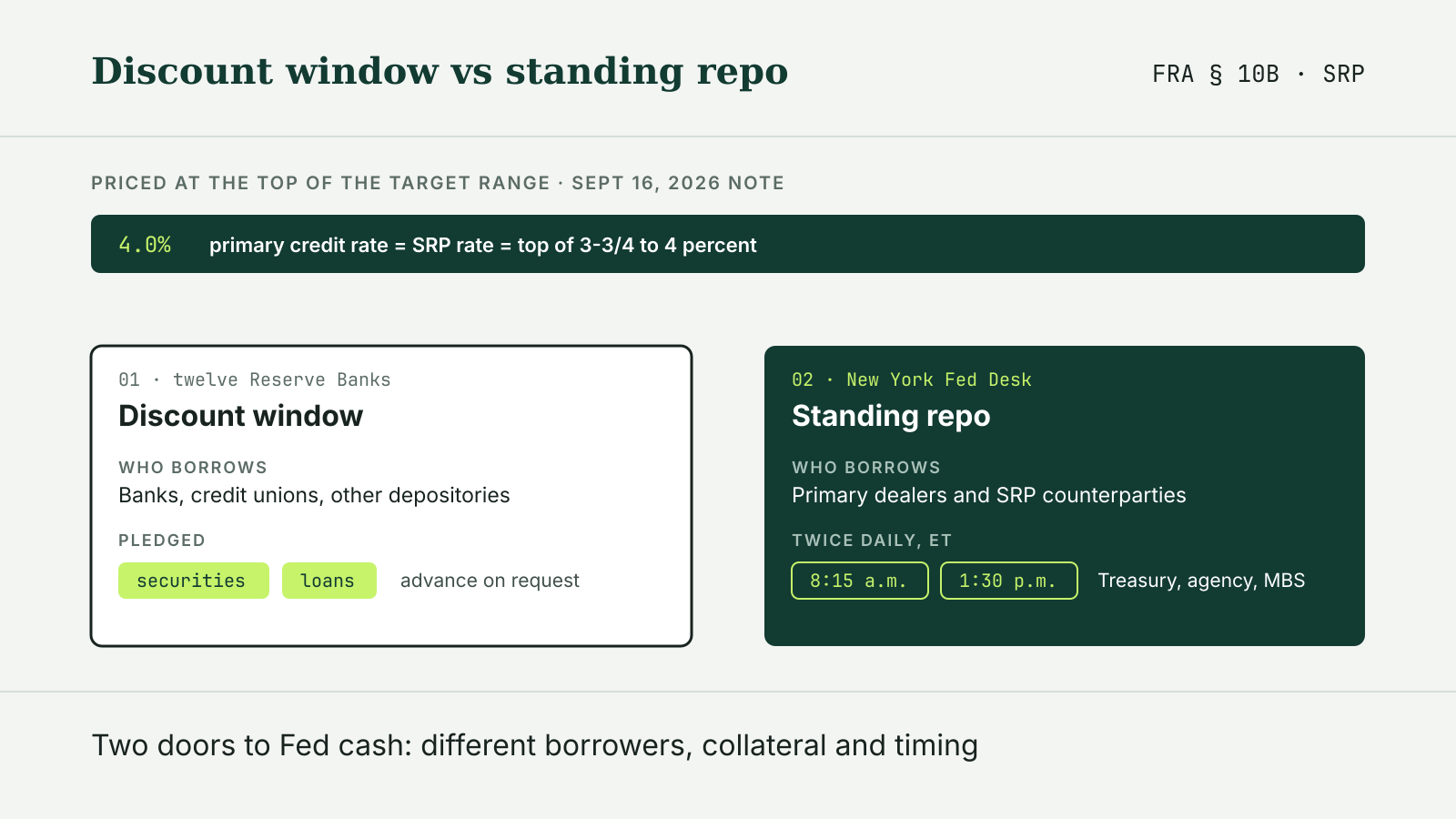
Comparison of the Federal Reserve discount window and standing repo operations: who borrows, what collateral is pledged and the two daily operation times, under a band showing both rates at 4.0 percent in the September 16, 2026 implementation note
Federal Reserve ·

Discount Window vs Standing Repo Facility: The Fed's Two Backstops

Who can borrow, what they pledge and how each is priced: the Fed's discount window and standing repo side by side.
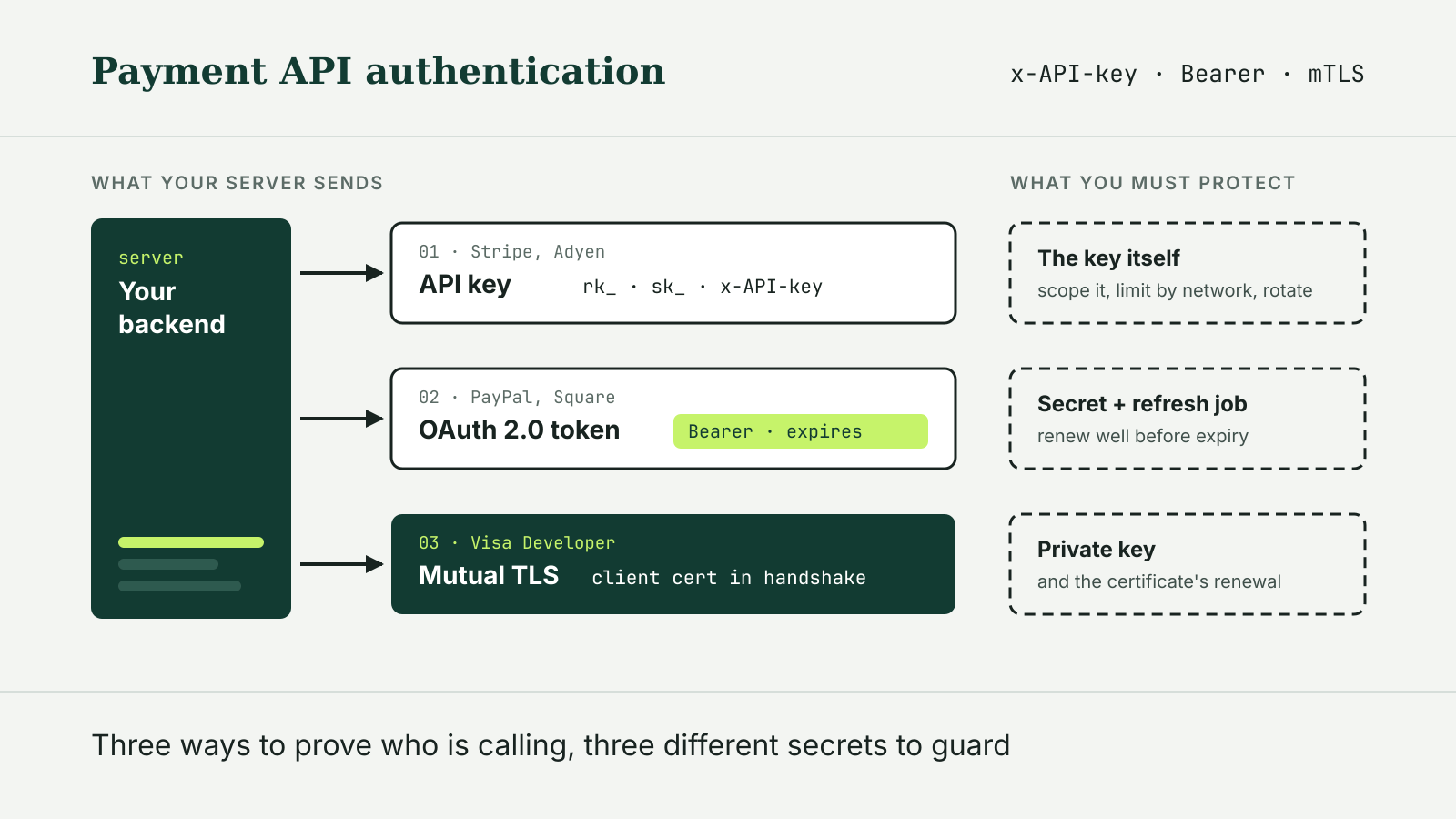
Diagram of a backend server sending three kinds of payment API credentials: an API key, an OAuth 2.0 bearer token and a mutual TLS client certificate, each paired with the secret it requires you to protect
Payment APIs ·

Payment API Authentication: API Keys, OAuth 2.0 and Mutual TLS

API keys, OAuth 2.0 tokens and mutual TLS compared across Stripe, Adyen, PayPal, Square and Visa.
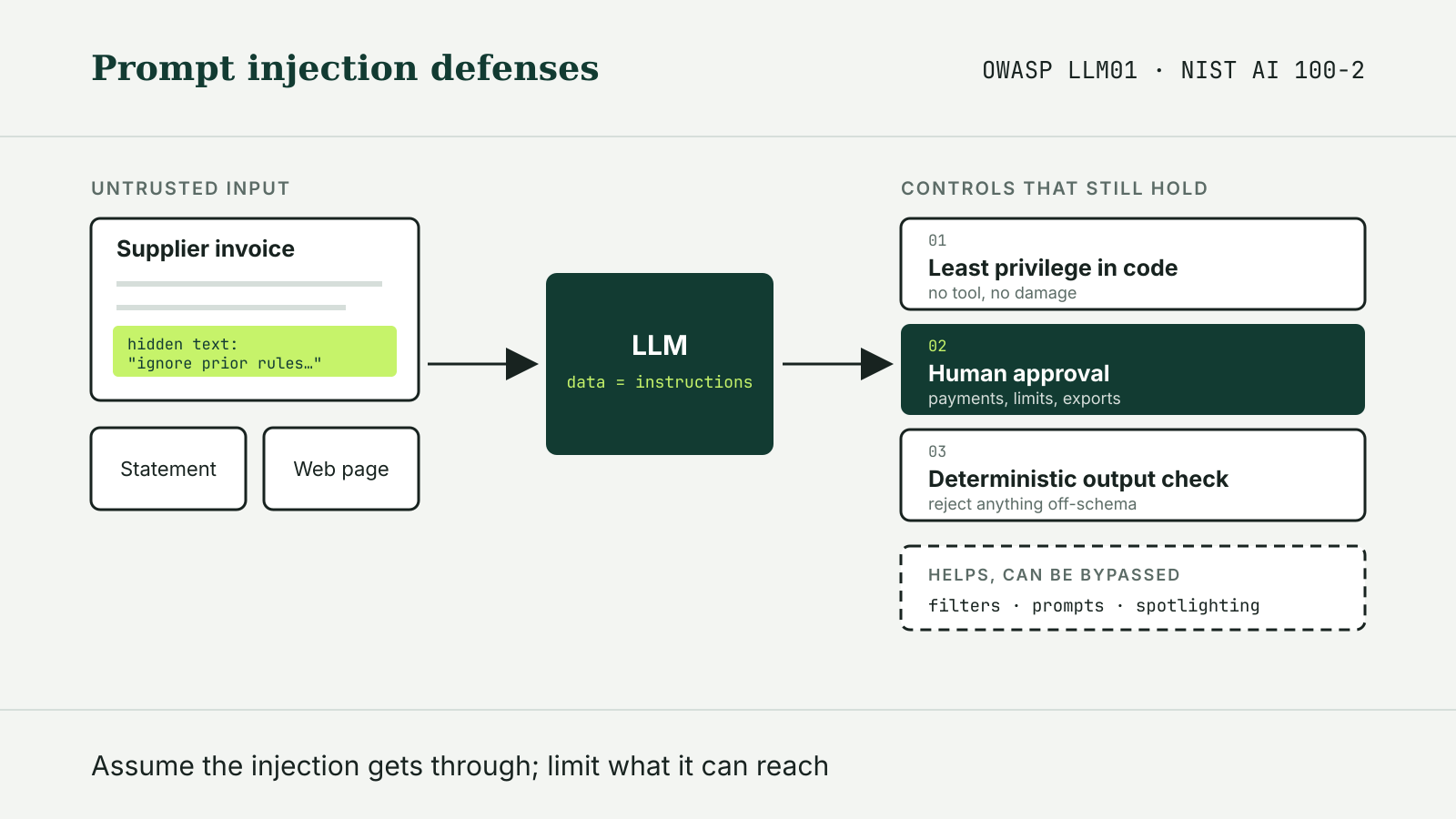
Diagram: a supplier invoice with hidden instructions flows into a language model, followed by three controls that still hold (least privilege, human approval, deterministic output checks) and weaker filters that can be bypassed
Prompt injection ·

Prompt Injection in Financial LLM Apps: The Defenses That Hold Up

OWASP and NIST say prompt injection cannot be reliably filtered. These controls still protect financial data.
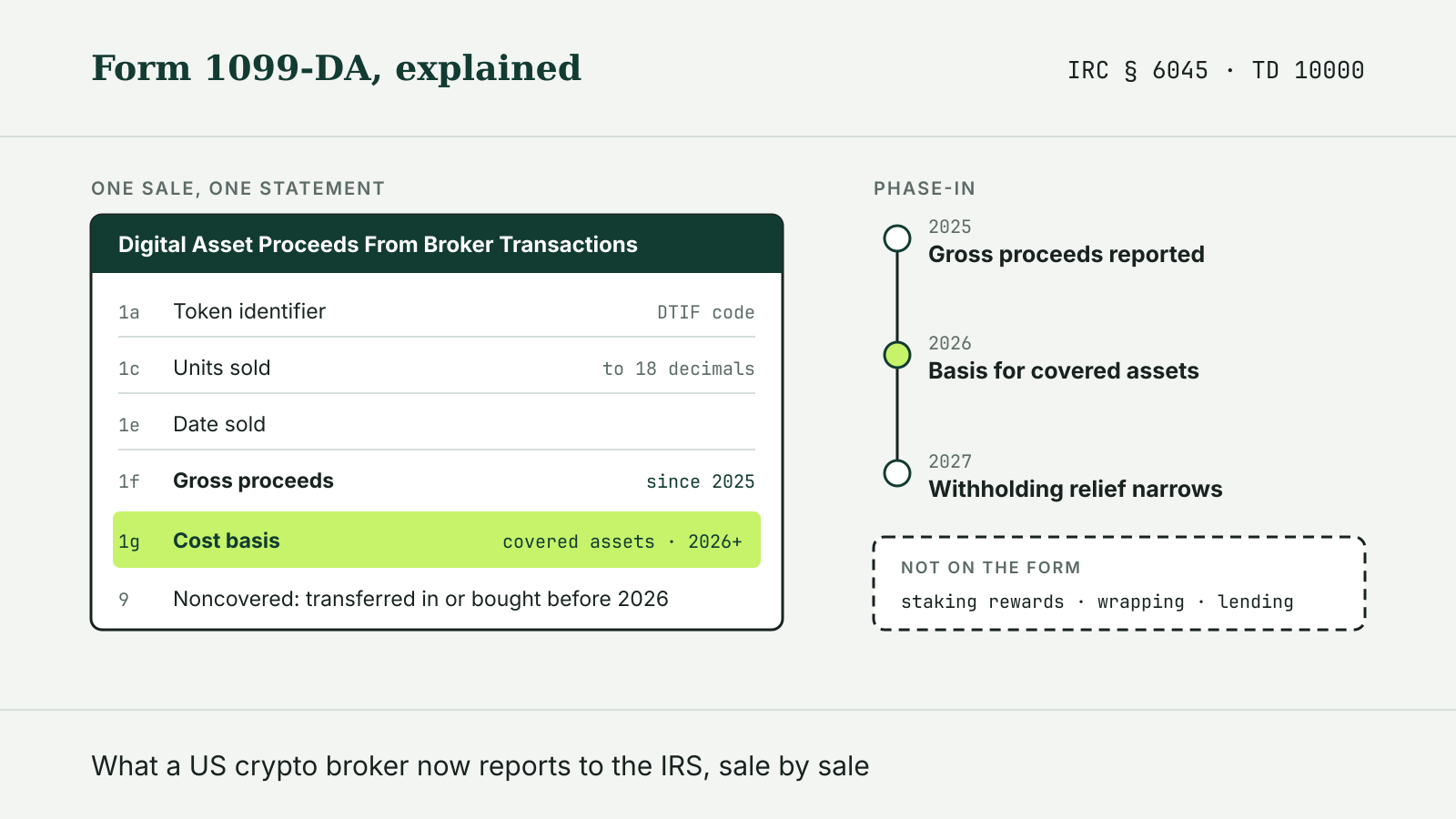
Diagram of Form 1099-DA boxes, from token identifier and gross proceeds to cost basis for covered assets, beside a 2025 to 2027 phase-in timeline and items left off the form
Form 1099-DA ·

Form 1099-DA Explained: What Crypto Brokers Report to the IRS

Who files Form 1099-DA, what each box reports, why cost basis is often blank and what changes for 2026 sales.
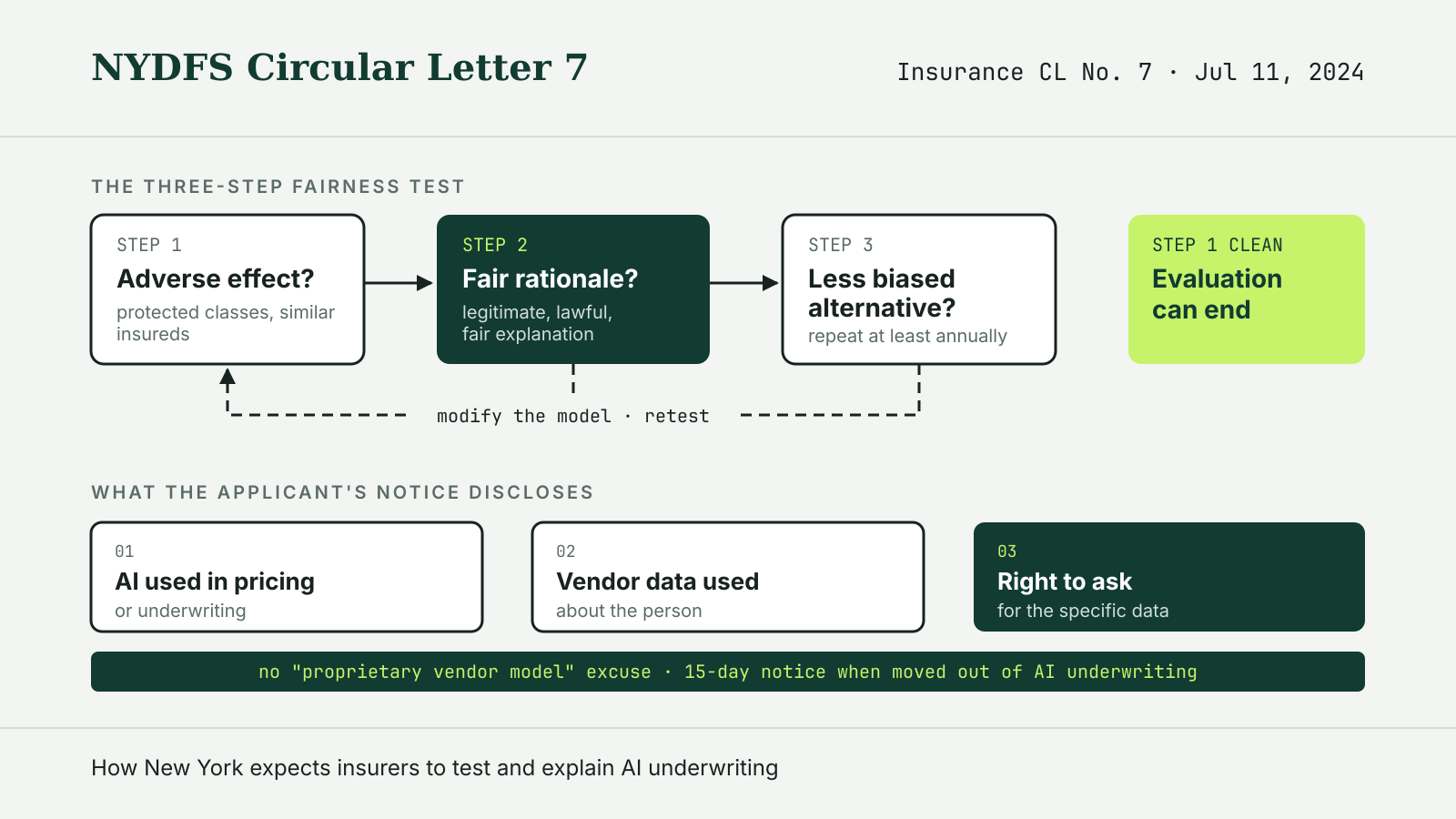
Diagram of the NYDFS Circular Letter 7 three-step fairness test, with a retest loop, and the three disclosures an applicant notice should include
NYDFS ·

NYDFS Circular Letter 7: What New York Expects From AI Underwriting

What New York expects when AI or outside data shapes insurance underwriting: fairness tests, governance and notices.
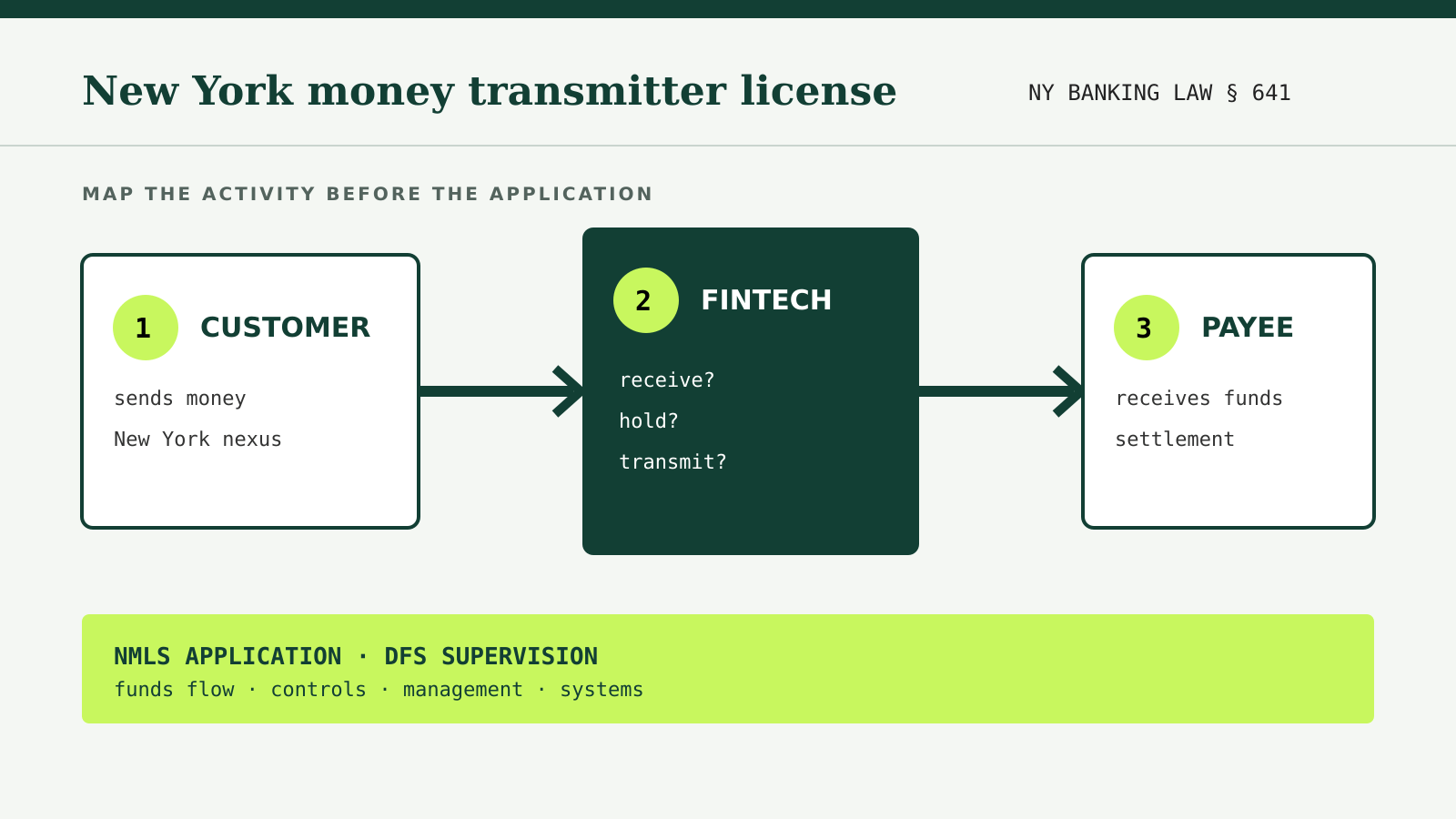
NYDFS ·

When a Fintech Needs a New York Money Transmitter License

A guide to New York money transmitter licensing, NMLS applications, funds-flow analysis, and DFS supervision.

NY Presswire

What are you looking for?

Search a topic or question