
AI / FINTECH / CRYPTO / TECH

NY Presswire

Understand the systems shaping money.

Stories: PayPal

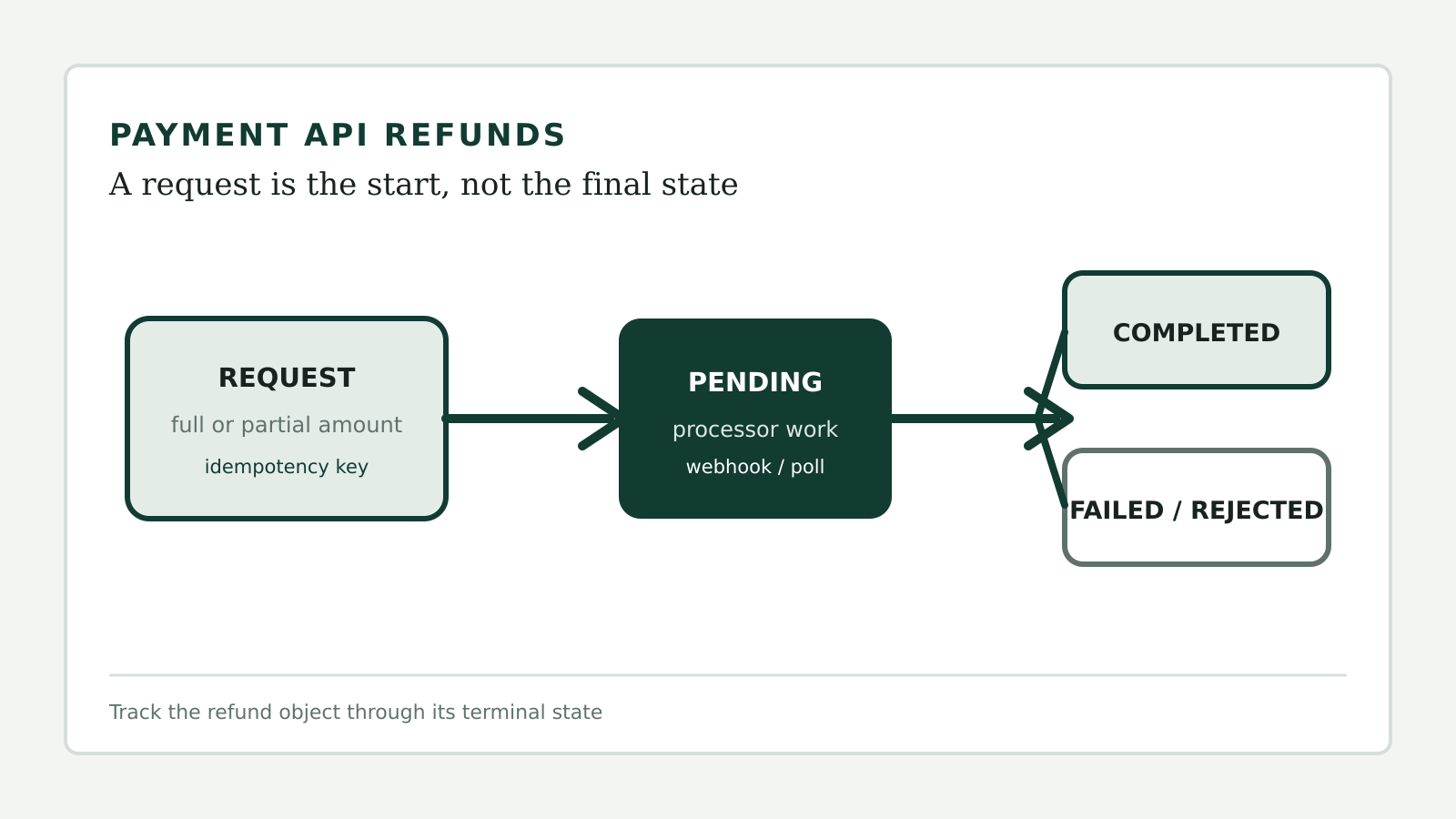
Refund API state diagram from request through pending processing to completed or failed outcomes
Payment APIs ·

Payment API Refunds: Full, Partial and Pending States

How Stripe, Adyen, PayPal and Square handle full, partial and asynchronous refunds.
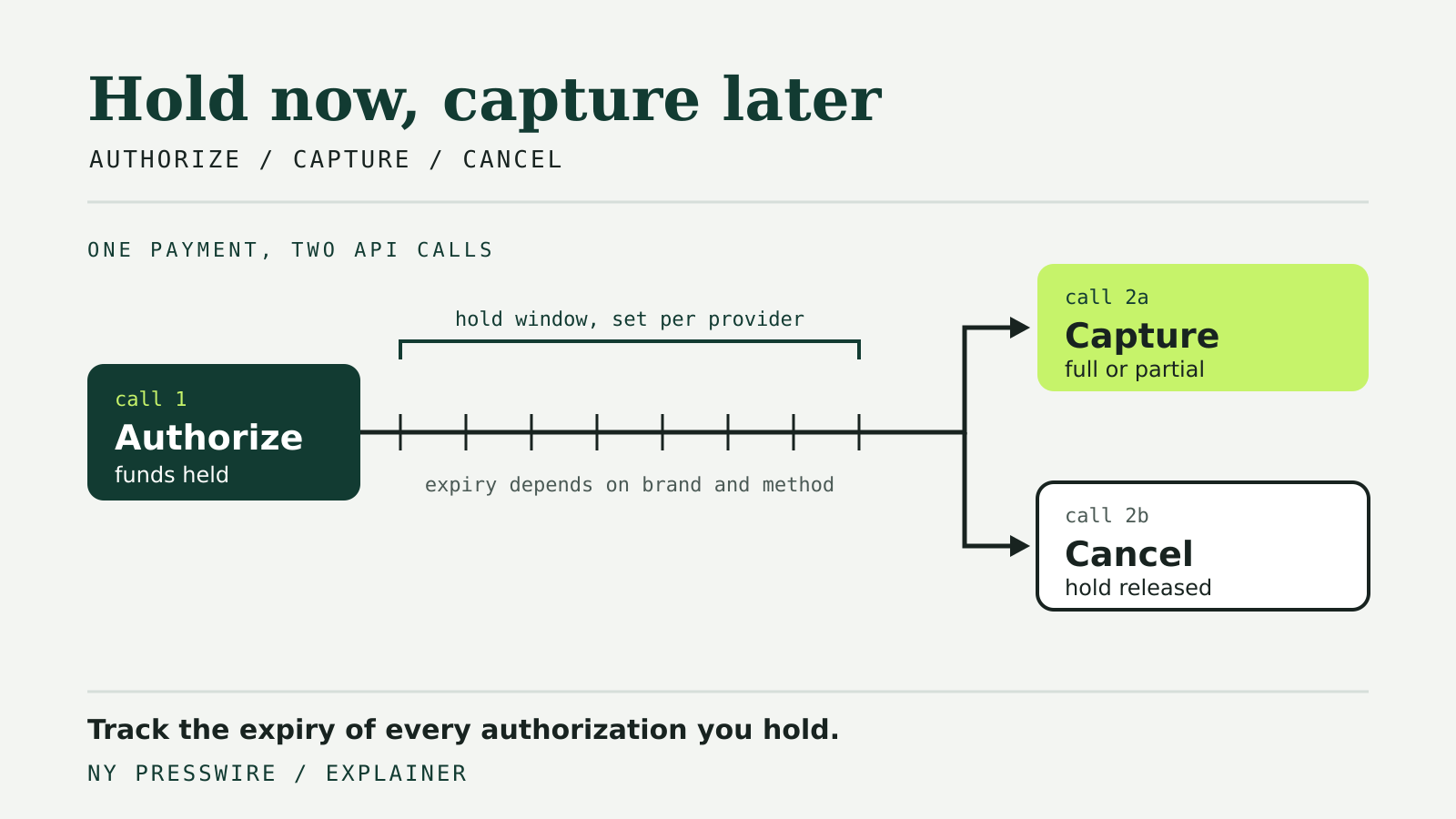
Diagram of a card payment authorized first, held for a provider-set window, then either captured in full or part or cancelled to release the hold
Payment APIs ·

Authorize and Capture in Payment APIs, Compared

How separate authorization and capture works at Stripe, Adyen, PayPal and Square, from hold windows to expiry.
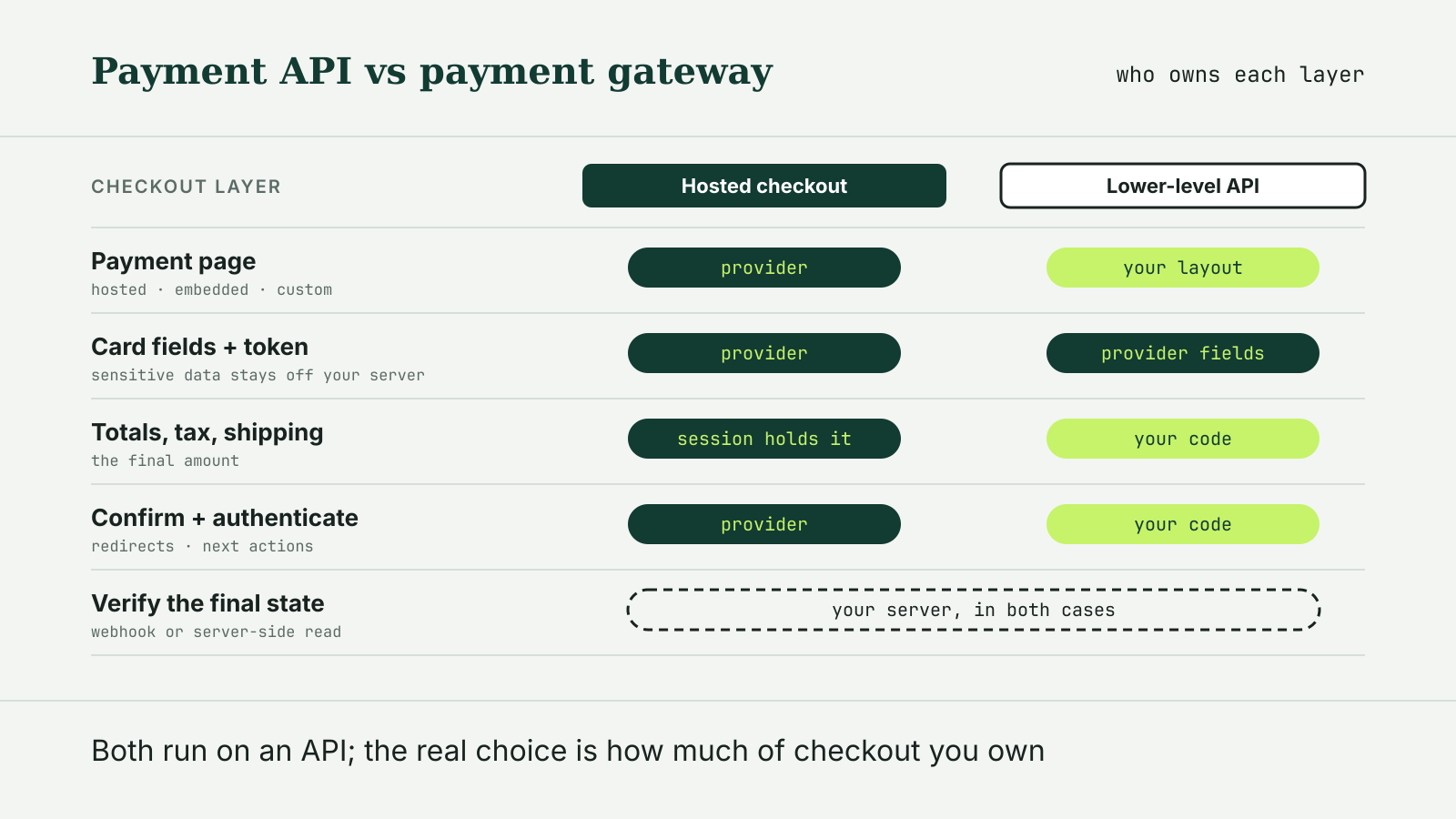
Table comparing hosted checkout with a lower-level payment API across five layers: payment page, card fields and tokens, totals, confirmation and final-state verification, showing which layers the provider or your code owns
Payment APIs ·

Payment API vs Payment Gateway: What You Actually Integrate

Hosted checkout bundles the payment UI; a lower-level API leaves more of the payment lifecycle in your code.
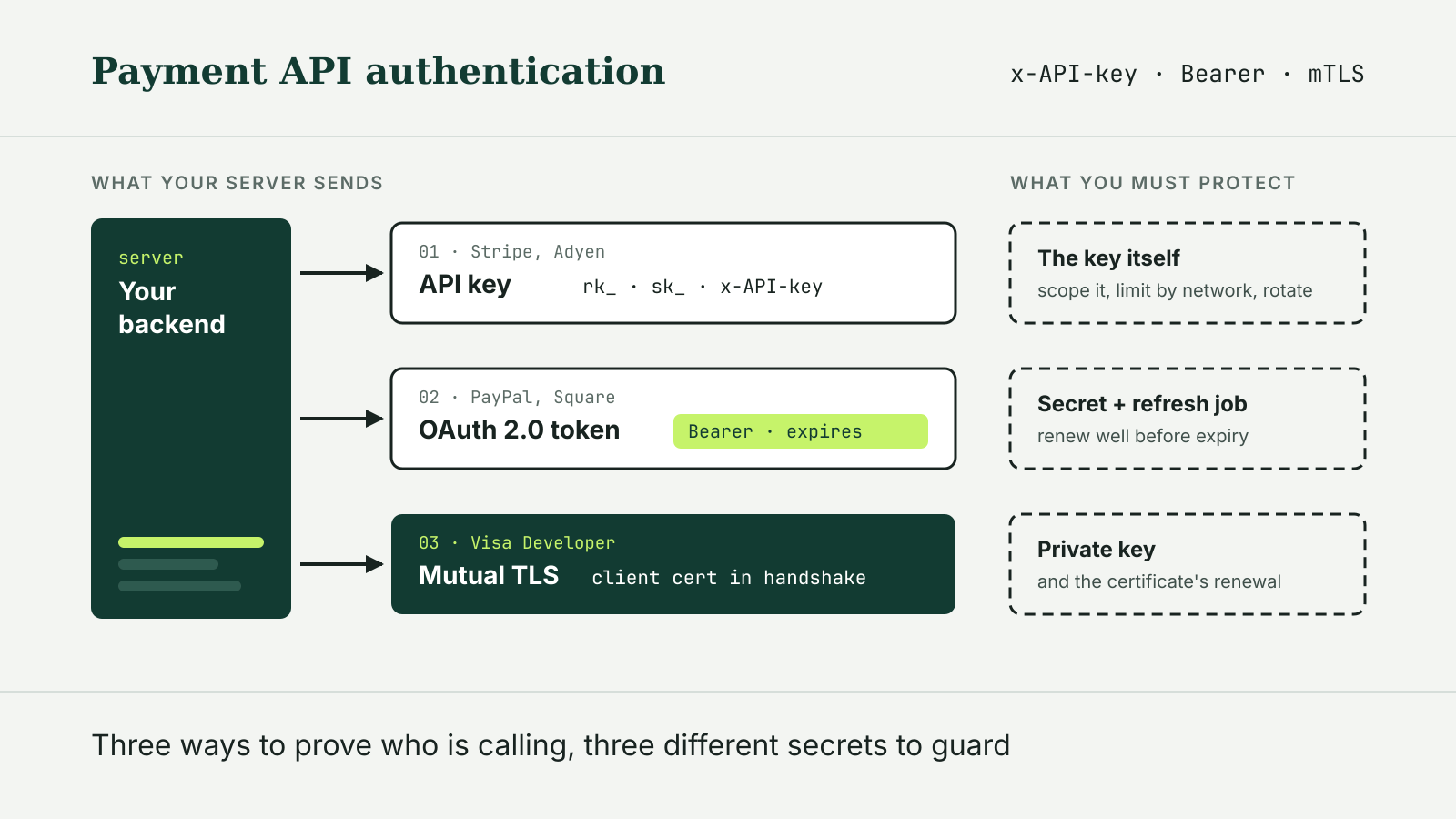
Diagram of a backend server sending three kinds of payment API credentials: an API key, an OAuth 2.0 bearer token and a mutual TLS client certificate, each paired with the secret it requires you to protect
Payment APIs ·

Payment API Authentication: API Keys, OAuth 2.0 and Mutual TLS

API keys, OAuth 2.0 tokens and mutual TLS compared across Stripe, Adyen, PayPal, Square and Visa.
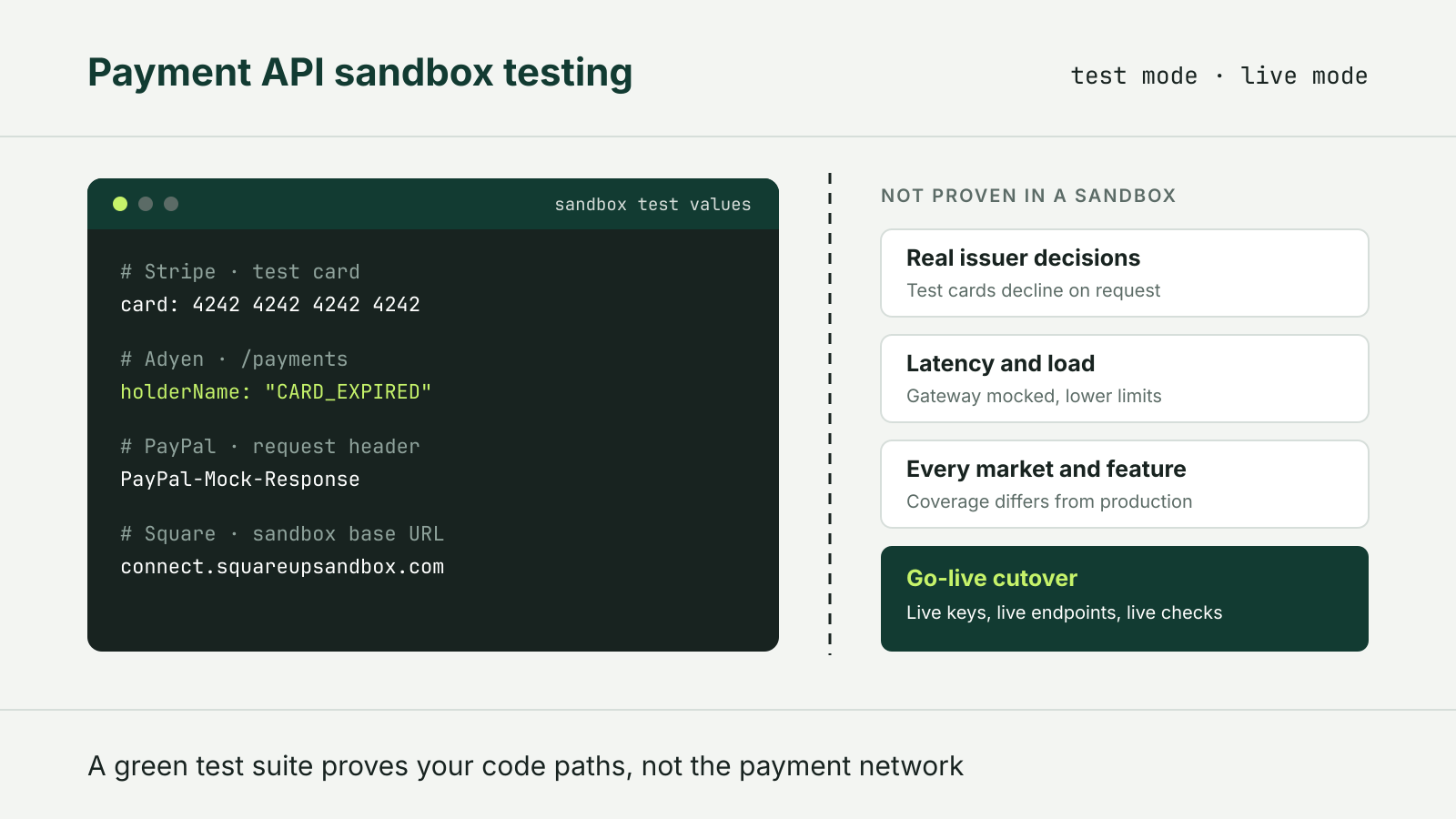
Diagram of payment API sandbox testing: sandbox test values for Stripe, Adyen, PayPal and Square beside a list of what a sandbox does not prove, from issuer decisions to go-live cutover
Payment APIs ·

Payment API Sandbox Testing: What Test Mode Proves and What It Can't

How Stripe, Adyen, PayPal and Square sandboxes force failures, and where each says test mode differs from production.
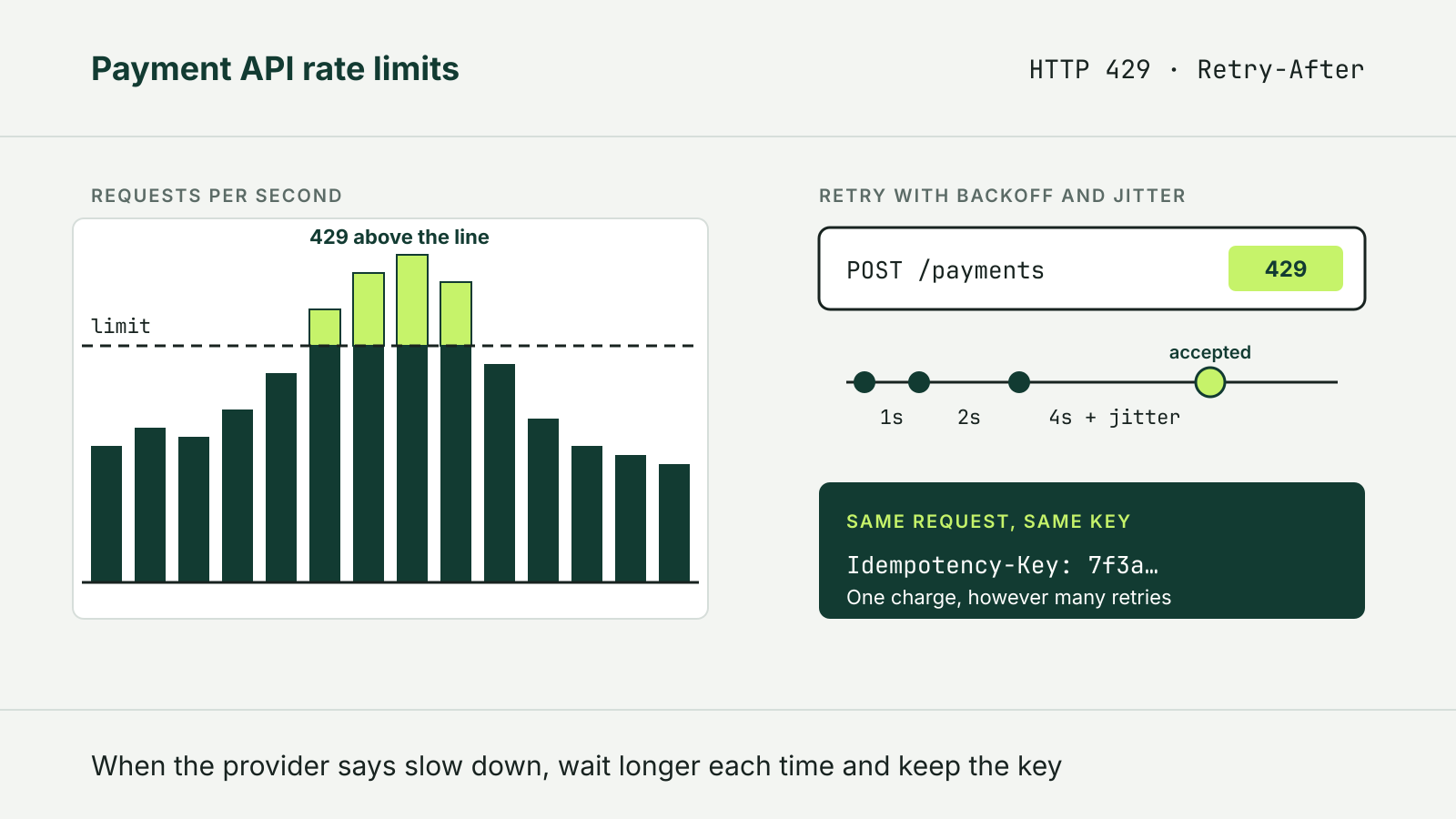
Bar chart of API requests per second crossing a dashed rate limit, with the excess answered by 429, beside a request retried after 1, 2 and 4 seconds plus jitter and sent with the same idempotency key.
Payment APIs ·

Payment API Rate Limits: Handling a 429 at Stripe, Square and PayPal

How Stripe, Square and PayPal throttle API calls, and how to retry a 429 without charging twice.
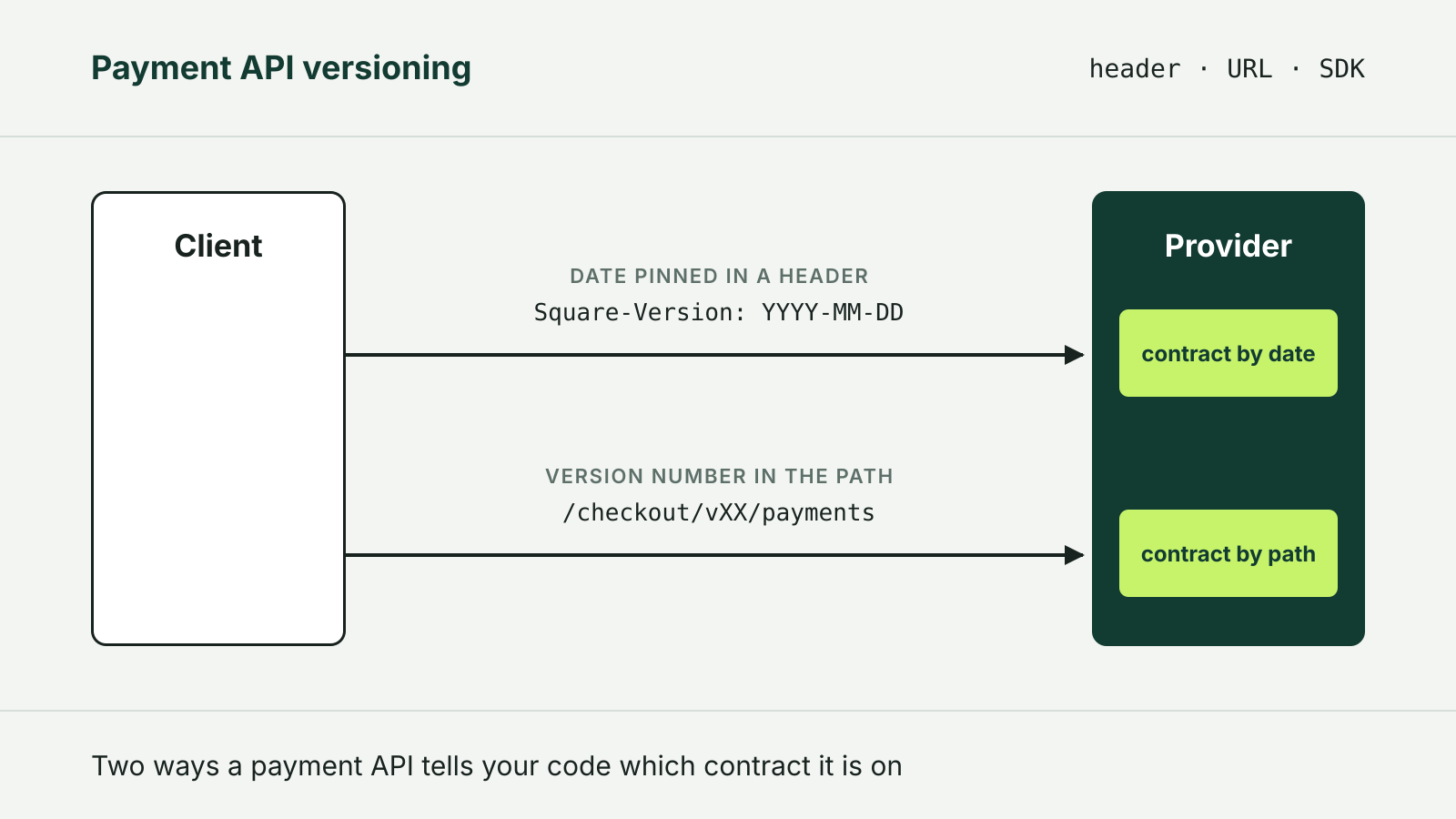
Diagram: a client calls a payment provider two ways, once with a dated version header and once with a version number in the URL path.
Payment APIs ·

Payment API Versioning: Dated Headers vs Version Numbers in the URL

How Stripe, Square, Adyen and PayPal ship breaking changes, and what each model means for your code.
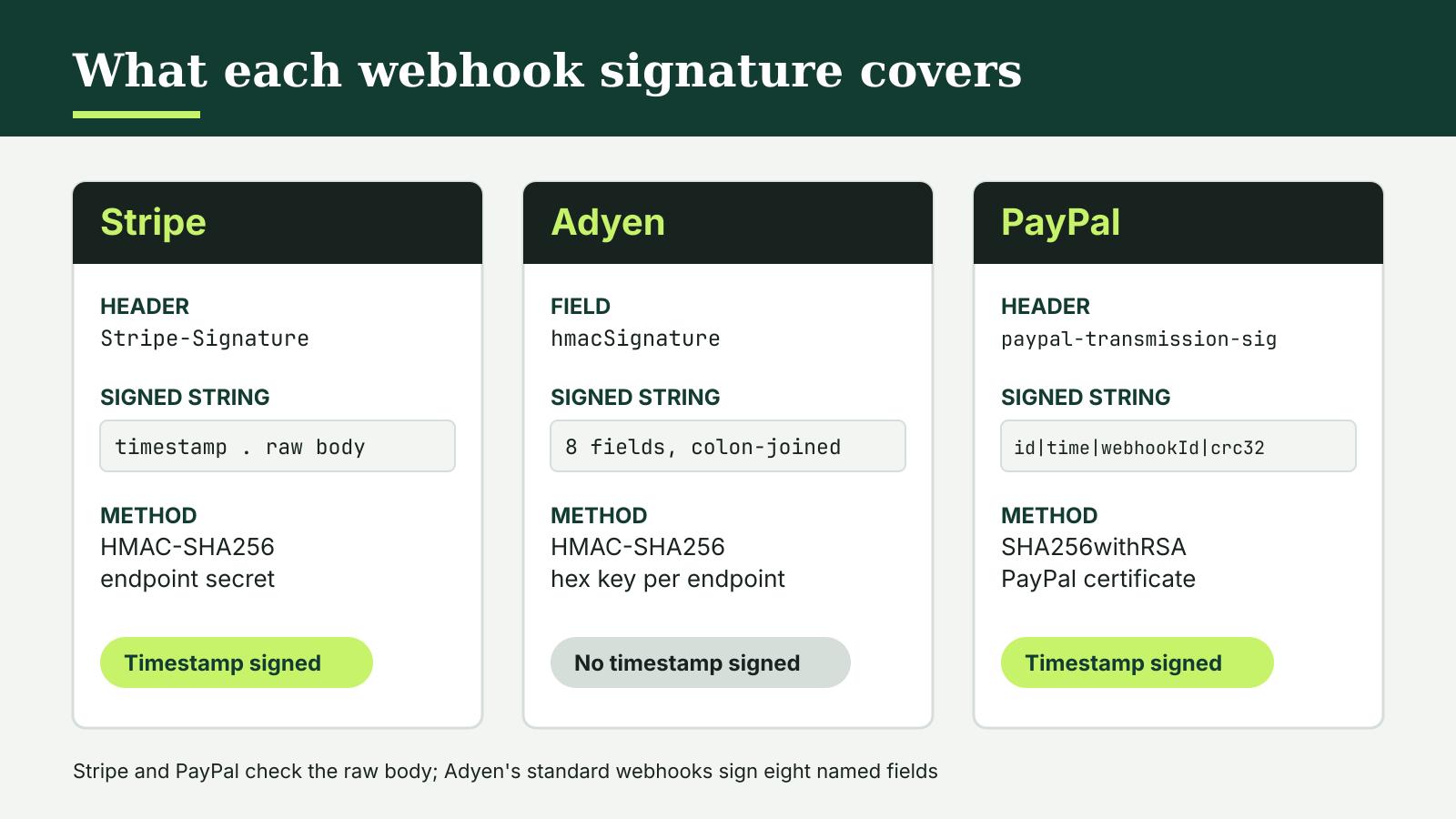
Comparison of payment webhook signatures: Stripe signs a timestamp and the raw body with HMAC-SHA256, Adyen signs eight colon-joined fields with HMAC-SHA256 and no timestamp, and PayPal signs the transmission ID, time, webhook ID and a CRC32 of the body with SHA256withRSA.
Payment APIs ·

Verifying Payment Webhook Signatures at Stripe, Adyen and PayPal

Stripe, Adyen and PayPal all sign webhooks, but not the same things. What each check proves and where it breaks.
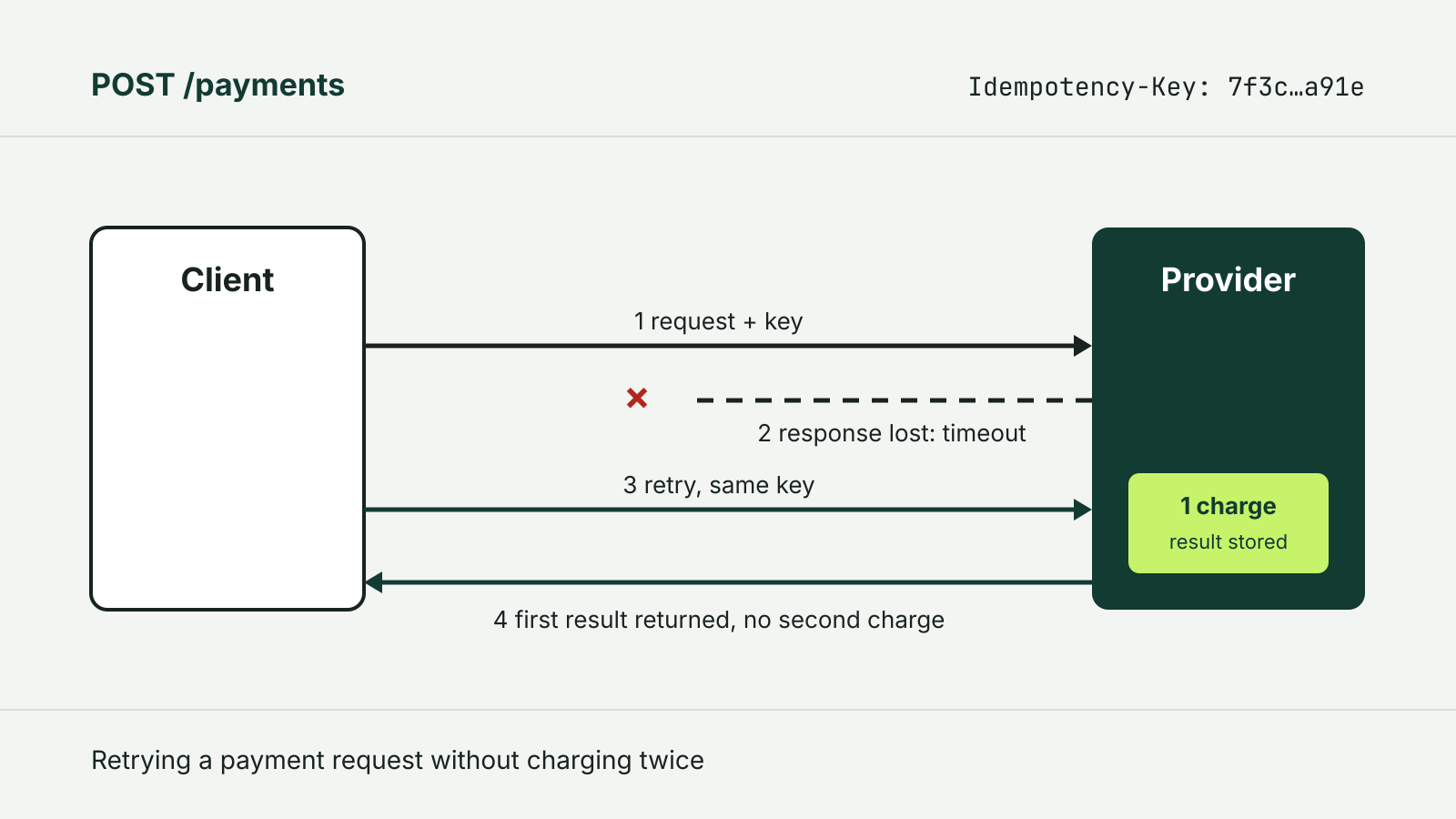
Diagram of a payment request sent with an idempotency key: the response is lost to a timeout, the client retries with the same key, and the provider returns the stored first result with only one charge.
Payment APIs ·

Idempotency Keys in a Payment API: Retrying Without Charging Twice

How idempotency keys let a payment API call be retried safely, and where Stripe, Adyen, PayPal and Square differ.

NY Presswire

What are you looking for?

Search a topic or question