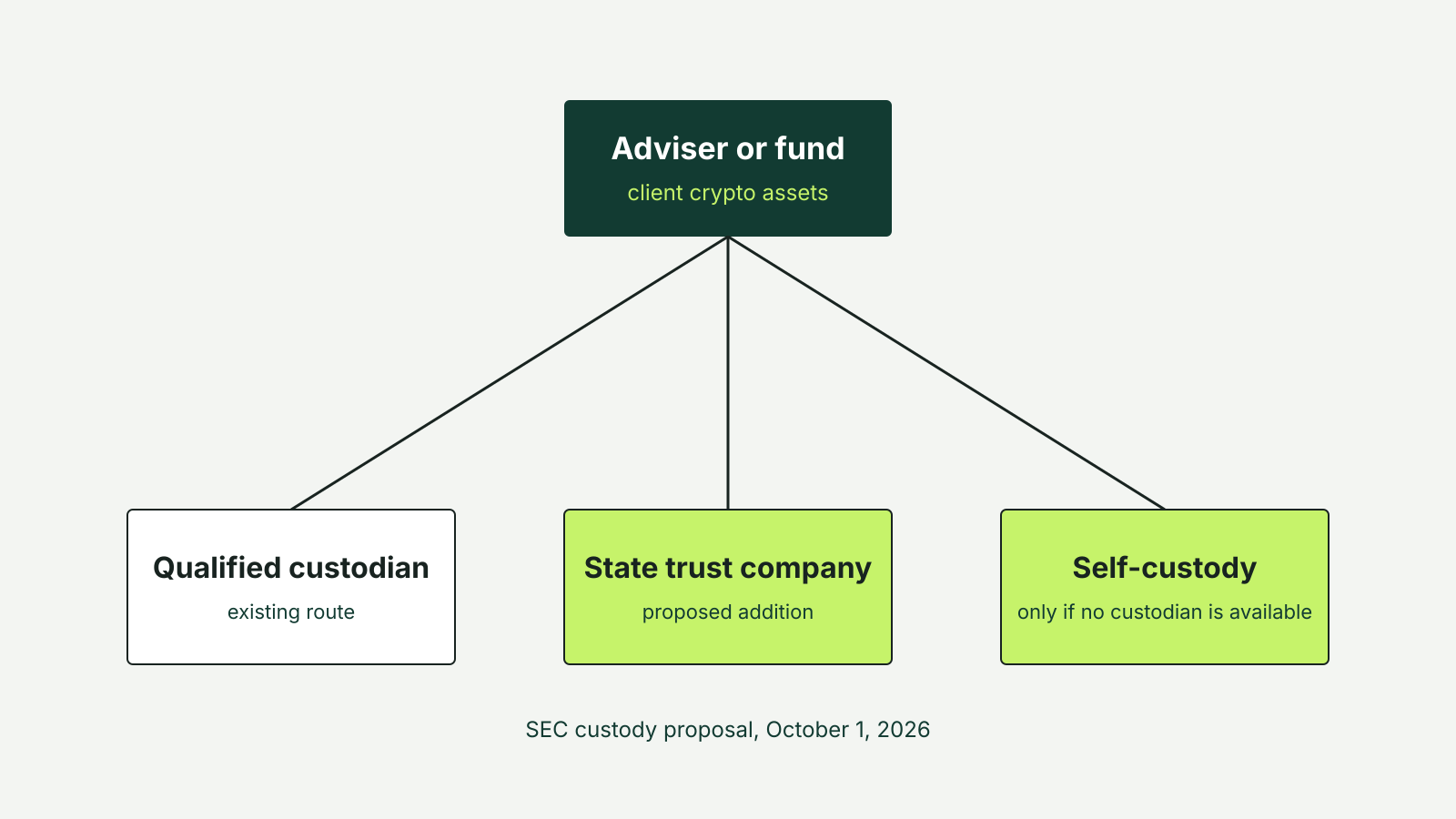
The Securities and Exchange Commission on October 1, 2026 proposed rules that would tell registered investment advisers and regulated funds how they may hold crypto assets for clients. The SEC crypto custody proposal would add state trust companies as permitted custodians for those assets and, in narrow cases, let an adviser keep them itself.
According to the SEC’s announcement, the proposal covers advisers under the Investment Advisers Act of 1940 and regulated funds, meaning registered investment companies and business development companies, under the Investment Company Act of 1940. The public comment period runs for 60 days after the proposing release is published in the Federal Register. Nothing changes for advisers until the Commission adopts a final rule.
What the proposal would change
State trust companies. Commissioner Hester Peirce’s statement sets out the main condition. Before engaging a state trust company, and annually after that, the adviser or fund would need a reasonable basis, after due inquiry, for believing the company is authorized by the relevant state banking authority to provide crypto asset custody and has written policies reasonably designed to safeguard crypto assets and related cash from theft, loss, misuse and misappropriation.
Self-custody. An adviser could hold client crypto assets itself only after determining, before it starts and every quarter after that, that no permitted custodian is available for the asset. Commissioner Mark Uyeda’s statement lists the guardrails: safeguarding expertise, cybersecurity protections, annual reviews, internal reporting, account statements and disclosures to clients.
Scope. The rules would not reach every token. Peirce quotes the release: the Advisers Act amendments would apply only to crypto assets that are funds or securities, and the Investment Company Act rules only to crypto assets that are securities or similar investments.
Other changes. The SEC says the package also updates financial statement audit requirements for advisers and broker-dealer custody for regulated funds. Uyeda adds that it would exclude authorized discretionary trading from the Advisers Act custody rule under conditions, and exempt an adviser from independent verification when its only custody comes from a standing letter of authorization.
Why New York firms will read it closely
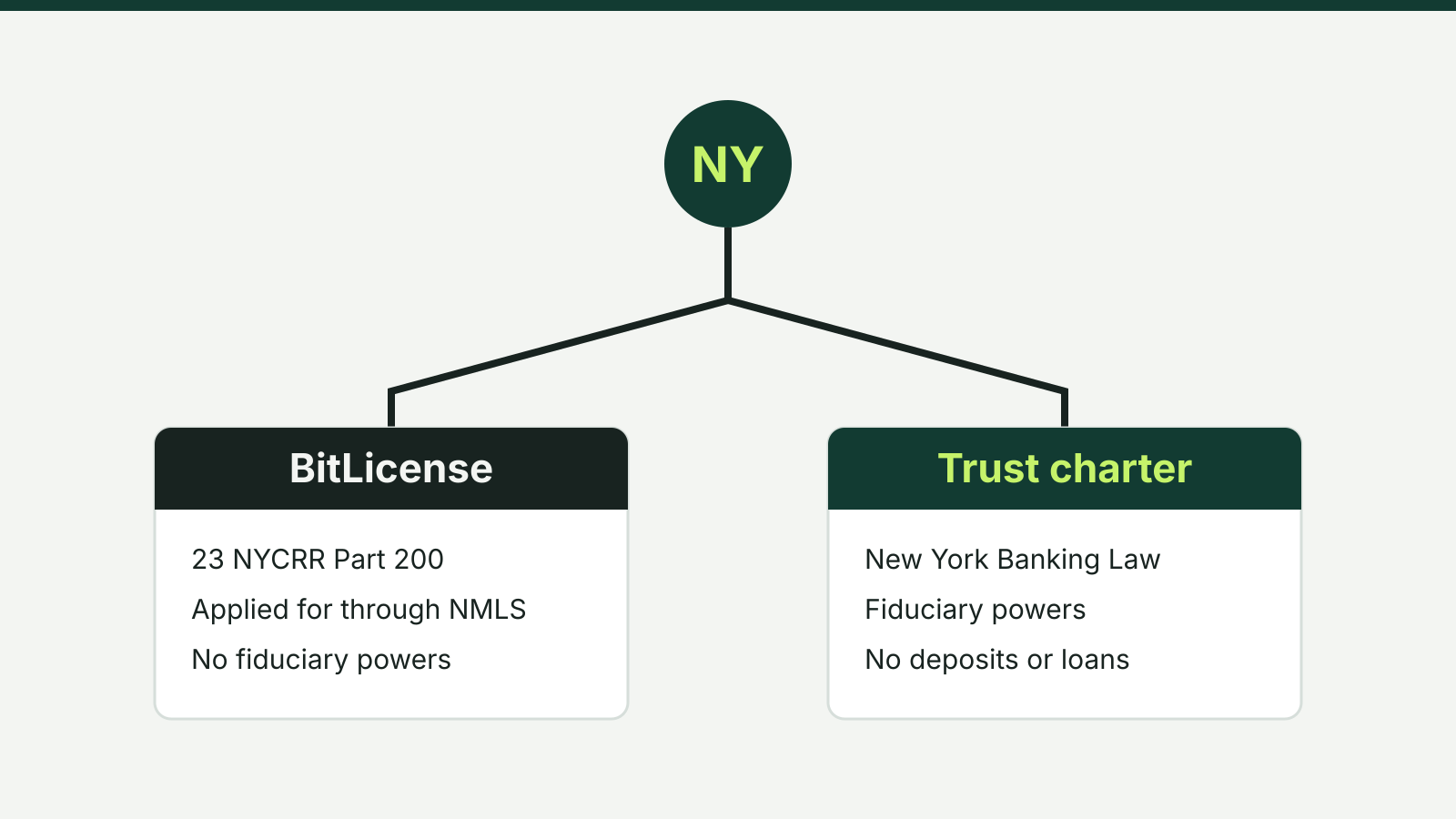
Several crypto custodians in New York are limited purpose trust companies chartered by the Department of Financial Services, as our BitLicense vs trust charter explainer describes, and the NYDFS BitLicense list records which groups hold a trust charter. The proposal turns on authorization by the state banking authority and on the custodian’s own safeguarding policies, so whether a given trust company qualifies would depend on the conditions in the final rule. Uyeda called state-chartered trust companies “important participants in the crypto custody ecosystem.”
How it fits the SEC’s 2026 agenda
The proposal replaces the approach of the Commission’s 2023 custody proposal, which Uyeda says would have required qualified custodians while doubting that any could show exclusive control over crypto assets. Chairman Paul Atkins’s statement places it after the Commission’s March interpretation on which crypto assets are securities, the August Regulation Crypto Assets proposal and the Innovation Exemption for tokenized stock trading.
Questions readers ask
Is the rule in force?
No. It is a proposal. Comments are open for 60 days after Federal Register publication, and the Commission would have to adopt a final rule before anything changes.
Who does it apply to?
Registered investment advisers and regulated funds, meaning registered investment companies and business development companies. It does not set custody rules for exchanges or retail wallets.
When could an adviser hold crypto itself?
Only after it determines, before starting and every quarter after, that no permitted custodian is available for that asset, and subject to the safeguards in the proposal.
Sources
- SEC press release 2026-100, October 1, 2026.
- Proposing release: Adviser and Regulated Fund Custody Rules; Crypto Custody Rules, Release Nos. IA-7023, IC-36353.
- Statement of Chairman Paul S. Atkins.
- Statement of Commissioner Hester M. Peirce.
- Statement of Commissioner Mark T. Uyeda.
Sources reviewed October 2, 2026. This is a proposed rule; it is not legal advice for a particular firm.