

Latest
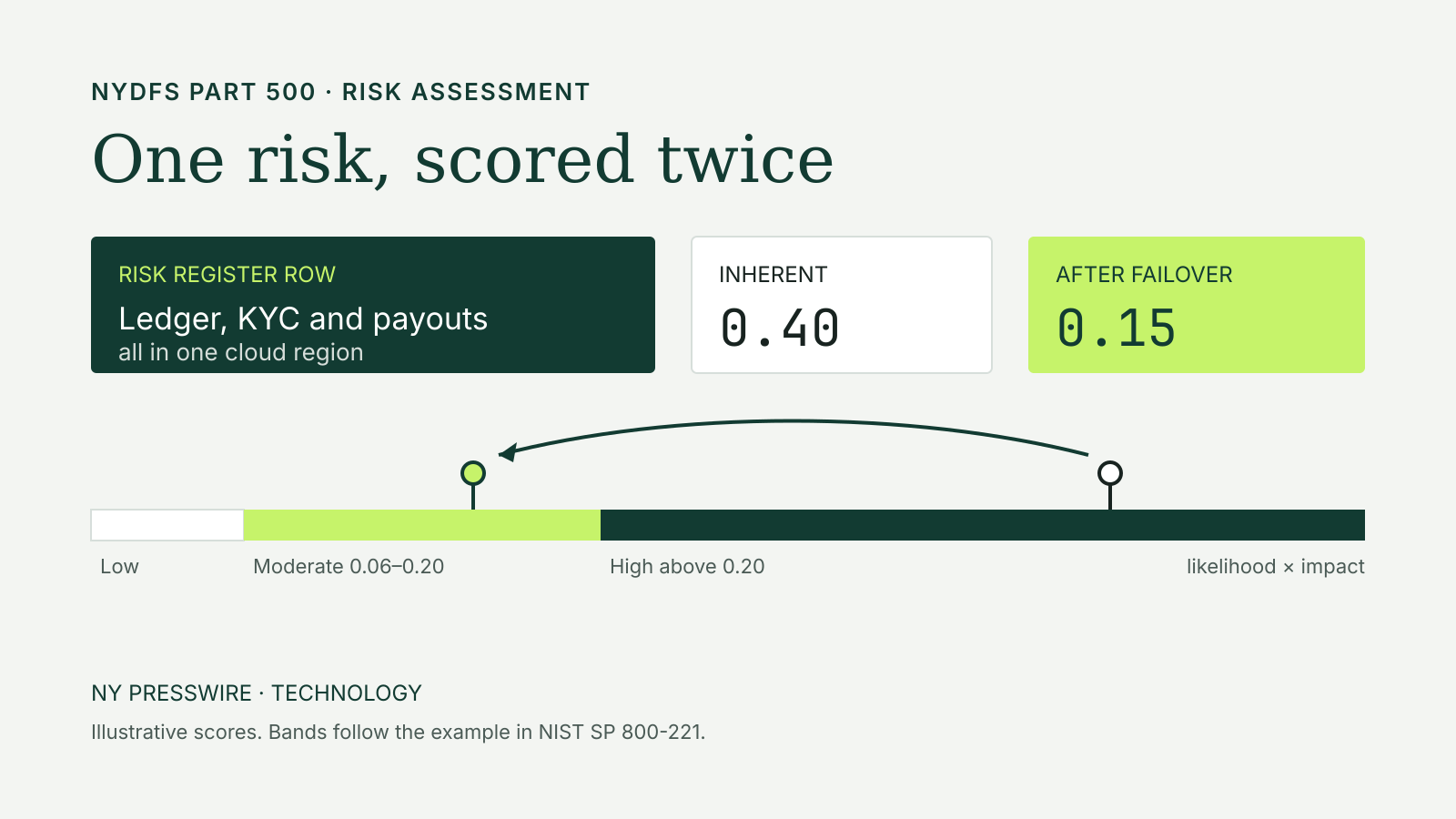
NYDFS Risk Assessment Guidance: What Part 500 Requires and What DFS Expects
What New York's September 2026 risk assessment letter adds to Part 500, who must comply and how a risk is scored.
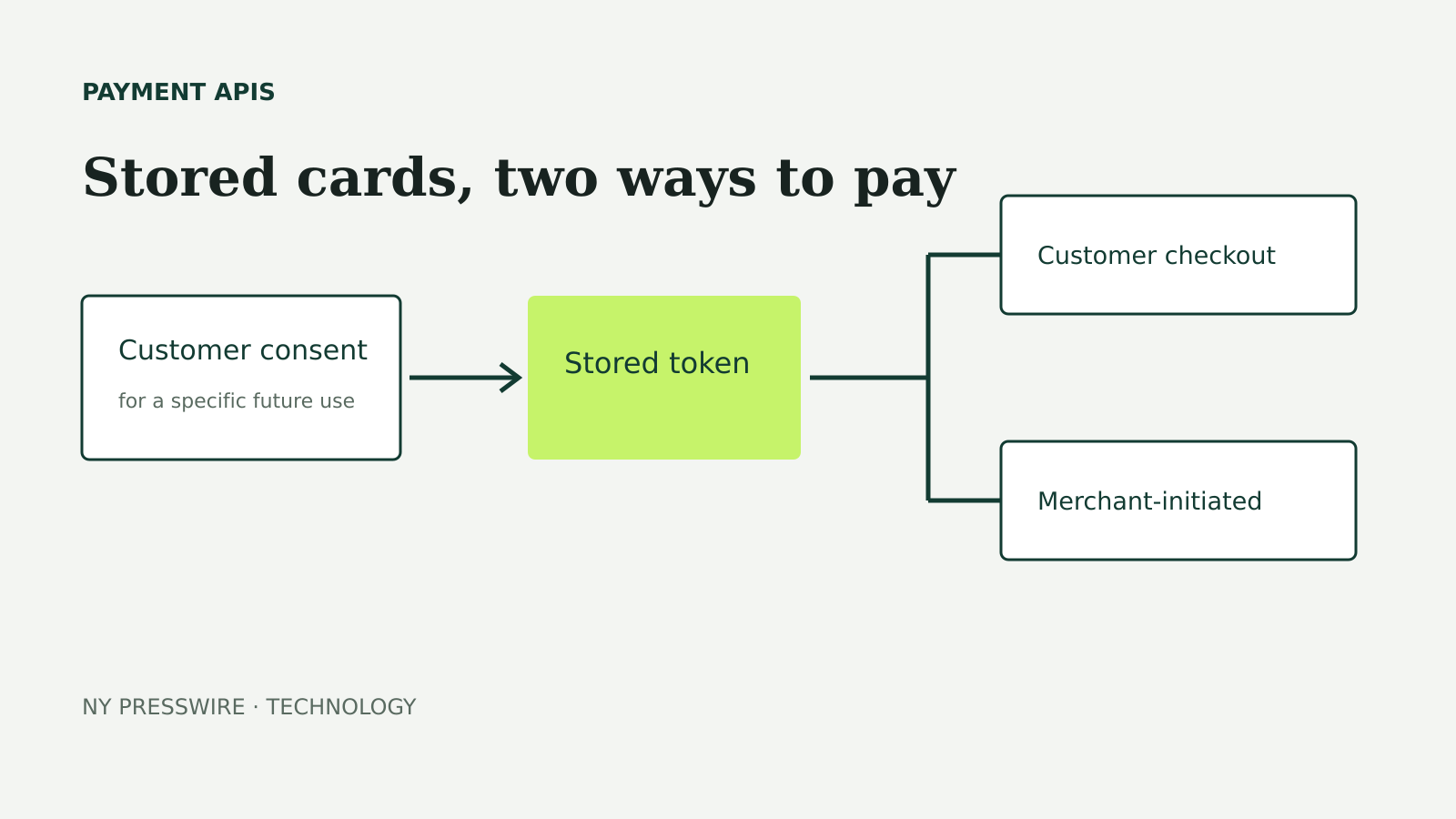
Merchant-Initiated Transactions and Stored Cards
How customer consent, stored credentials and later payment attempts fit together in Stripe and Adyen integrations.
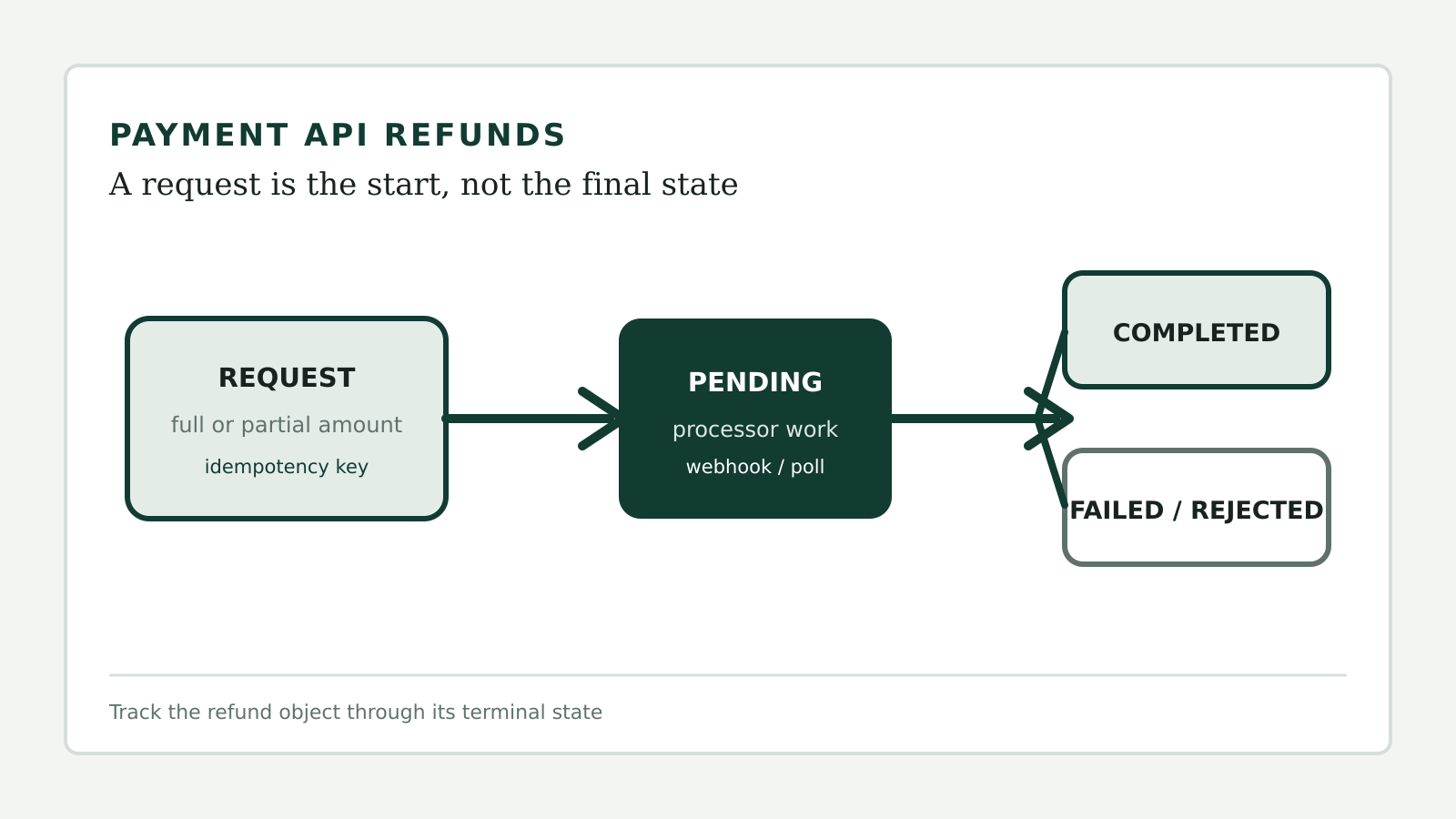
Payment API Refunds: Full, Partial and Pending States
How Stripe, Adyen, PayPal and Square handle full, partial and asynchronous refunds.
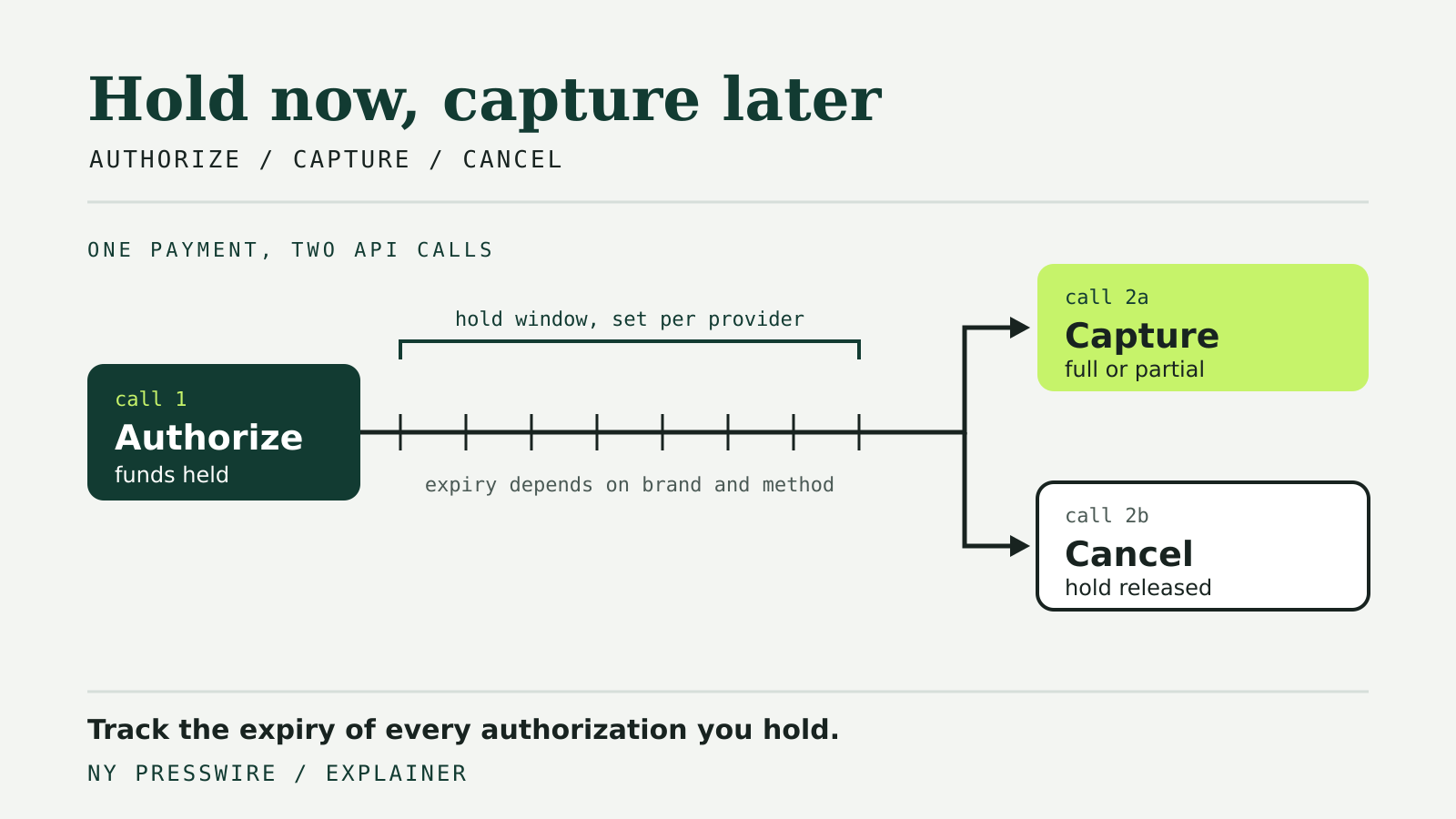
Authorize and Capture in Payment APIs, Compared
How separate authorization and capture works at Stripe, Adyen, PayPal and Square, from hold windows to expiry.

SOC 2 for Fintech Startups: What the Report Actually Covers
What a SOC 2 report covers, how to set scope and which controls a fintech startup must operate consistently.
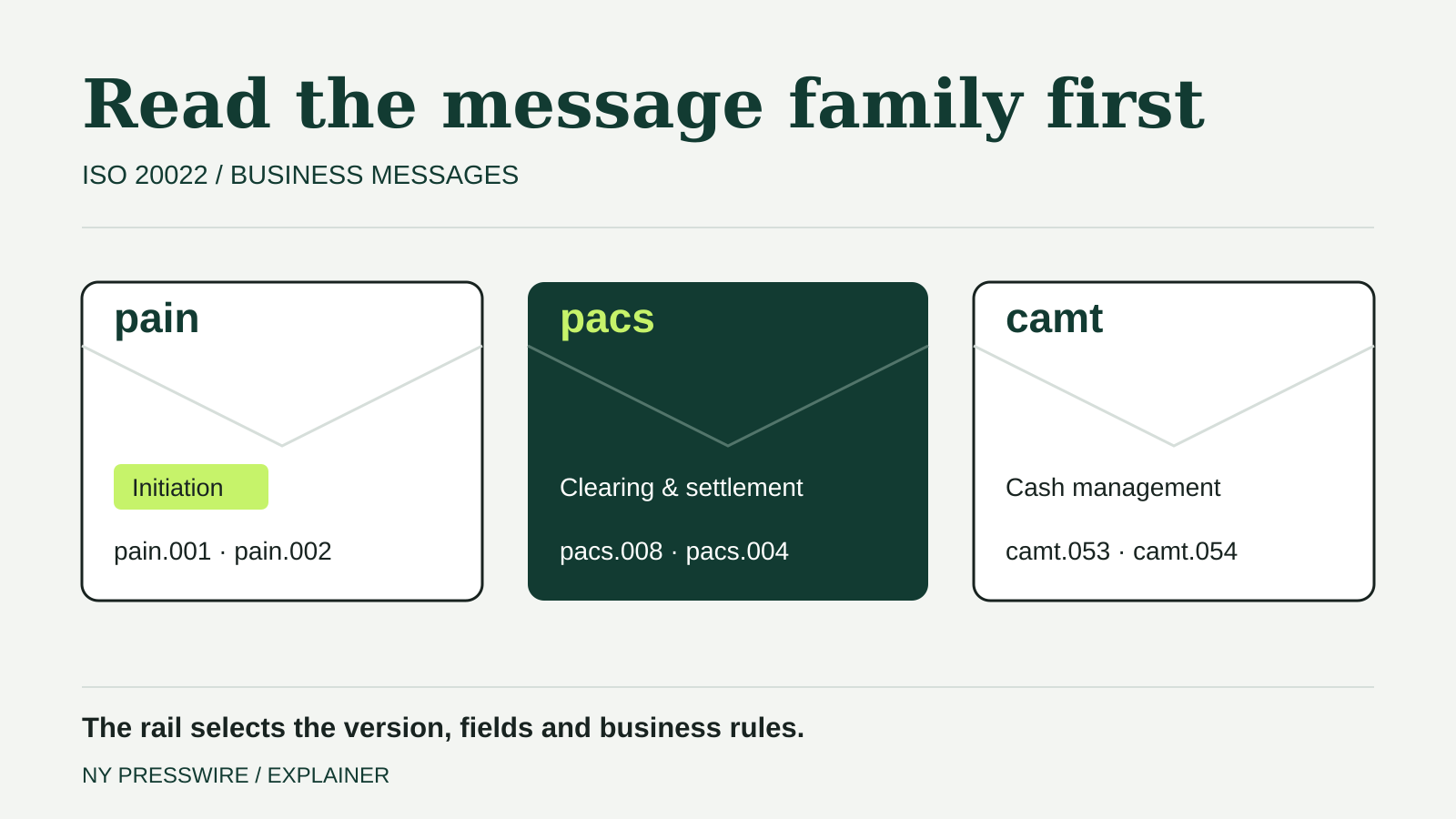
ISO 20022 Messages Explained: pain, pacs and camt
Read pain, pacs and camt by their business jobs, then check the rail's version and implementation rules.
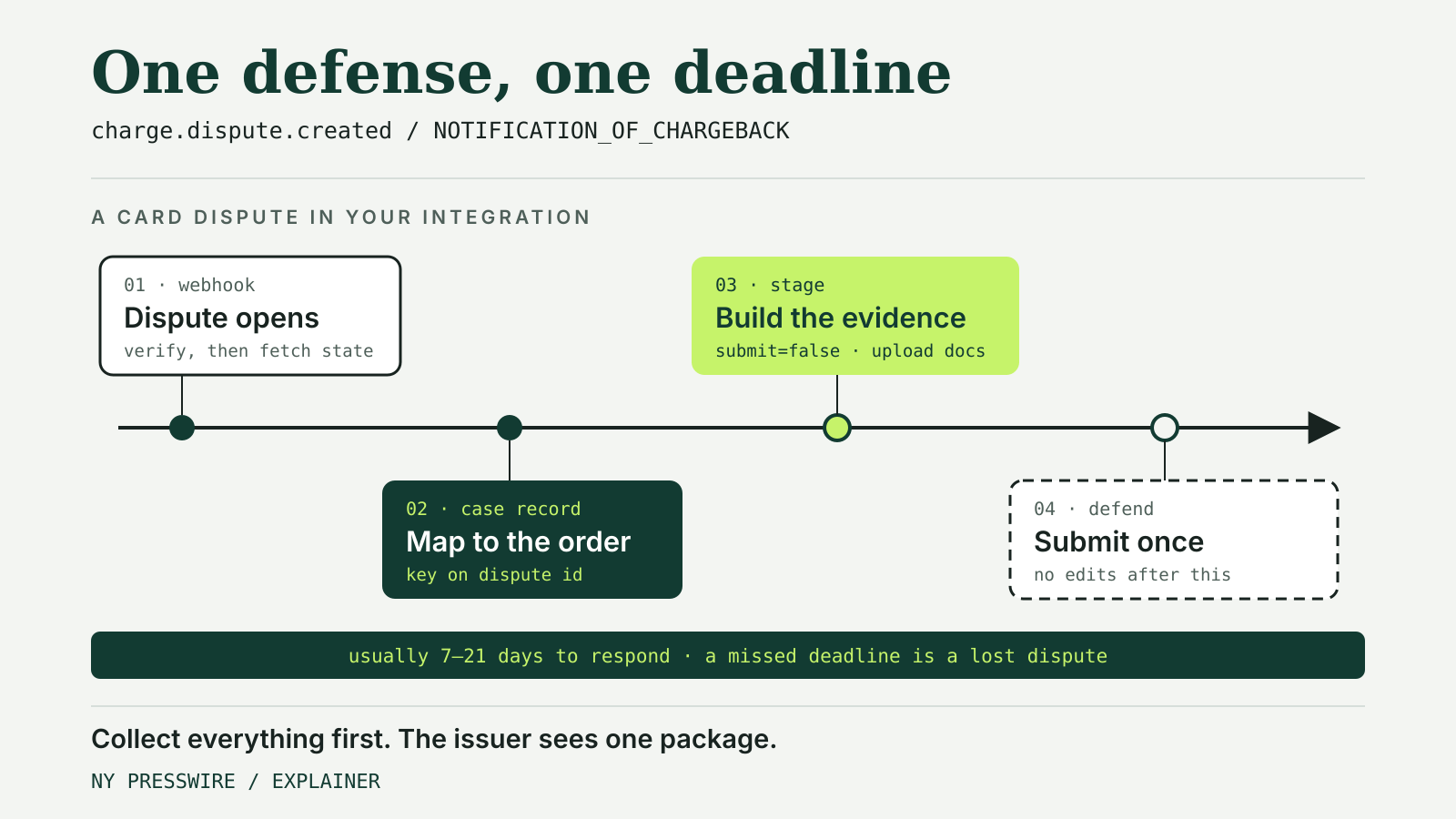
Chargeback API Disputes: Webhooks, Evidence and Deadlines
How Stripe and Adyen report card disputes, stage evidence and take a one-shot defense before the deadline.
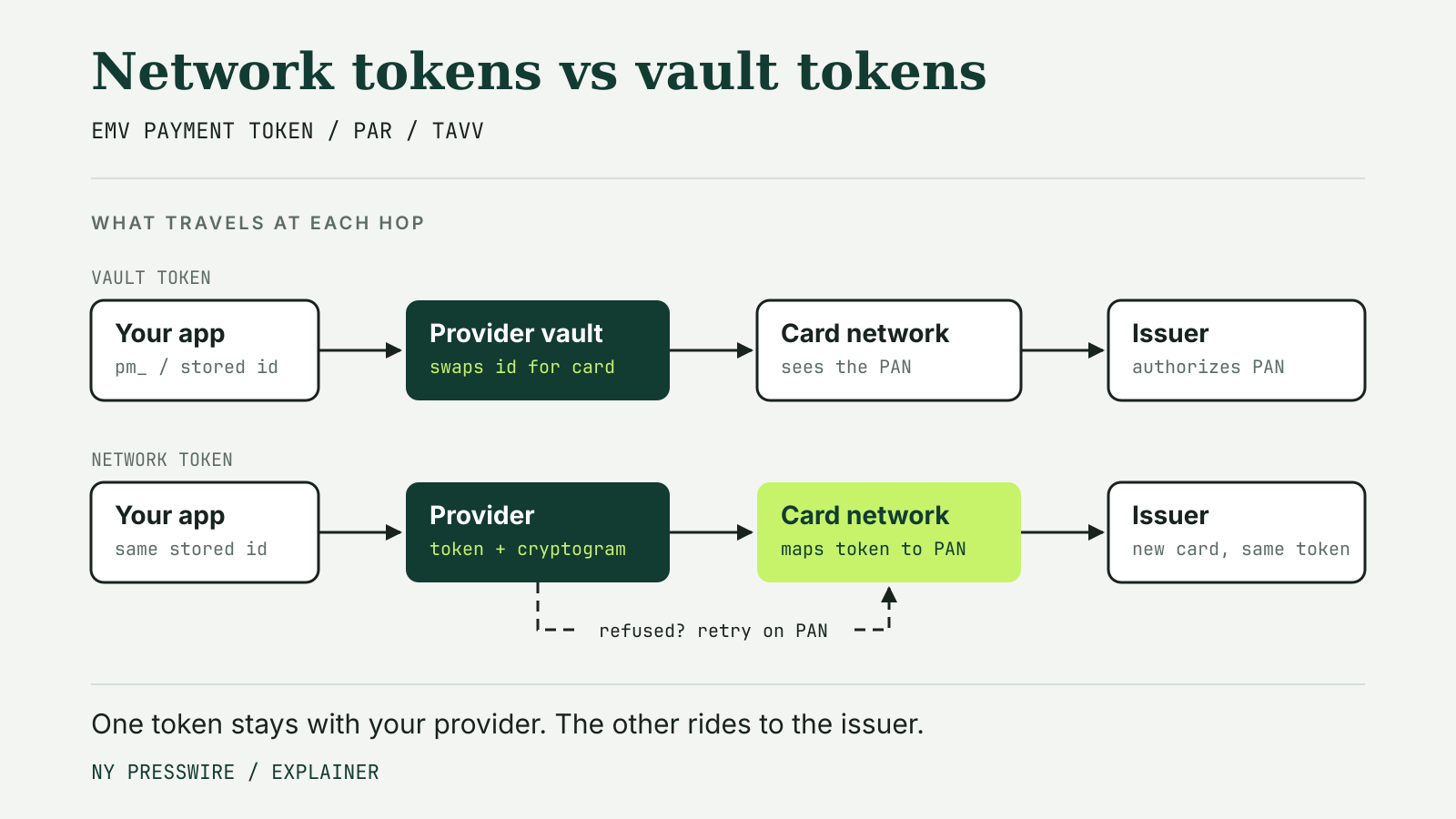
Network Tokenization Explained: Network Tokens vs Vault Tokens
How card network tokens differ from a provider's vault token, and what that changes for developers.
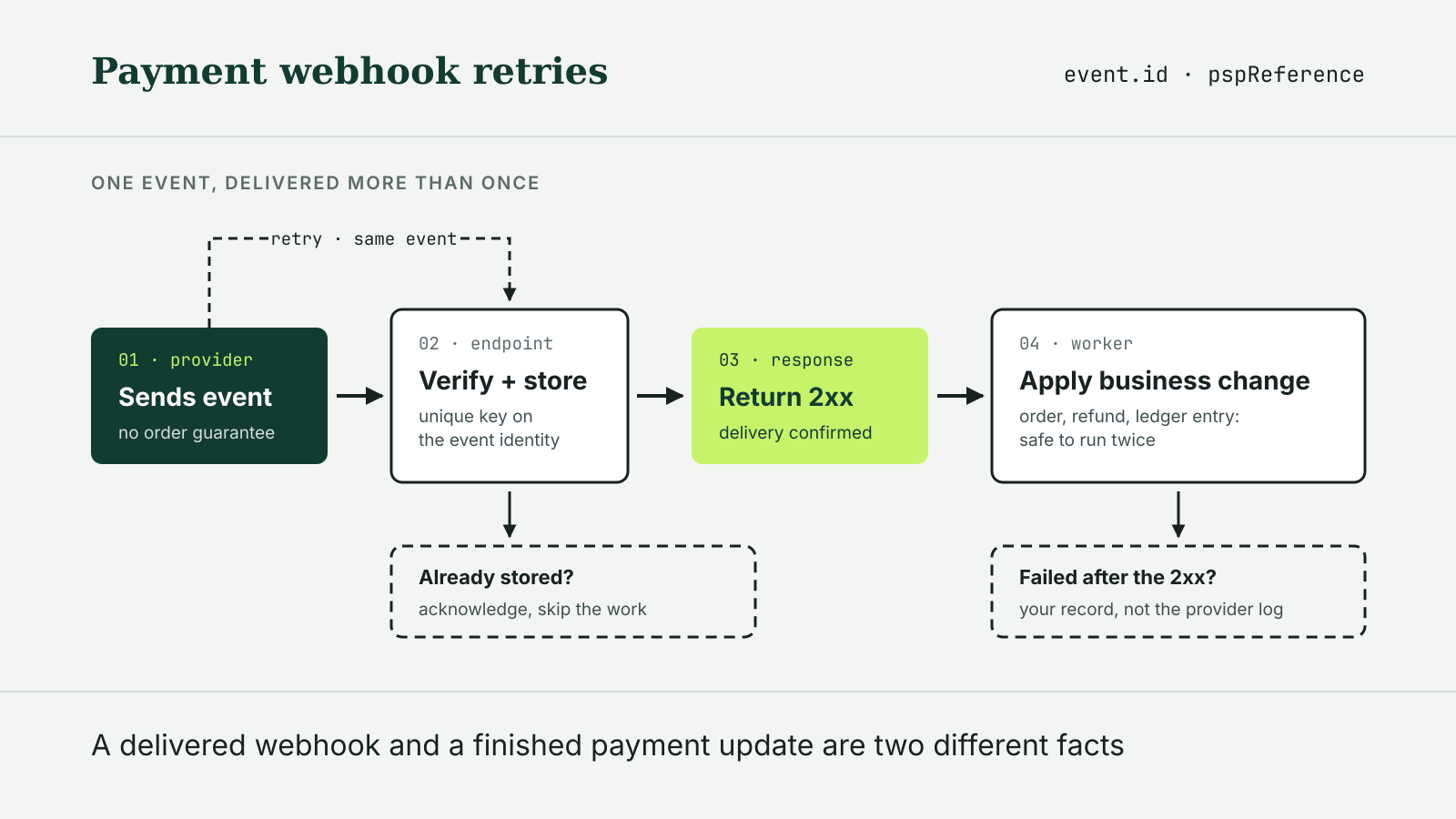
Payment Webhook Retries: Duplicates, Order and Recovery
Separate delivery acknowledgment from payment processing, and make repeated events safe.
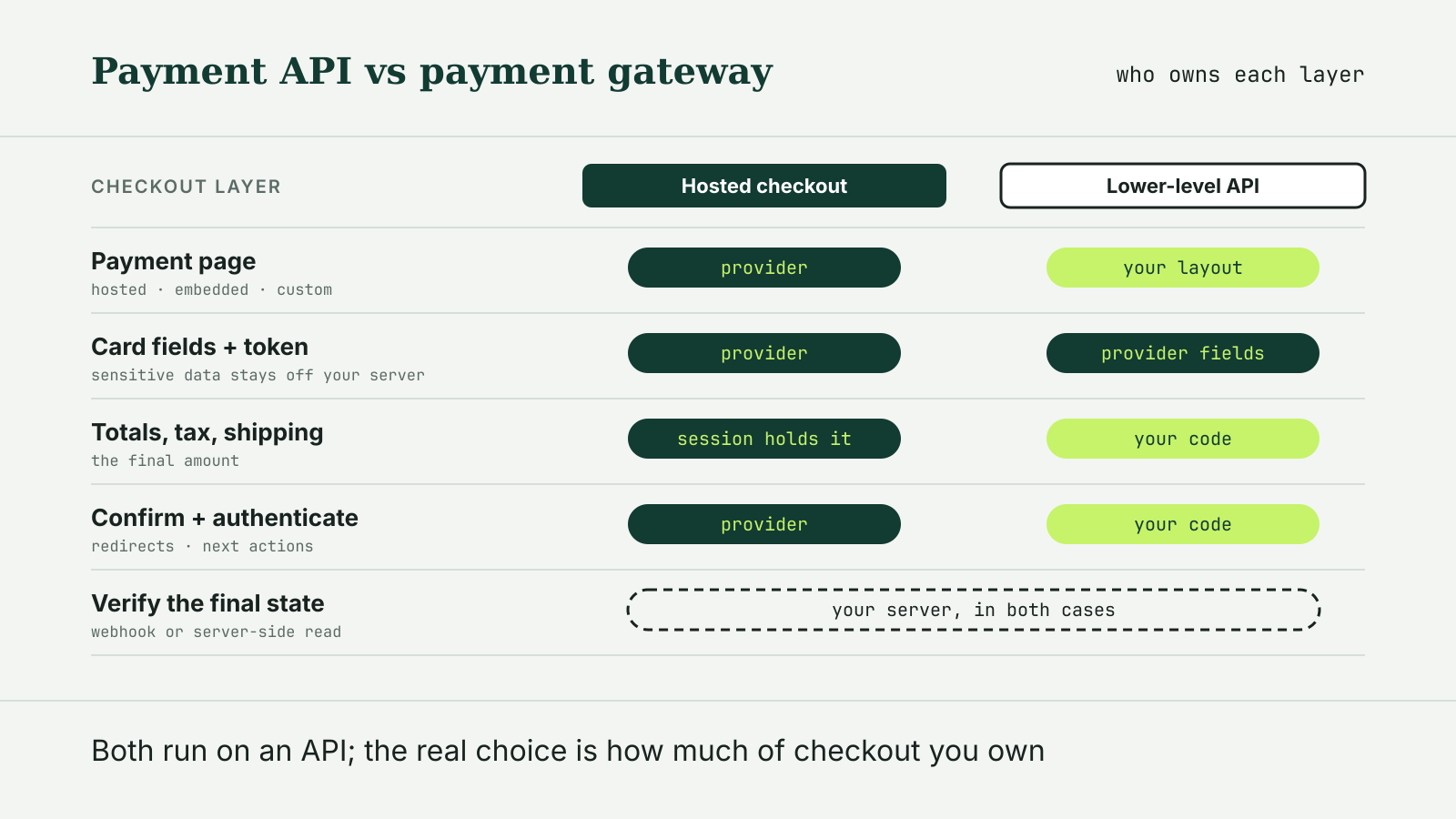
Payment API vs Payment Gateway: What You Actually Integrate
Hosted checkout bundles the payment UI; a lower-level API leaves more of the payment lifecycle in your code.
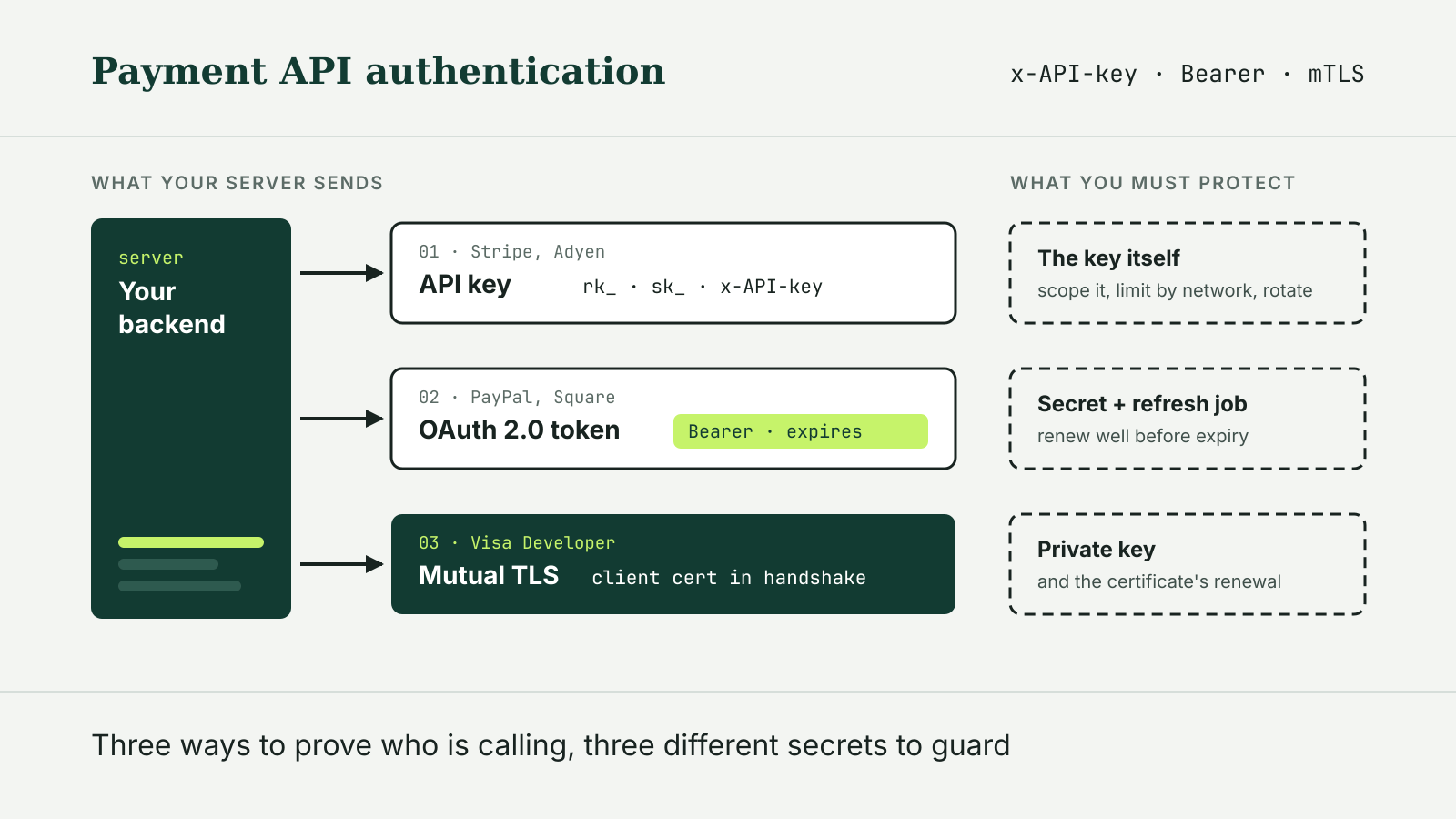
Payment API Authentication: API Keys, OAuth 2.0 and Mutual TLS
API keys, OAuth 2.0 tokens and mutual TLS compared across Stripe, Adyen, PayPal, Square and Visa.
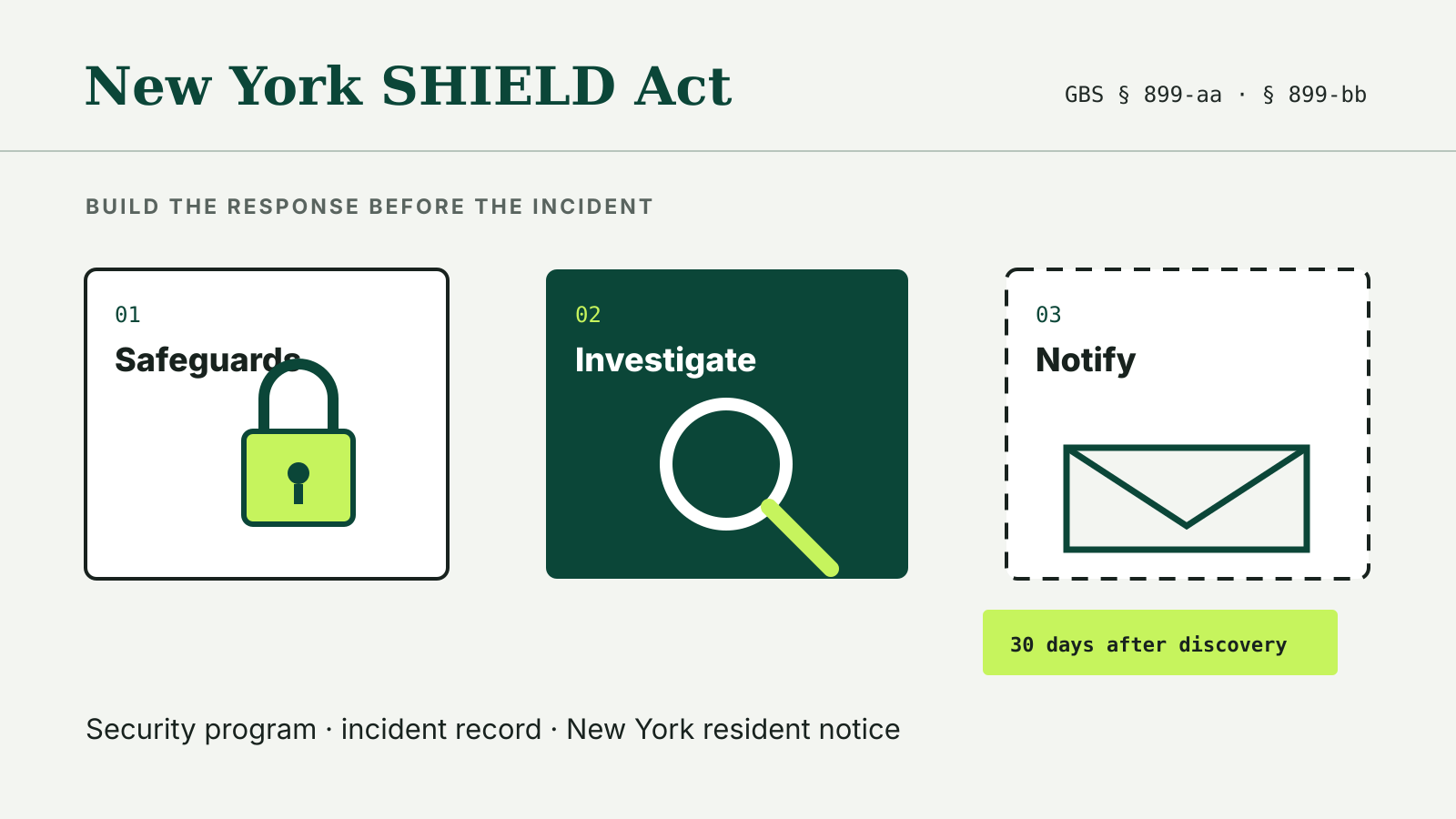
New York SHIELD Act Requirements for App Developers
The New York SHIELD Act reaches businesses outside the state when they hold New Yorkers’ private information.
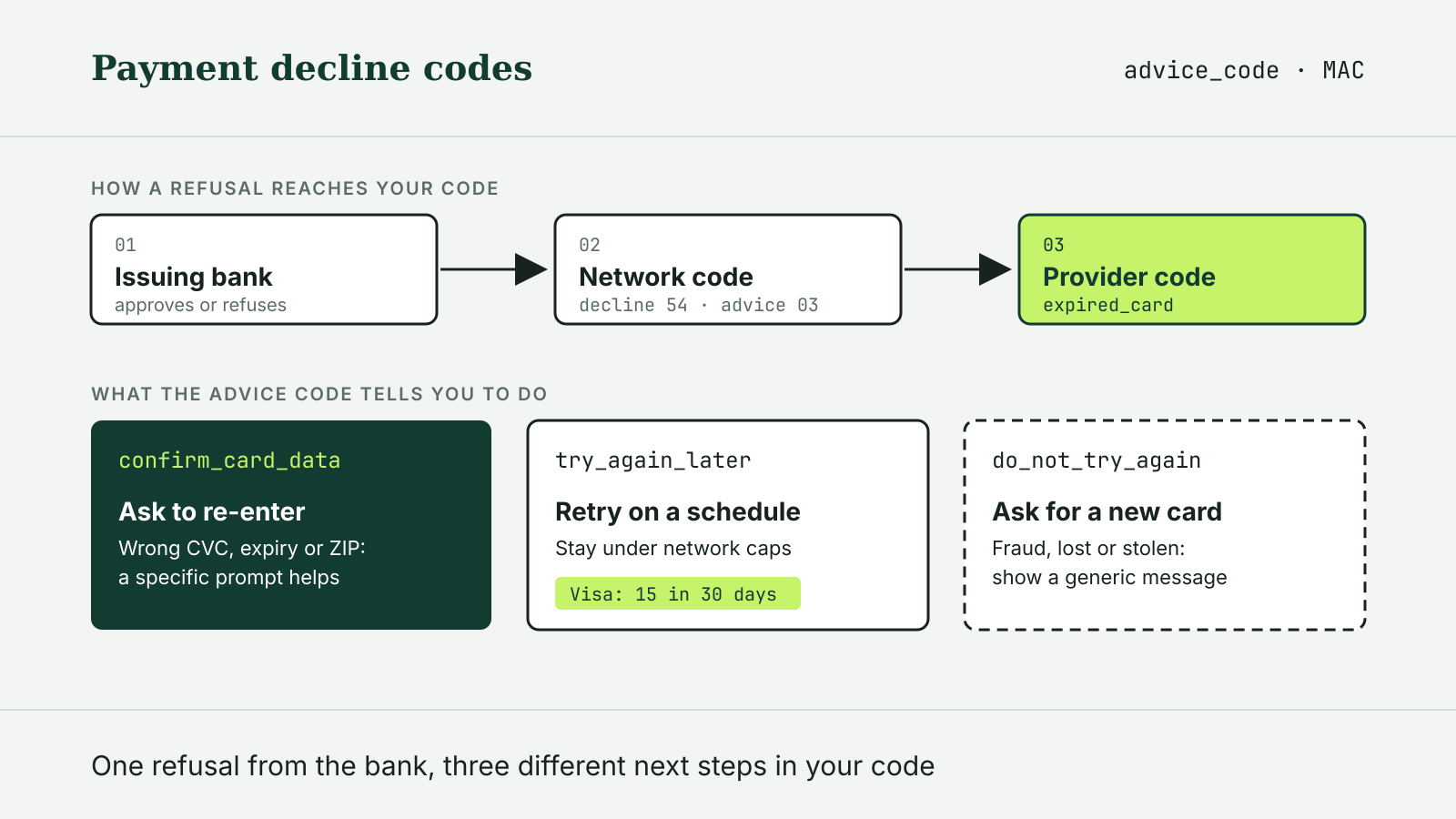
Payment Decline Codes: Reading Stripe, Adyen and Braintree Refusals
How Stripe, Adyen and Braintree report card declines, what to tell the customer and when a retry is allowed.
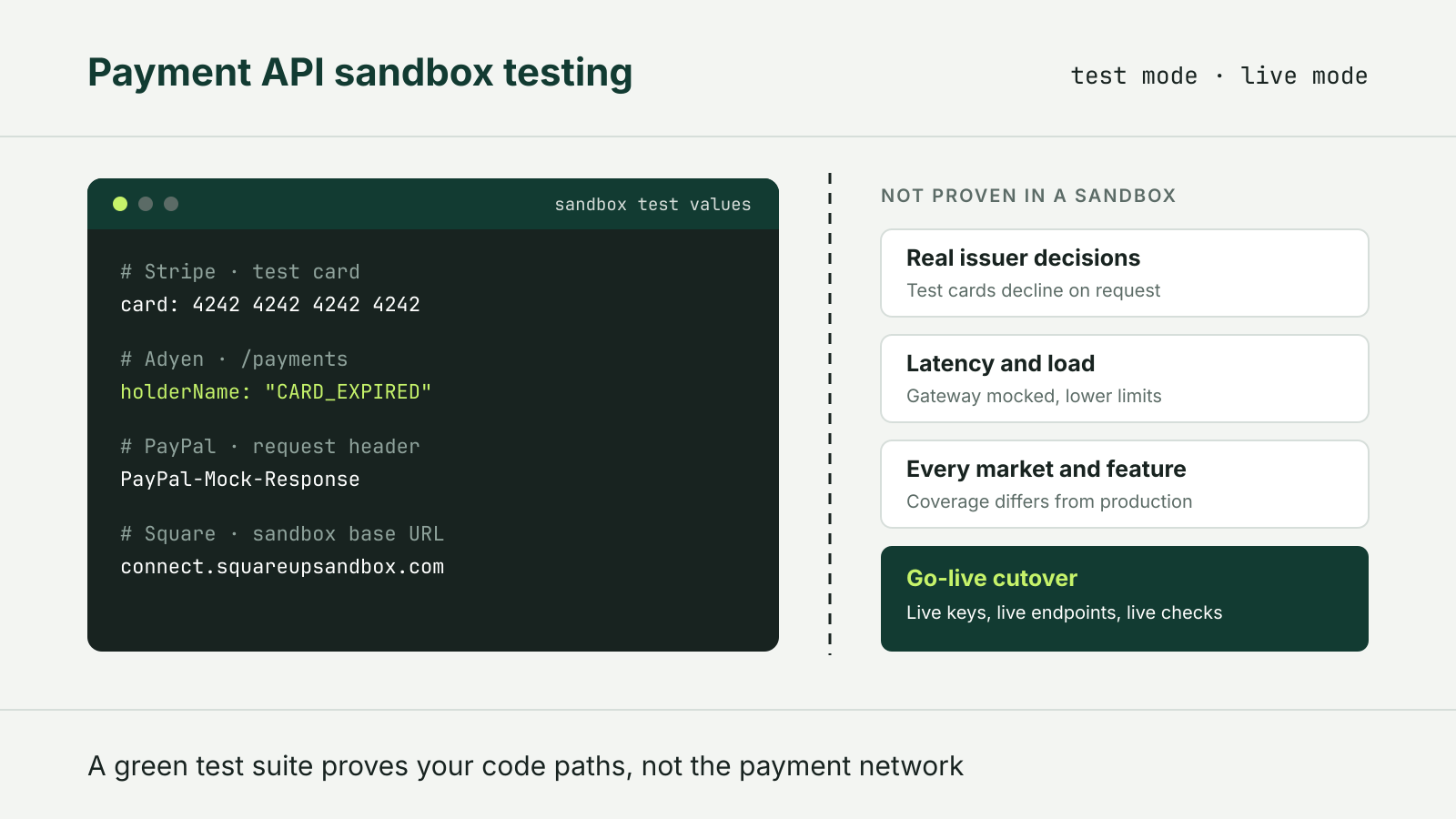
Payment API Sandbox Testing: What Test Mode Proves and What It Can't
How Stripe, Adyen, PayPal and Square sandboxes force failures, and where each says test mode differs from production.
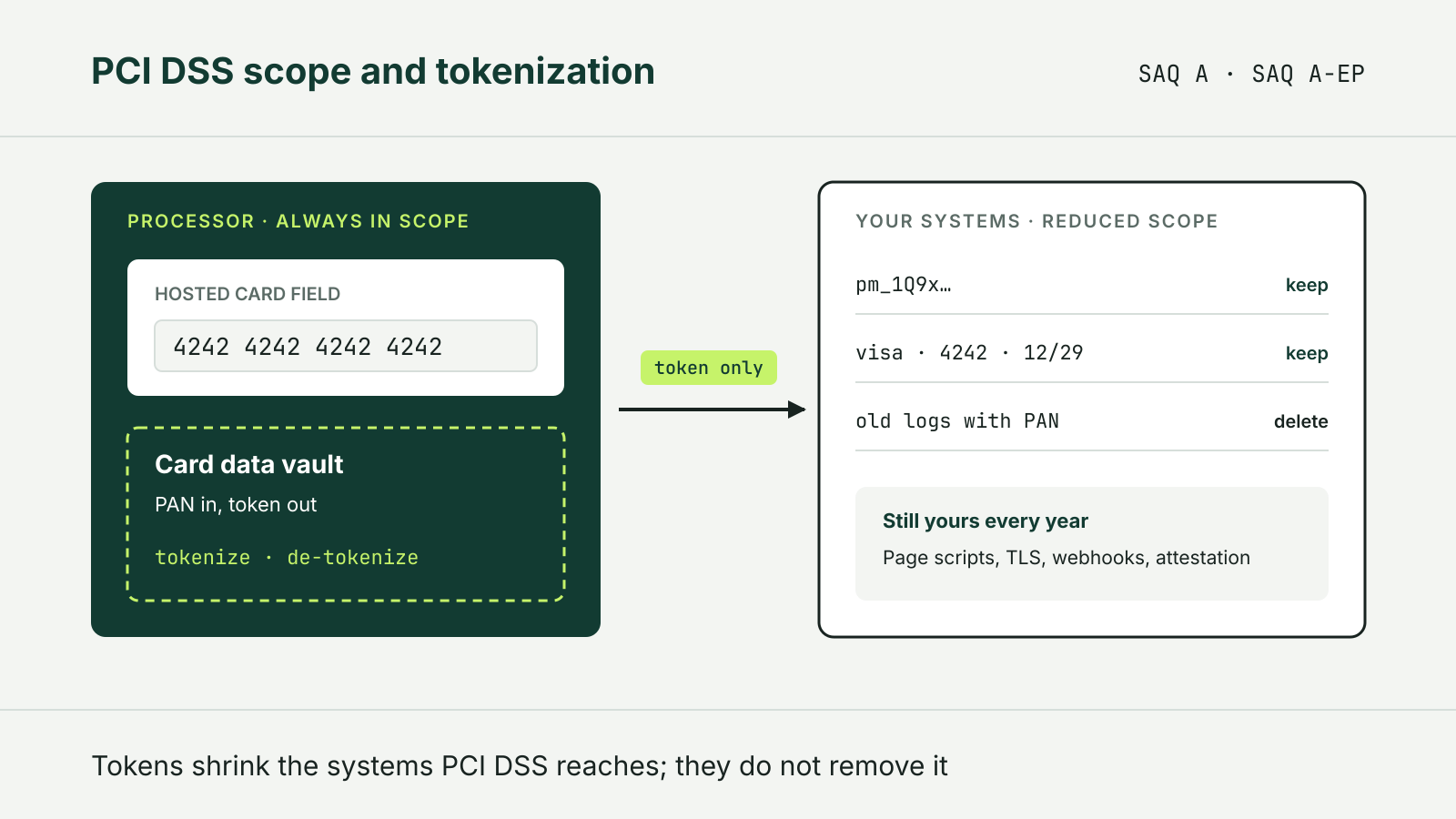
PCI DSS Scope and Tokenization: What Leaves Your Plate, What Stays
What tokens take out of PCI DSS scope, what stays in, and how a hosted card form decides SAQ A or A-EP.
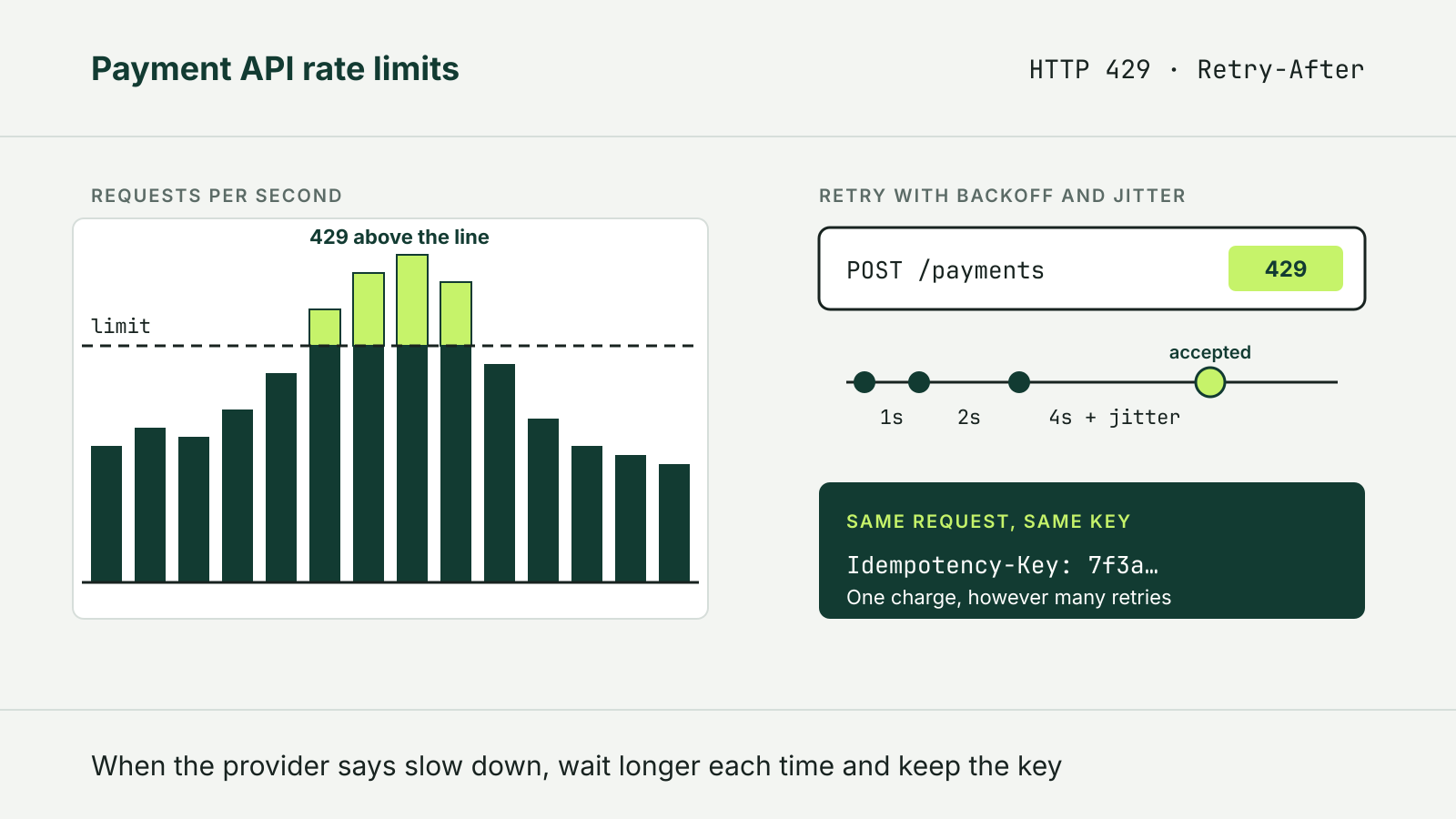
Payment API Rate Limits: Handling a 429 at Stripe, Square and PayPal
How Stripe, Square and PayPal throttle API calls, and how to retry a 429 without charging twice.
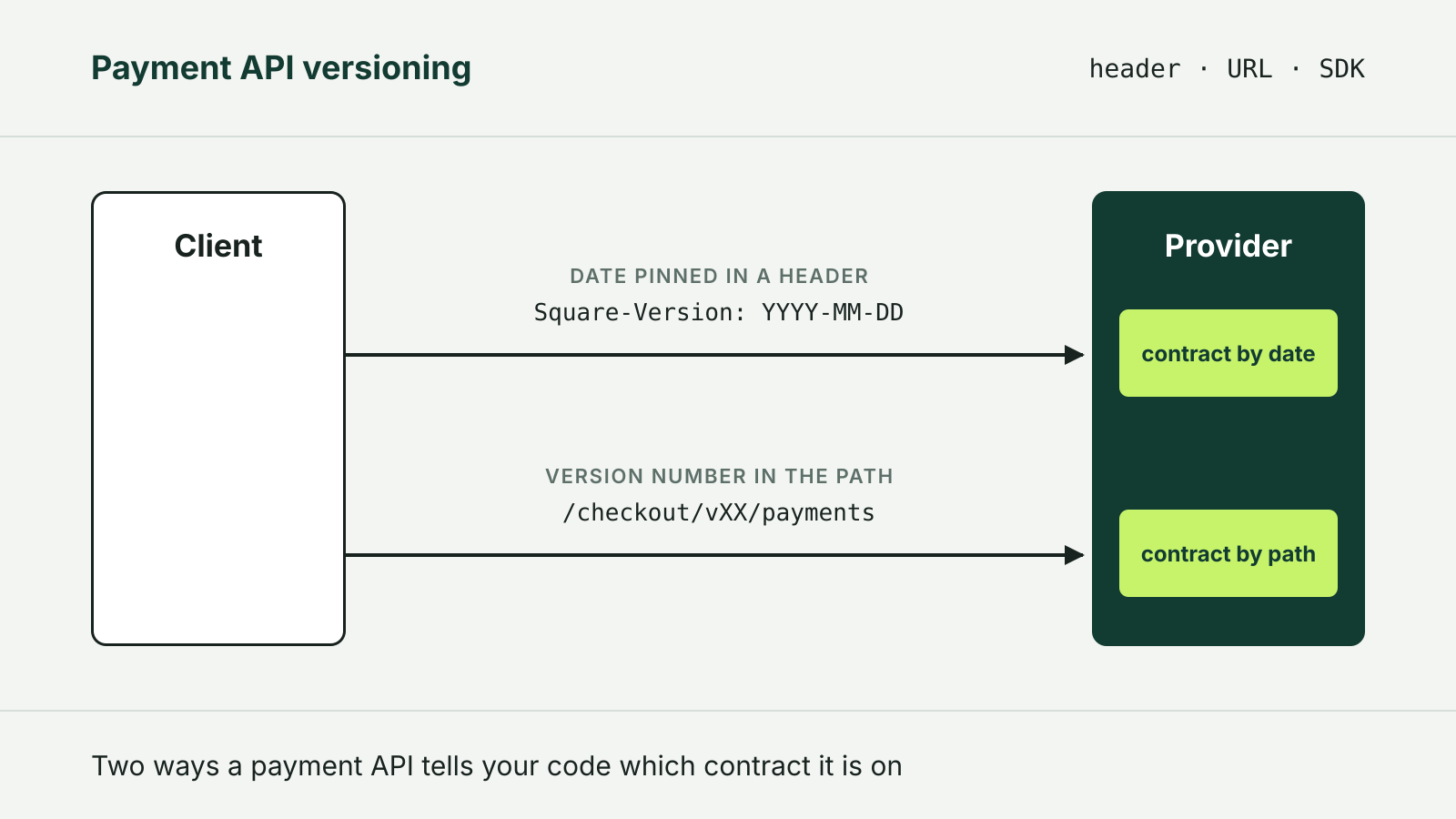
Payment API Versioning: Dated Headers vs Version Numbers in the URL
How Stripe, Square, Adyen and PayPal ship breaking changes, and what each model means for your code.
NYDFS Part 500 Requirements for Fintech and Crypto Firms
A working guide to cybersecurity controls, notices, annual filings and exemptions under NYDFS Part 500.
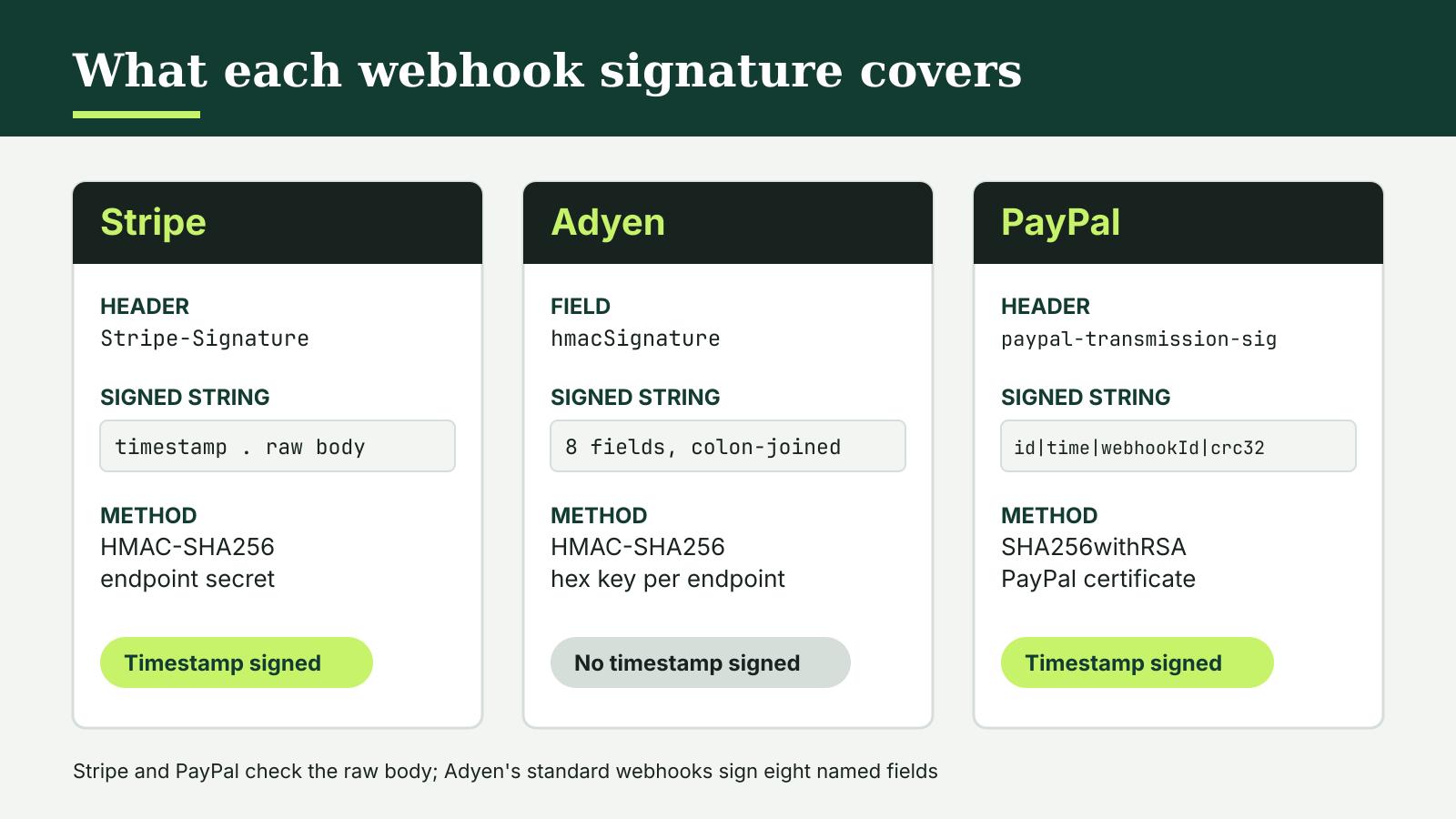
Verifying Payment Webhook Signatures at Stripe, Adyen and PayPal
Stripe, Adyen and PayPal all sign webhooks, but not the same things. What each check proves and where it breaks.
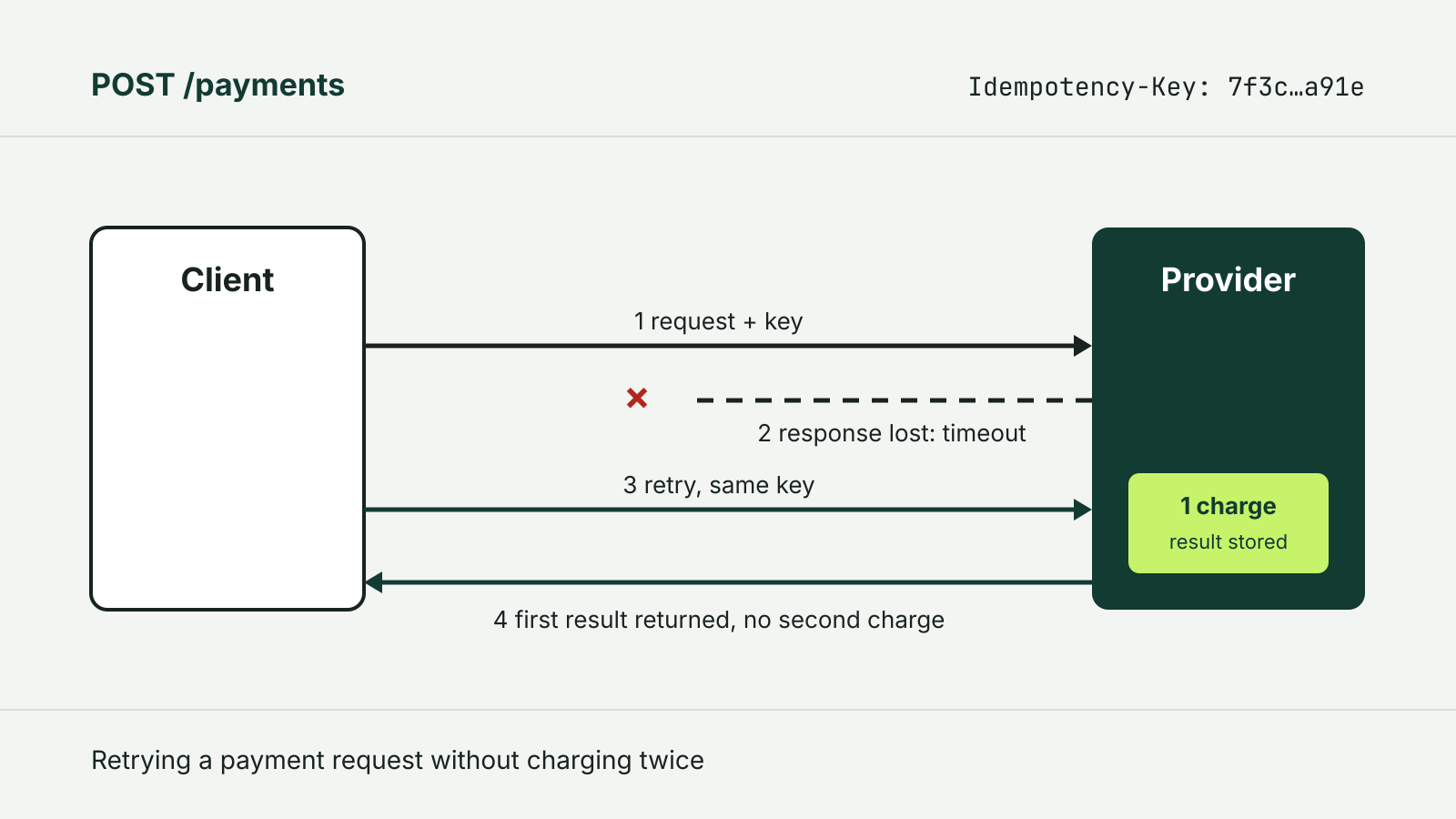
Idempotency Keys in a Payment API: Retrying Without Charging Twice
How idempotency keys let a payment API call be retried safely, and where Stripe, Adyen, PayPal and Square differ.

Passkeys After a Lost Phone: How Account Recovery Works
Your recovery route depends on where a passkey is stored and which other sign-in methods remain available.